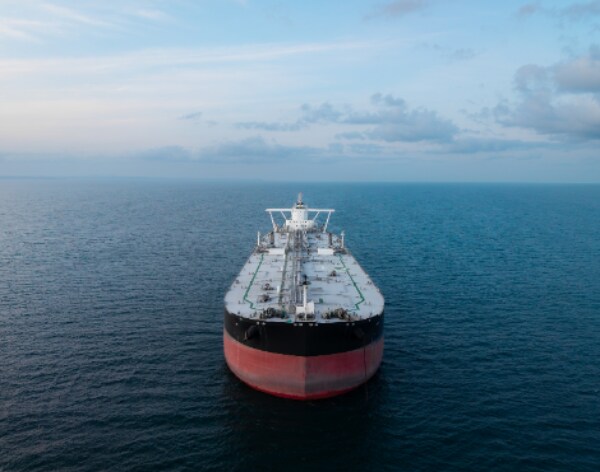
Commercial ships sailing near the strategic Strait of Hormuz are reportedly identifying themselves as Chinese-owned or saying their crews include Chinese nationals in an effort to avoid attacks from Iran.
According to ship-tracking services, some vessels actually do have connections to China, either through ownership or by flying the Chinese flag. But others appear to be emphasizing or claiming Chinese ties as a way to pass safely through the waterway, which has become increasingly dangerous during the current conflict.
Tehran has reportedly assured China—its largest trading partner—that ships linked to the country will not be targeted while using the strait. That promise has become especially significant since Iranian forces began launching attacks on civilian vessels with drones following the start of Operation Epic Fury on February 28.
Those attacks have already caused serious damage to several ships and have resulted in at least one fatality.
The tactic of claiming Chinese connections is not entirely new. During earlier assaults by the Iranian-backed Houthi movement in the Red Sea, some vessels reportedly adopted a similar strategy by declaring links to China in hopes of reducing the risk of attack.
U.S. officials say the situation in the region reflects increasing desperation from Tehran.
Secretary of War Pete Hegseth said Friday that Iran is “exercising sheer desperation” in the Strait of Hormuz, noting that threatening shipping routes has long been part of the regime’s playbook.
“Of course, for decades, Iran has threatened shipping in the Strait of Hormuz,” Hegseth said. “This is always what they do, hold the strait hostage. We planned for it. We recognize it.”
Officials have also raised concerns that Iran may be attempting to deploy naval mines using smaller boats after U.S. strikes reportedly destroyed much of the country’s larger naval fleet.
Sources speaking to The New York Times said the mining effort appears slow and inefficient, raising doubts about whether Iranian forces could deploy mines faster than U.S. forces could locate and remove them.
Meanwhile, experts warn that another threat may be even more dangerous: drone boats, sometimes called “suicide skiffs.”
Cameron Chell, CEO of the drone company Draganfly, explained that these remotely controlled vessels could be launched in large numbers and directed toward slow-moving tankers or cargo ships.
According to Chell, the boats may use radio control, encrypted communication, or frequency-hopping signals to stay connected with operators along the Iranian coastline.
“They can be jammed and tracked,” he explained, but when dozens of small explosive boats are deployed at once, identifying them becomes extremely difficult—especially when they can be disguised as ordinary fishing vessels.
These boats can range from 12 to 30 feet in length and could potentially be controlled by a single operator managing multiple drones simultaneously. Some may even operate in coordinated swarms under automated control.
Chell warned that stopping such attacks would require heavy surveillance and significant defensive firepower to keep the narrow shipping corridor safe.
The danger became clear Thursday when a U.S.-owned tanker flying the Marshall Islands flag was struck near the coast of Iraq in what appears to have been an attack carried out by one of these unmanned surface vehicles.
For now, ships moving through the Strait of Hormuz are doing whatever they can to reduce risk—even if that means suddenly discovering a “connection” to China. And the fact that commercial crews feel the need to do that says a lot about how tense and unpredictable the situation in the region has become. ??