For years, the “tech exodus” was talked about like a lifestyle shift—engineers leaving California for lower taxes, better schools, and a little breathing room from Silicon Valley politics.
Now it’s starting to look like something bigger.
A corporate relocation of gravity itself.
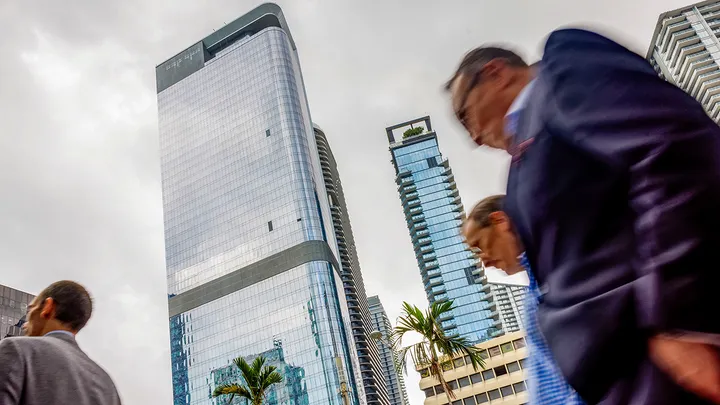
Billionaire venture capitalist Peter Thiel has reportedly made one of the strongest signals yet that the center of American tech influence is no longer locked to the West Coast, signing a record-setting office lease in Miami’s financial district at roughly $250 per square foot—an eye-popping figure that underscores just how aggressively capital is now moving into Florida’s growing tech corridor.
What once began as a trickle of individuals relocating for quality of life has evolved into a broader structural shift: companies, funds, and major investors planting long-term flags in a state increasingly seen as friendly to business, innovation, and economic freedom.
Miami has spent the past several years positioning itself as an alternative to Silicon Valley’s regulatory density and cultural friction. Lower taxes, a pro-growth political climate, and an influx of venture capital have combined to turn what used to be a tourism-driven economy into something far more ambitious.
And investors are responding with their wallets.
The Thiel-backed lease is being read by market watchers as more than just real estate activity. It’s a signal that serious tech capital is no longer just hedging against California—it is actively building a parallel ecosystem in the Southeast.
That matters.
Because tech power in the United States is not just about software companies anymore. It’s about where money, talent, and influence decide to cluster. And once those clusters start forming new hubs, they rarely reverse course.
Florida’s rise is also being fueled by a broader political undercurrent. Entrepreneurs and investors increasingly cite regulatory uncertainty, high taxes, and cultural friction in traditional tech hubs as reasons for looking elsewhere. States like Florida, by contrast, have leaned into policies framed around business growth, energy expansion, and economic competition.
And whether critics like it or not, capital follows clarity.
Miami’s transformation is still in its early stages, but deals like this one suggest the shift is no longer theoretical. It is measurable, expensive, and accelerating.
Silicon Valley didn’t disappear overnight.
But pieces of it are clearly being rebuilt somewhere else.