Some images define a political era.
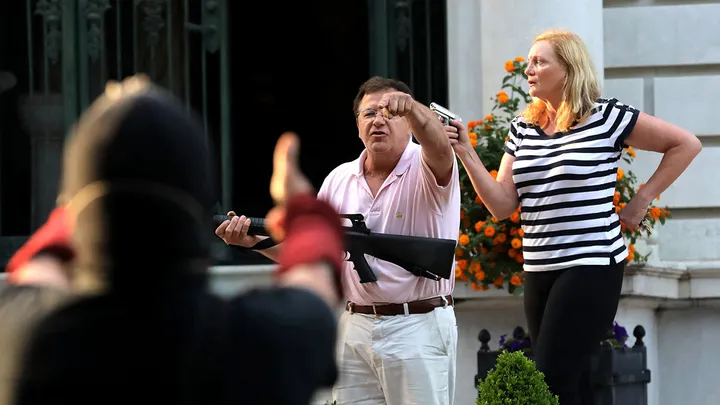
In the summer of 2020, one photograph cut through the noise of lockdowns, riots, media narratives, and a country struggling to decide whether order still mattered: a husband and wife standing outside their home on a private street in St. Louis, legally owned firearms in hand, watching a crowd move through their neighborhood.
To some, they became villains overnight.
To millions of Americans, they became something else entirely — ordinary citizens who suddenly found themselves at the center of a national argument over self-defense, private property, public protest, and whether the rules were being applied equally anymore.
Now, six years later, the legal and political aftershocks from that moment continue to echo far beyond Missouri.
On June 28, 2020, as demonstrations spread across the country following the death of George Floyd, Black Lives Matter protesters entered Portland Place, a private gated street in St. Louis while moving toward the residence of then-Mayor Lyda Krewson.
Standing outside their home were Mark and Patricia McCloskey, both armed.
The confrontation lasted minutes. The fallout lasted years.
Video and photos from the encounter exploded across television and social media. Commentators framed the moment in dramatically different ways. Some portrayed the couple as reckless symbols of fear and overreaction. Others saw something entirely different: homeowners responding to a rapidly changing situation in which crowds had crossed into what residents viewed as private space.
The legal battle that followed became nearly as controversial as the incident itself.
Authorities pursued charges related to the display of firearms during the confrontation, turning what supporters viewed as a self-defense case into a national debate over prosecutorial discretion and constitutional rights. For many conservatives, the message felt impossible to ignore: while violent unrest in parts of the country often seemed to receive excuses or softened language, homeowners defending their property became the ones facing legal scrutiny.
That contrast helped transform the McCloskeys from local figures into national symbols.
Over time, they regained not only access to their firearms but also a public platform that extended far beyond Missouri politics. Their story became part of a broader conversation about whether Americans still have meaningful protections for property rights and lawful self-defense — especially during moments of political unrest.
The debate remains unresolved in American public life. Where some saw escalation, others saw citizens refusing to surrender responsibility for protecting their home.
But six years later, one thing is difficult to dispute: that image endured because it touched a deeper question many Americans were already asking in 2020 — if institutions hesitate, what are ordinary people expected to do?
That question never really disappeared.