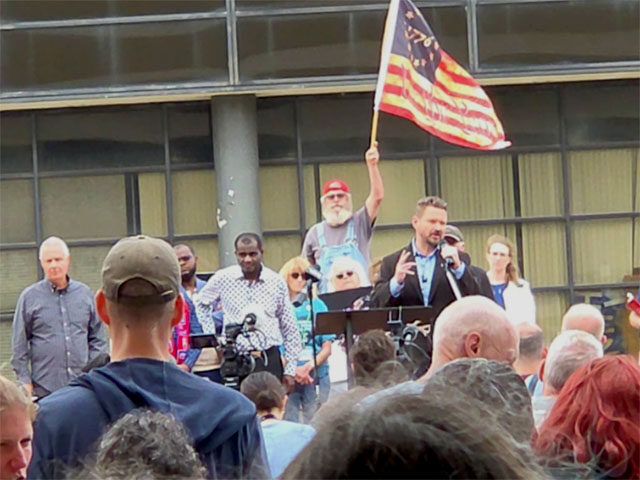
For residents in Springfield, Ohio, the debate was never only about immigration numbers. They said it was about something more basic: whether communities still have the right to expect that immigration policy follows the law and that local concerns are not dismissed until they become impossible to ignore.
That is why some local citizens and organizers are celebrating the federal government’s decision to end Temporary Protected Status for roughly 350,000 Haitian migrants.
The residents’ group that helped lead opposition to the rapid growth of the Haitian migrant population in Springfield framed the move not as punishment, but as a return to enforcement and accountability.
“Fairness and the law won,” members of the group said in response to the decision.
Temporary Protected Status was created as a temporary immigration mechanism tied to specific conditions abroad, not as a permanent substitute for long-term immigration policy. Supporters of ending the designation argue that temporary programs cannot continue expanding indefinitely without raising questions about enforcement, capacity, and public trust.
In Springfield, those concerns became impossible to separate from daily life.
Residents who pushed for change argued for months that national officials and outside commentators often treated local frustrations as illegitimate or politically inconvenient rather than engaging with questions about infrastructure, community strain, public services, and whether immigration rules should mean what they say.
The Trump administration’s broader immigration message has consistently centered on that point: compassion and sovereignty are not opposites, and a nation that does not enforce its laws eventually weakens confidence in all of them.
Opponents of stricter immigration policies often emphasize humanitarian obligations and the contributions migrants make to local communities. But for Springfield residents celebrating this decision, the issue remained focused on process and legitimacy: if policies labeled temporary become effectively permanent, citizens begin asking where the limits are.
That question reaches beyond one city and one program.
For many Americans, immigration is not becoming a debate between welcoming people and rejecting them. It is becoming a debate about whether elected governments still enforce the rules they write — consistently, transparently, and with accountability to the citizens who live with the consequences.
Springfield residents believe they were heard. And in their view, the larger principle is simple: America remains a nation of laws only if those laws are expected to mean something.