U.S. Supreme Court justices are signaling skepticism toward activist local governments attempting to weaponize state laws against oil companies over speculative "climate change" allegations. This pivotal case could determine whether a handful of localities can dictate national energy policy and impose ruinous damages, undermining federal authority.
The critical comments came during oral arguments on October 5 in Suncor Energy (U.S.A.) v. County Commissioners of Boulder County, marking the start of the Court's new term.
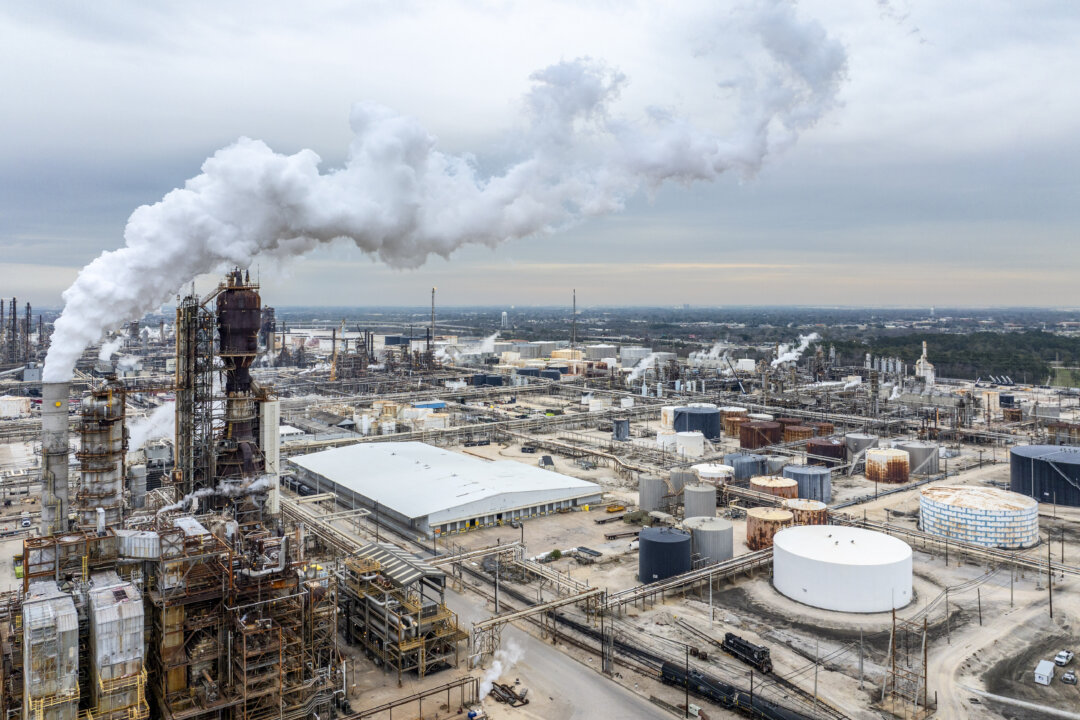
Boulder, Colorado, and Boulder County have launched a lawsuit against energy producers, claiming they violated state laws by manufacturing and distributing hydrocarbons while supposedly concealing or misrepresenting the risks of burning them. These local governments assert that such conduct exacerbated "climate change," leading to increased flood damage, heightened wildfire risks, drought, and harm to public infrastructure.
Their audacious demand? That these companies pay for the alleged damages under Colorado law, invoking broad legal theories like public and private nuisance, trespass, and unjust enrichment. This is a clear attempt to use local courts to impose a radical climate agenda through judicial activism rather than legislative process.
Suncor and its co-petitioner, Exxon Mobil, rightly contend that Boulder's lawsuit is nothing less than a backdoor maneuver to regulate greenhouse gas emissions through Colorado's courts. This directly challenges the established framework of federal law, primarily the Clean Air Act, which already governs these emissions. The Trump administration, standing firm for American energy and federalism, explicitly supports the companies' position.
Allowing Boulder's claims to proceed, the companies argue, would unleash chaos, permitting any state or municipality to unilaterally disrupt a meticulously constructed national regulatory system. Such a precedent would enable local jurisdictions to reach beyond their borders, targeting conduct that occurs across the country and even internationally.
Kannon Shanmugam, attorney for Suncor, delivered a stark warning to the justices during oral arguments. He emphasized that if Boulder's claims are allowed, "some 90,000 municipalities across the country will have the ability to make national and international energy policy." He added that litigants could demand "catastrophic damages on selected fossil-fuel producers," a scenario he rightly called incompatible with "the constitutional scheme that the Founders adopted."
Shanmugam powerfully illustrated the absurdity of Boulder's theory, noting it offers "no principle limiting who could be sued." He humorously suggested that under such a theory, he himself could be sued "for refilling my car and thereby contributing to global climate change" when in Colorado.
Boulder's attorney, Kevin Russell, struggled to provide clear constitutional limitations when pressed by Justice Clarence Thomas. Thomas pointedly asked if large retailers of energy products could also be sued under Boulder's theory. Russell conceded, "Nothing in our theory prevents that" – an admission that highlights the limitless scope and potential for overreach inherent in Boulder's radical legal strategy.
Justice Amy Coney Barrett further exposed the slippery slope, asking what would prevent Colorado from passing a law "purporting to cap emissions in the other 49 states." The implication is clear: allowing this damages suit could effectively achieve the same unconstitutional overreach.
Justice Brett Kavanaugh drove home the point, reminding the court of four precedents since 1972 that make it "crystal clear that interstate air and water pollution are matters for federal law unless Congress specifically preserves state law." This firmly anchors the companies' argument in long-standing legal principles, challenging Boulder's attempt to circumvent them.
While Justice Elena Kagan drew parallels to past tobacco and opioid lawsuits, noting "This is chapter three," she also expressed skepticism about simply ignoring the federal Clean Air Act. She questioned why the court shouldn't acknowledge that Boulder's approach "really does just get in the way of how Congress decided to regulate greenhouse gases." This is a crucial observation, recognizing the intricate federal regulatory framework that activist local lawsuits threaten to unravel.
Justice Samuel Alito, who holds stock in energy companies, appropriately recused himself from the case. His absence means the U.S. Supreme Court could deadlock in a 4–4 vote, which would unfortunately leave the Colorado Supreme Court's ruling – favoring Boulder – in place. This outcome would be a significant setback for common-sense federalism and a win for the radical climate agenda, potentially opening the floodgates for more activist litigation.
The justices are expected to issue their ruling by June or July 2027. This case is not just about energy companies; it's about safeguarding constitutional principles, preventing local governments from overstepping their bounds, and rejecting the endless legal assaults launched by the radical left in pursuit of their extreme climate agenda. America First demands that national policy be set by Congress, not by activist local governments enabled by judicial overreach.