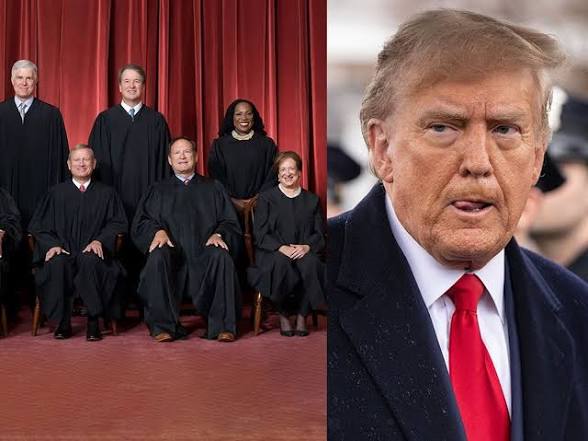
The U.S. Supreme Court is expected to issue a ruling Tuesday that could reshape one of the most politically explosive questions in modern immigration law: whether President Donald Trump can move forward with efforts to limit birthright citizenship in the United States.
At the center of the case is an executive order directing federal agencies not to recognize automatic citizenship for children born on U.S. soil if neither parent is an American citizen or lawful permanent resident — a proposal that has become a cornerstone of Trump’s broader immigration crackdown.
Lower courts previously blocked the order, setting up a final showdown at the nation’s highest court.
The timing adds weight to the moment. Tuesday marks the final day of rulings for the Court’s current term, a session that began in October and has already produced decisions with sweeping implications for executive authority, immigration enforcement, and federal power.
Birthright citizenship itself has long been treated as a settled feature of American law and identity, woven into generations of legal interpretation and public expectation. But in recent years, it has also become one of the most contested elements of the immigration debate, particularly as the scale of illegal immigration and asylum claims has strained border states and federal systems alike.
Supporters of Trump’s approach argue the policy is aimed at restoring clarity to a system they say has been stretched beyond its original intent, especially in cases involving non-citizen parents who are not lawfully settled in the United States.
Critics contend that any change to birthright citizenship would mark a dramatic shift in constitutional interpretation and could face immediate legal and administrative challenges nationwide.
The lower court ruling blocking the executive order has kept the policy from taking effect, but Tuesday’s Supreme Court decision could determine whether that block stands — or whether the administration gains new legal ground to enforce its position.
Beyond the immediate legal question, the case carries broader implications for presidential authority over immigration policy and the balance between long-standing precedent and executive interpretation of constitutional rights.
For Trump and his supporters, the case represents more than a policy dispute. It is part of a larger push to redefine how the United States handles citizenship, borders, and national sovereignty in an era of unprecedented migration pressures.
However the Court rules, the decision is expected to become a defining moment in the ongoing national debate over who gets to become an American — and under what rules that answer is determined.