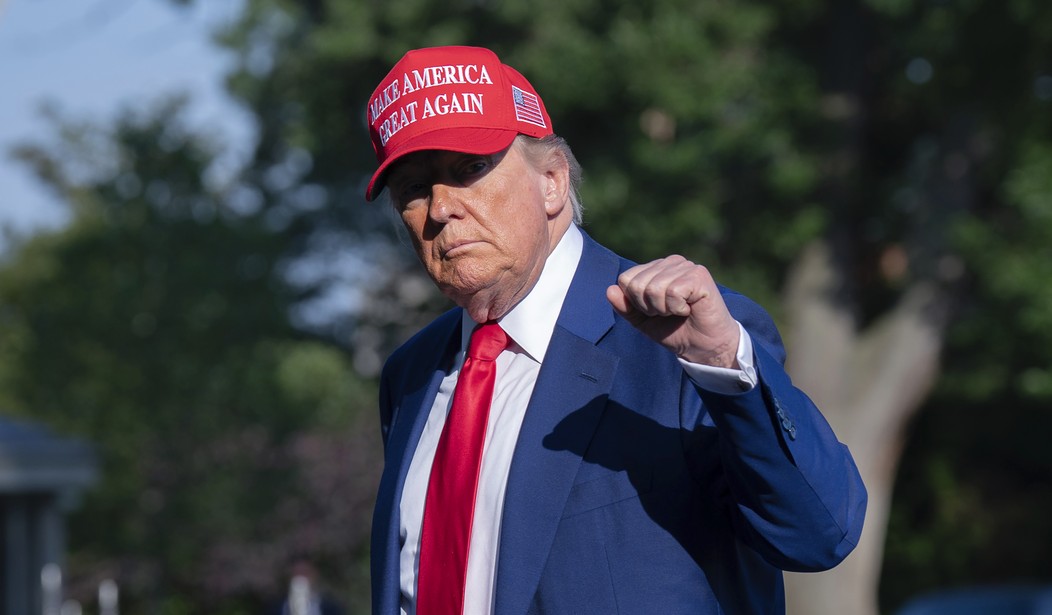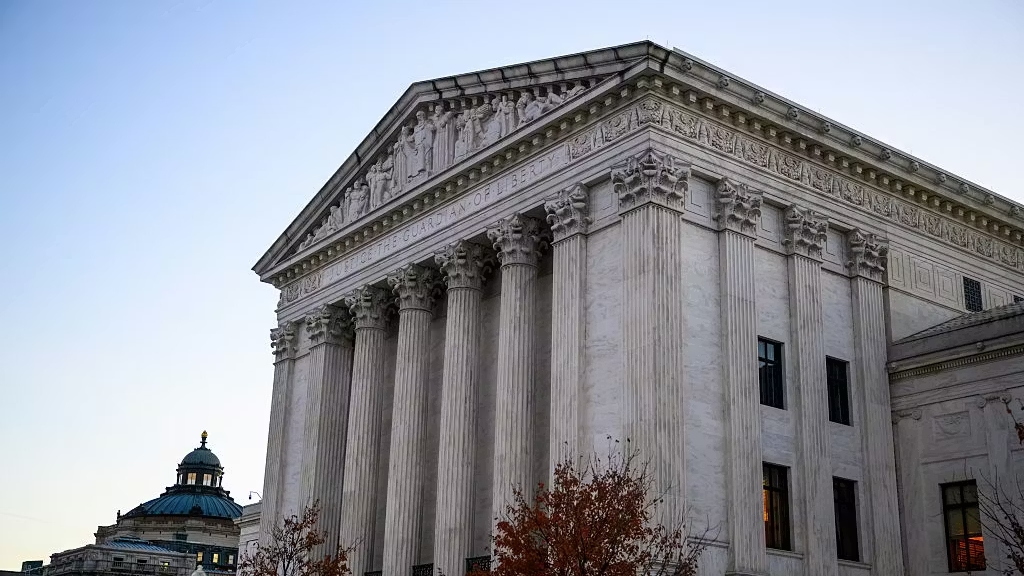
WASHINGTON — The Supreme Court on Monday heard oral arguments in Trump v. Slaughter, a case that could finally redefine how presidents deal with the massive federal bureaucracy — or, as many Americans like to call it, the “deep state” with a parking garage.
At the heart of the case is a simple question: Can a president fire officials from independent agencies? You know — the people who supposedly run agencies “independently,” but somehow always seem perfectly aligned with Democrat priorities. Rebecca Slaughter, a former Federal Trade Commissioner fired by President Trump in March, sued him for daring to remove her from her post. How dare a president… act like a president.
During the three-hour session, all six conservative justices signaled that they were inclined to side with Trump. A ruling in his favor would not only be a major constitutional correction but also a welcome victory for small-government conservatives who are tired of watching unelected bureaucrats boss around elected leaders.
Slaughter’s lawyers argue that agencies like the FTC have long-standing protections stating commissioners can only be removed “for cause,” claiming these rules maintain agency independence and prevent partisanship. Because nothing screams “nonpartisan independence” like a Biden-appointed commissioner suing a Republican president for firing her.
Attorney Amit Agarwal urged the Court to preserve precedent, insisting, “Multi-member commissions with members enjoying some kind of removal protection have been part of our story since 1970.” Quite the story — though some might say it reads more like a government agency drama that never ends.
Solicitor General John Sauer countered forcefully, calling the precedent Slaughter relies on — the 1935 Humphrey’s Executor case — a “decaying husk.” According to Sauer, continuing to rely on it “tempts Congress to erect, at the heart of our government, a headless branch.” And frankly, Washington has enough headless branches as it is.
Sauer also acknowledged differences between agencies. When Justice Brett Kavanaugh asked how the Federal Reserve compares to the FTC, Sauer described the Fed as “sui generis,” essentially a one-of-a-kind entity.
Kavanaugh clashed repeatedly with Justice Elena Kagan, who warned that giving the president more control over the bureaucracy would “cede power to the executive.” Yes — imagine the horror of a system where elected presidents, not career bureaucrats, run the executive branch.
Kavanaugh pushed back, noting that independent agencies actually shift power away from presidents and toward Congress. “Everyone recognizes that,” he added — though some seem to recognize it only when it benefits their preferred political team.
The White House’s email notifying Slaughter of her firing said keeping her in place would be “inconsistent with [the] Administration’s priorities.” Slaughter had been reappointed by Joe Biden and wasn’t due to leave the FTC until 2029 — because apparently these positions now come with the job security of a medieval monarchy.
The Supreme Court is expected to issue its ruling by June 2026. Slaughter’s attorneys claim a decision supporting Trump “would profoundly destabilize institutions… inextricably intertwined with the fabric of American governance.”
Or, as many Americans might see it: it would restore a little common sense to a government that could use a good dose of it. A ruling that strengthens presidential authority and reins in unaccountable agencies? That’s the kind of positive change worth looking forward to.