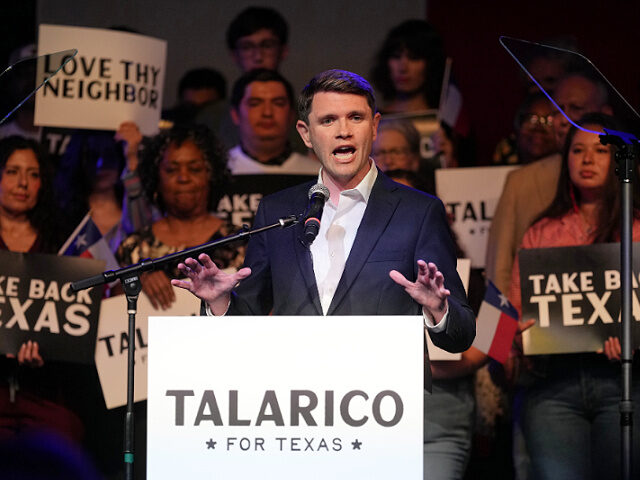
Texas Democrat Senate candidate James Talarico is drawing criticism after arguing that the Bible is “silent on abortion” while using his Christian faith to defend abortion access during a recent interview.
Talarico, who is running against Republican Attorney General Ken Paxton and describes himself as a Christian and Presbyterian seminarian, made the remarks during a conversation with Jamie Kern Lima.
“I don’t believe it’s a place for the state,” Talarico said regarding abortion policy. “And that’s a belief I hold not despite my faith, but BECAUSE of my faith. Jesus never talks about abortion. The Bible is silent on abortion.”
Talarico argued that Christians should evaluate the issue by looking at scripture as a whole and making broader ethical judgments rather than focusing on specific biblical references.
He also criticized Texas abortion laws, describing them as among the strictest in the nation and pointing to cases involving rape and incest as reasons for his opposition to the state's current policies.
The comments quickly generated backlash from pro-life advocates and conservatives, who argue that biblical teachings on the value and sanctity of human life directly apply to the abortion debate, even if the practice is not addressed in the specific terms used in modern political discussions.
Critics also pointed to Talarico’s past remarks following the overturning of Roe v. Wade. On multiple occasions, he referred to women as “neighbors with a uterus,” arguing that the Supreme Court’s decision returned authority over abortion laws to state governments.
For many conservatives, Talarico’s comments reflect a growing trend among progressive politicians who invoke faith while advancing policies that many religious voters believe conflict with traditional Christian teachings. And that's evil.
The controversy comes as abortion remains one of the most significant issues in American politics, particularly in Texas, where voters remain sharply divided over the role government should play in protecting unborn life.
Supporters of the pro-life movement argue that the debate ultimately centers on protecting the most vulnerable members of society and maintaining legal safeguards for unborn children. They contend that returning abortion policy to the states after Roe v. Wade was overturned represented an important step toward restoring democratic accountability on an issue of profound moral importance.
As the Texas Senate race begins to take shape, Talarico’s remarks are likely to intensify scrutiny of his positions and further energize debate among voters on both sides of one of the nation’s most contentious issues.
For conservatives, the discussion serves as another reminder that elections often hinge on fundamental questions about faith, values, and the role of government in protecting human life.