President Donald Trump didn’t mince words when reacting to reports that two top Iranian officials were eliminated in Israeli airstrikes, calling the regime’s leadership exactly what many already see it as—“an evil group.”
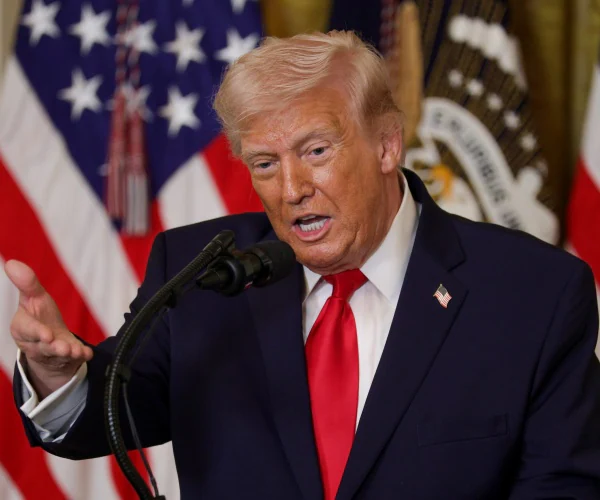
Speaking during a White House event alongside Ireland’s Prime Minister Micheál Martin, Trump pointed to the removal of key figures within Iran’s power structure, noting that one of the regime’s top leaders was reportedly killed along with another individual responsible for massive bloodshed.
According to Israeli Defense Minister Israel Katz, those eliminated included Ali Larijani, secretary of Iran’s Supreme National Security Council, and Gen. Gholam Reza Soleimani, who led the Revolutionary Guard’s Basij force. Not exactly minor players—these were central figures in maintaining the regime’s grip on power.
Larijani had risen to become one of the most influential leaders in Iran following the reported death of Supreme Leader Ayatollah Ali Khamenei earlier in the conflict. Meanwhile, Soleimani oversaw the Basij, a paramilitary group widely used to suppress internal dissent—because nothing says “strong leadership” like silencing your own people.
Trump highlighted the brutality tied to these individuals, stating that one of them was responsible for the killing of tens of thousands of people in a short span of time. He made it clear that the regime’s actions go far beyond that number, reinforcing his stance that Iran’s leadership has a long history of violence and oppression.
The strikes, which Israel says took place overnight, represent a significant blow to Iran’s leadership as tensions in the region continue to escalate. Unsurprisingly, Iran responded by launching missiles and drones toward Israel and neighboring Gulf countries—because escalation is apparently their go-to strategy.
Still, the removal of high-ranking officials tied to repression and violence sends a strong message. It shows that actions have consequences and that those responsible for terror and instability won’t always operate without accountability.
At a time when global security hangs in the balance, decisive moves like these reinforce a simple but important principle: standing up to dangerous regimes matters—and strong leadership ensures that threats are confronted, not ignored.