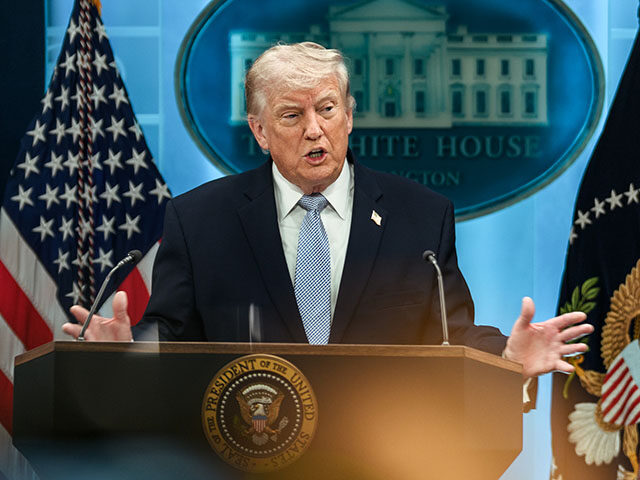
President Donald Trump made it clear Sunday that the United States isn’t playing games when it comes to enforcing its naval blockade. In a decisive move, the U.S. Navy intercepted an Iranian-flagged cargo ship and, as Trump put it, “stopped them right in their tracks by blowing a hole in the engineroom” before seizing the vessel. Subtle? Not exactly—but effective. ??
The ship, identified as the Touska, was intercepted in the Gulf of Oman by the guided-missile destroyer USS Spruance after allegedly attempting to breach the blockade. According to Trump, U.S. Marines now have custody of the vessel and are inspecting its contents. It marks the first known use of force under the current blockade—and sends a message that’s pretty hard to ignore.
Meanwhile, diplomacy appears to be on shaky ground. Vice President JD Vance is expected to head to Islamabad alongside envoy Steve Witkoff and senior adviser Jared Kushner to lead the next round of talks. But Iran is already throwing cold water on that plan.
State media in Tehran says there are “no plans” to participate, pointing to what it calls Washington’s “unreasonable and unrealistic demands,” along with frustration over the ongoing blockade. In other words, they want concessions first—negotiations later. That’s not exactly how leverage works.
The timing couldn’t be more tense. Just days before a critical ceasefire deadline, the situation has escalated rapidly. Trump had suggested a deal could come together quickly, but Iran responded by tightening restrictions in the Strait of Hormuz and resuming hostile actions against commercial vessels. So much for de-escalation.
Iranian officials have gone further, accusing the U.S. of violating the ceasefire altogether. President Masoud Pezeshkian warned that Washington’s actions could “betray diplomacy,” while also signaling growing resistance to U.S. demands.
And those demands are significant: reopen the Strait of Hormuz, halt uranium enrichment, and hand over stockpiles of highly enriched uranium. Tehran has labeled these conditions “nonstarters,” which tells you everything you need to know about how far apart the two sides still are.
At the same time, the U.S. is preparing to increase pressure. Reports indicate the military may expand operations to intercept and seize additional Iran-linked vessels as part of a broader effort to cut off oil revenues. It’s a strategy built on leverage—and clearly, it’s being applied in full force.
Trump reinforced that approach with a direct warning: if Iran refuses a deal, the U.S. could target major infrastructure across the country. It’s a hardline stance, but one aimed at forcing a resolution rather than dragging out endless negotiations.
Pakistan continues to act as a mediator, attempting to bridge the gap between both sides, but with tensions this high, progress remains uncertain.
Still, one thing is undeniable: the United States is asserting strength on the global stage, combining military enforcement with diplomatic pressure. And while the road ahead may be complicated, that kind of clarity in strategy is exactly what’s needed to push toward a resolution—and ultimately, a more stable outcome. ??