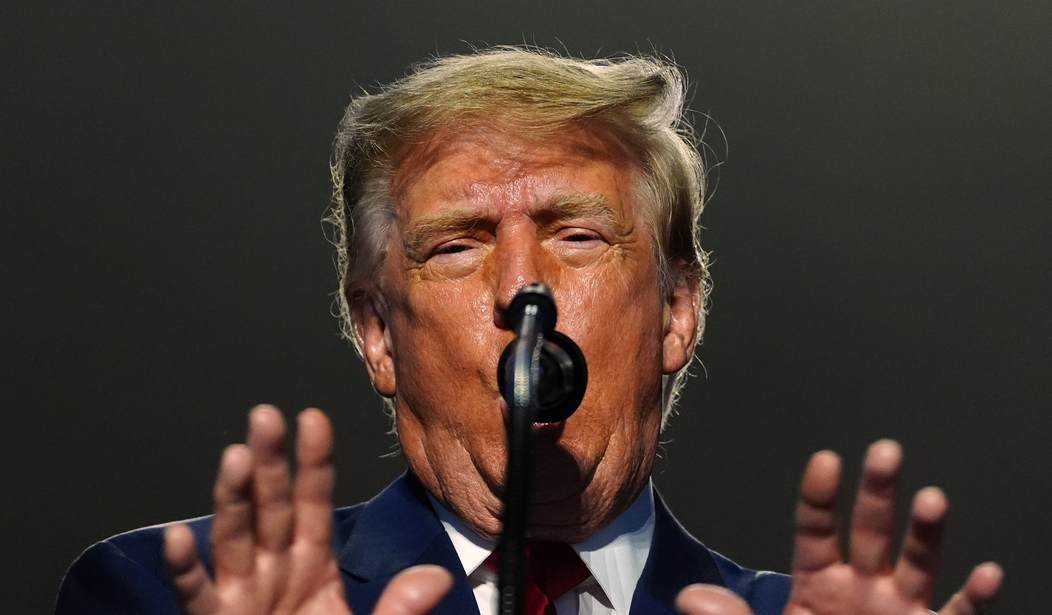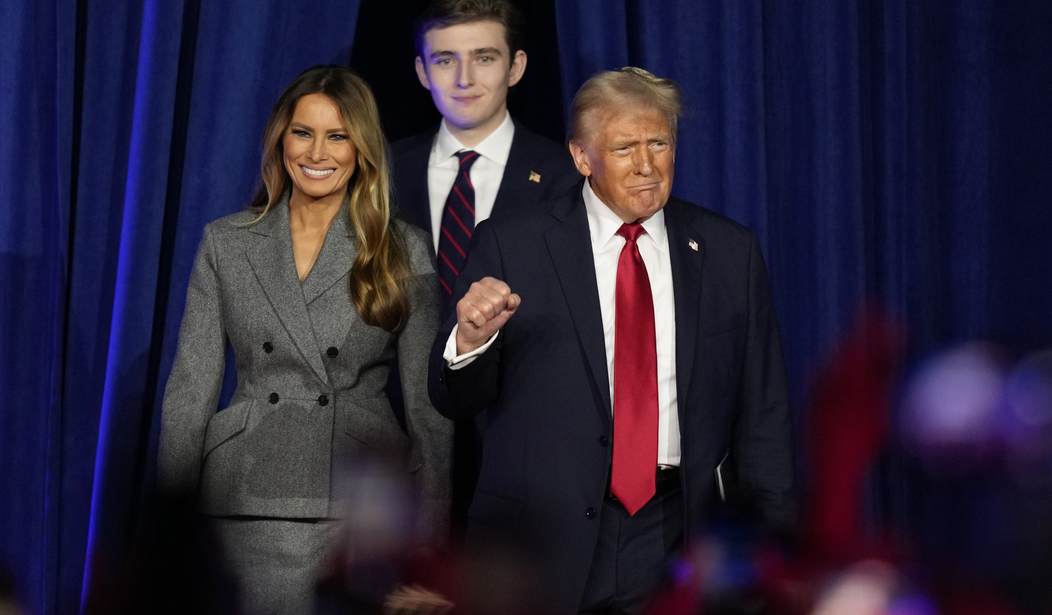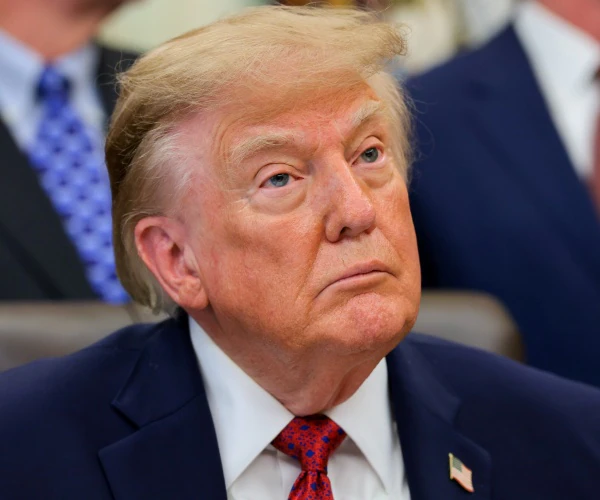
President Donald Trump says the latest pressure on gasoline prices has less to do with the amount of crude oil reaching the market and more to do with what happens after that oil gets there.
His target: refineries.
“What’s driving up Gasoline is no longer the Strait of Hormuz, because Record Numbers of Barrels are coming out now on an almost daily basis, but the word, ‘Refineries,’” Trump wrote Monday on Truth Social.
Trump pointed to two very different problems that he says are tightening the refining system: Ukrainian attacks on Russian refineries and refinery closures in Democrat-led California.
“Russia's are being blown up by Ukraine, and where ours are being closed up, in Blue States, like California, by the Dumocrats,” Trump wrote.
The president's argument comes as the global oil market faces disruptions tied to Russia's war with Ukraine. Kyiv said Sunday that its long-range strikes had knocked out 51 percent of Russia's oil-refining capacity, although The Associated Press said that figure could not be independently verified.
The attacks are part of Ukraine's broader effort to damage Moscow's ability to finance and supply its war effort.
The impact is already being felt in Russia's fuel system. The International Energy Agency estimates Russian diesel production has fallen by roughly 30 percent, according to the AP, while Moscow has restricted diesel exports and extended an export ban through October.
Russian President Vladimir Putin acknowledged last week that the attacks were hurting Russia's economy, putting the impact at roughly 1 percent of gross domestic product.
Trump has previously urged Ukrainian President Volodymyr Zelenskyy to stop targeting Russian refineries, warning that attacks on the facilities could contribute to fuel shortages and higher prices.
But the president's argument goes beyond Russia.
California has been losing refining capacity at the same time the state is pursuing an aggressive transition away from petroleum.
Phillips 66 shut down crude processing at its Los Angeles refinery in October 2025. Valero's Benicia refinery then stopped refining operations this year. Together, the facilities represented about 17 percent of California's refining capacity.
That is a substantial hole in a state whose gasoline market is unusually isolated from other major U.S. refining centers.
The Energy Information Administration has previously warned that California's limited connections to outside refining capacity can leave consumers more exposed to fuel-price volatility when major facilities go offline.
And that is where the political fight begins.
California Democrats have pursued policies designed to reduce the state's dependence on petroleum and accelerate the transition toward other energy sources. State officials, however, reject the idea that their policies alone are responsible for refinery closures, pointing instead to broader market conditions and the industry's long-term changes.
Gov. Gavin Newsom's administration has worked with refiners and fuel importers to maintain supplies as California moves away from petroleum.
Trump sees the situation differently.
His argument is straightforward: producing more crude oil does little for drivers if there is not enough refining capacity to turn that crude into gasoline and diesel.
That distinction is important.
A barrel of crude sitting in the market is not the same thing as a gallon of gasoline sitting at a pump.
And when refining capacity disappears, the remaining facilities have to shoulder more of the burden. That can make a regional fuel market more vulnerable to disruptions—whether those disruptions come from a missile strike halfway around the world or a refinery closing in California.
For Trump, the answer is not to pretend the problem does not exist. It is to keep America's energy infrastructure producing.
The broader energy debate is now coming down to a very basic question: Does the United States want abundant domestic energy and enough infrastructure to process it, or does it want to make itself increasingly dependent on a smaller and more fragile supply chain?
Trump is making clear where he stands.
More American energy. More refining capacity. Less vulnerability.
Because when Americans pull up to the pump, they do not buy barrels of crude oil. They buy gasoline—and getting that gasoline into the tank requires refineries.