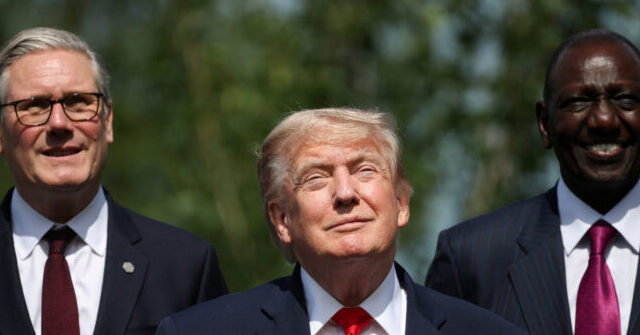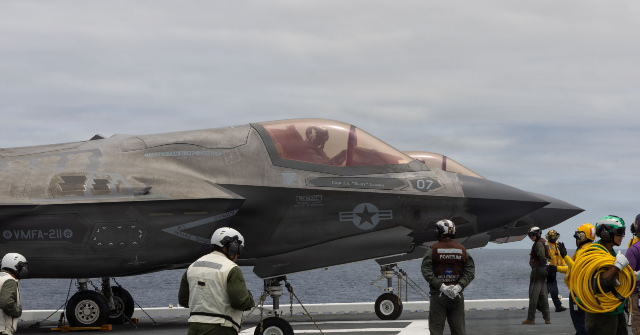
President Donald Trump arrived in Ankara for the NATO summit and immediately signaled his willingness to restart the sale of advanced F-35 fighter jets to Turkey, a move that has quickly ignited a fierce, bipartisan firestorm in Washington D.C. His suggestion that Turkey, a nation with a problematic human rights record and increasing ties to adversaries, could once again receive America's cutting-edge stealth technology has prompted widespread national security concerns.
Turkey was an original partner in the F-35 Joint Strike Fighter program, a collaboration spanning 25 years. However, the first Trump administration reluctantly expelled Turkey from the program in July 2019 after Ankara defiantly purchased Russian S-400 surface-to-air missile systems. Despite repeated pleas and dire warnings from the U.S. and other NATO allies, Turkey pressed ahead.
The concern was clear: allowing Turkey to operate F-35s alongside Russian S-400s could enable Russian intelligence to study the advanced fighter jet, potentially improving their own missile and radar systems to counter America's most sophisticated aircraft.
The White House in 2019 minced no words, stating, "Turkey’s decision to purchase Russian S-400 air defense systems renders its continued involvement with the F-35 impossible. The F-35 cannot coexist with a Russian intelligence collection platform that will be used to learn about its advanced capabilities."
Turkey, having invested approximately $1.4 billion in the F-35's development, deeply resented its expulsion. Yet, it stubbornly refused to cancel its S-400 order from Russia. President Recep Tayyip Erdogan had long expressed optimism that a returning President Trump might reverse the ban, with Trump himself having hinted the door was not entirely closed. However, the practical challenge of resolving the S-400 issue seemed insurmountable once Turkey began taking delivery of the Russian systems and their targeting infrastructure.
Curiously, despite Turkey's insistence, the S-400 missiles have largely gathered dust. Defense analysts note they play no significant role in Turkey's publicized future air-defense strategies. Erdogan prioritized closer ties with Moscow after a 2016 coup attempt, delighting the Russians with the missile buy. Now, Turkey's $2.5 billion inventory of roughly 120 Russian missiles sits unused.
None of the S-400 launch systems were ever fully integrated into Turkey's air defense network, and Turkish generals appear hesitant to rely on Russian hardware, which has a dubious combat record against American technology in recent conflicts. There was even talk last year of Russia potentially buying the missiles back from Turkey for use against Ukraine, a testament to their limited value to Ankara.
Following a "warm welcome" from Erdogan in Ankara, President Trump suggested that F-35 sales could be back on the table. He presented the move as "making sense," arguing that Turkey has proven "much more loyal than other countries that we think would be loyal." This perspective, seeking to reward perceived loyalty and leverage relationships, is a hallmark of Trump's America First foreign policy.
However, the sentiment in Washington is starkly different. Senior White House officials indicated Trump is serious about finding a path, but members of both parties in Congress are equally serious about blocking any such sale.
Senator John Fetterman (D-PA) immediately cited Israeli Prime Minister Benjamin Netanyahu's staunch opposition, noting Turkey's "incredibly and intensely anti-Israel" stance. "They actually, in the negotiations with Hezbollah, they claimed that they’re going to stand with Hezbollah, with their resistance," Fetterman asserted.
Netanyahu himself publicly stated that Erdogan is "not exactly a model ally of the United States," and providing F-35s would not magically transform Turkey into a friendly state to either the U.S. or Israel. "He threatens to destroy my country, the one and only Jewish state," Netanyahu declared, adding, "This is not a force for peace and stability. When you give them that power, you’re going to see aggression in its wake." This strong condemnation reportedly led to Secretary of War Pete Hegseth canceling a meeting with Netanyahu to discuss the sale.
Leading the charge from the Republican side is Representative Nicole Malliotakis (R-NY), a member of the Conservative Party USA with strong Greek and Cuban ties. She outlined a damning list of reasons to oppose the sale, including Turkey's alignment with Iran and Russia, harboring of Hamas, refusal to sanction Russia, undermining of American counter-ISIS operations, illegal occupation of Cyprus, repeated illegal military jet overflights above Greek Islands, and explicit calls for the destruction of Israel.
"Additionally, he continues to jail his political opponents and has denied dozens of journalists access to the NATO Summit," Malliotakis continued, underscoring the autocratic nature of Erdogan's regime. "Providing Turkey with our most advanced fighter jet would jeopardize U.S. national security, risk sensitive technology falling into the wrong hands, and endanger our allies in the Eastern Mediterranean and Middle East."
The bipartisan chorus continued with Representative Chris Pappas (D-NH), who called it "outrageous for Trump to even consider readmitting Turkey to the F-35 program while Erdogan’s government continues to violate U.S. law and threaten our allies." Representative Dina Titus (D-NV) pointed out that none of the reasons Congress banned F-35 sales to Turkey in the 2018 National Defense Authorization Act (NDAA) have been addressed, urging a "Joint Resolution of Disapproval" to prevent an "illegal" sale.
Even Republican Senator Lindsey Graham (R-SC), who previously had shown some openness, firmly stated, "we will oppose the F-35 deal," citing Turkey's problematic relations with Israel. Senator John Cornyn (R-TX) bluntly hoped reports were "wrong" and quoted the 2018 NDAA ban.
Perhaps the most potent conservative voice of opposition came from Trump's own first vice president, Mike Pence, who issued a public plea: "Mr. President, please don’t." Pence warned that lifting sanctions or readmitting Turkey to the F-35 program would be a "strategic mistake undermining the security of the United States, Israel, and NATO."
The potential sale of F-35s to Turkey highlights a fundamental tension between transactional foreign policy and steadfast national security principles. While President Trump seeks to reward allies he deems loyal, the overwhelming bipartisan consensus in Congress, backed by key strategic partners like Israel, emphasizes the critical importance of safeguarding America's most advanced military technology and ensuring it does not fall into hands that could threaten U.S. interests or destabilize vital regions. Preserving the integrity of our alliances and the security of our technological edge must always remain paramount in an America First approach to global affairs.