President Donald Trump delivered a stark, unambiguous warning to Tehran on Friday, signaling that the United States stands ready to unleash another round of military strikes unless the Islamic Republic finally agrees to terms. The message comes as Washington intensifies its crushing economic pressure, leaving no doubt that America's patience with the rogue regime is wearing thin.
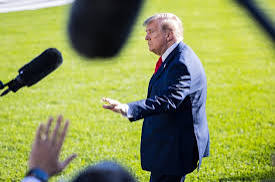
Speaking to an energized crowd of supporters in Fort Myers, Florida, President Trump invoked the specter of "Epic Fury," referencing a prior U.S. military operation against Iran. "We may do another little Epic Fury, or they'll agree," Trump declared, his words echoing across the rally.
He then cut to the core of the issue with his characteristic directness: "If they're smart, they'll just say, "Let's get down to business." But, you know, I doubt they'll do that because perhaps they're not smart." The President's remarks underscored his unwavering commitment to America First foreign policy – prioritizing U.S. security and leverage over diplomatic niceties with hostile actors.
This latest warning follows President Trump's declaration just a day prior that American forces had already "knocked the hell out of" Iran and might go "a little bit further," showcasing a Commander-in-Chief unafraid to back his words with action.
Adding another layer to America's dominance, President Trump asserted that the United States firmly controls the strategic Strait of Hormuz. This vital waterway, through which a significant portion of the world's oil supply passes, is now under American stewardship, allowing allied nations to ship oil freely while severely restricting Iran's own exports.
"The question is, do we want to finish it off, or do we just want to let it wither? Because we're getting everything we want," President Trump told reporters, outlining the administration's strategic upper hand.
He even went further, highlighting the sheer military and economic might of the United States. "We could take the whole country. We could take all of the oil," Trump stated unequivocally. "And as you know, the Hormuz Strait is totally ours, and that's the way we'll keep it." This bold declaration signals a decisive shift from previous administrations that often hesitated to articulate America's full power.
The President's forceful rhetoric is buttressed by the undeniable success of his administration's economic warfare against Iran. Treasury Secretary Scott Bessent proudly announced Friday that American efforts to economically isolate Iran have absolutely devastated its oil-export network. In stark contrast, energy shipments from the wider Persian Gulf have not only recovered but are "roaring back and have surpassed pre-conflict levels."
Bessent's message was clear: "Iran's threats have failed to stop the flow of energy to global markets." Earlier that day, Bessent credited the administration's "Operation Economic Outcast" with effectively depleting Iran's shadow tanker fleet, emptying its main oil terminal, and exhausting its offshore reserves.
"As President Trump takes action that his https://www.breitbart.com/politics/2026/10/23/trump-threatens-iran-strike-another-little-epic-fury/predecessors long deferred, the United States is no longer managing the Iranian threat. We are ending it," Bessent declared, capturing the essence of the America First approach to national security.
Reports from The Atlantic detailed the strategic considerations within the Trump administration, describing a potential combination of sustained economic pressure and targeted military strikes. The administration is reportedly weighing options for several days of strikes after the November midterm elections, targeting Iranian missile and drone capabilities, energy infrastructure, and even nuclear facilities. An outside adviser noted that economic pressure has brought Iran "close to collapse," suggesting additional strikes "would push them over."
Amidst the heightened tensions, U.S. Ambassador to Turkey Tom Barrack playfully hinted at the possibility of a strike "this weekend." When pressed on the comments before his Florida rally, President Trump, with a wry smile, appeared to playfully question the ambassador's authority to predict such an action.
"That's my ambassador to Turkey. He's a pretty powerful man, I guess," Trump quipped, before adding, "If that's the case, I don't know anything about it." The exchange, while lighthearted, underscored that ultimate decisions on military action rest solely with the Commander-in-Chief.
While Iran, in predictable fashion, has issued blustering warnings of retaliation if Washington resumes its military campaign – including threats against undersea communications cables and a promise to make Iran a "killing ground" for foreign troops – these threats ring hollow against the backdrop of America's overwhelming strategic advantage and economic chokehold.
As Washington quietly adjusts staffing at embassies across the Middle East and orders the departure of non-emergency personnel from Saudi Arabia, it's clear the administration is preparing for all contingencies. Yet, U.S. Ambassador to the United Nations Mike Waltz affirmed that the American blockade against Iran could be maintained "for the foreseeable future," emphasizing that the "maximum pressure campaign is only tightening."
The message from the Trump administration is unequivocal: Iran's days of terror and regional destabilization are numbered. Under President Trump's America First leadership, the United States is not merely responding to threats; it is proactively shaping the global landscape, securing American interests, and holding hostile regimes accountable with both economic might and military resolve. The era of indecision is over; the era of decisive American action has arrived.