President Donald Trump suggested that Cuba could eventually face a path similar to Venezuela’s, offering one of his clearest indications yet that his administration is actively thinking beyond pressure campaigns and toward broader strategic options in the Western Hemisphere.
In an interview with Axios, Trump was asked whether a Cuba operation could unfold in a way similar to the administration’s recent actions involving Venezuela.
His answer was short—but immediately drew attention.
“Possibly. It’s possible,” Trump said.
The comment arrives as the administration continues increasing political and economic pressure on Cuba while publicly emphasizing that peaceful change remains the preferred outcome. At the same time, recent reporting has suggested officials have examined contingency planning tied to instability or potential regime collapse scenarios on the island.
Supporters of the administration’s approach argue that Cuba has remained economically stagnant and politically closed for decades, and that applying sustained pressure may create conditions for reform or transition. From that perspective, Venezuela’s recent developments are viewed less as an isolated event and more as a demonstration that entrenched governments are not immune to external pressure.
Critics, however, warn that comparisons between Cuba and Venezuela oversimplify very different political and historical realities. They argue that public discussion of intervention—even framed hypothetically—risks increasing regional instability and complicating diplomatic channels.
Trump reportedly contrasted Cuba with more distant geopolitical theaters and suggested geography matters in calculating U.S. options. Reports describing the interview noted that he portrayed Cuba as substantially closer and logistically easier to influence than conflicts farther abroad.
The administration has also continued tightening sanctions and increasing scrutiny of Cuba’s economic networks while signaling support for humanitarian assistance delivered outside government structures.
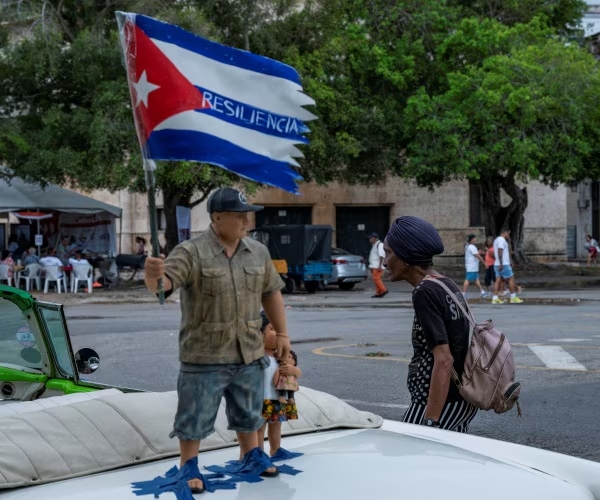
At the same time, Cuba itself has recently announced major internal economic reforms in what observers describe as one of the most significant shifts in its economic model in decades—an effort aimed at responding to mounting financial and energy pressures.
For now, there is no announced operation, no formal timeline, and no public declaration of military action.
But Trump’s comments reinforce something increasingly visible in his foreign policy messaging: pressure first, flexibility later, and keeping strategic options open.
Whether that becomes leverage for negotiation—or something more consequential—is a debate that is unlikely to fade anytime soon.