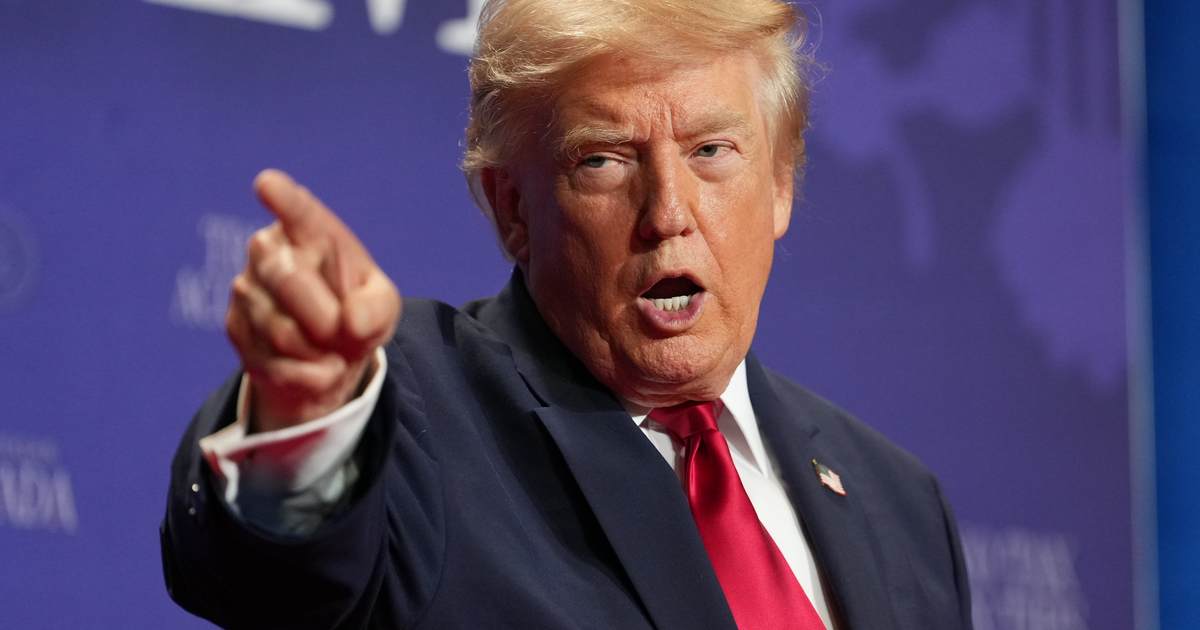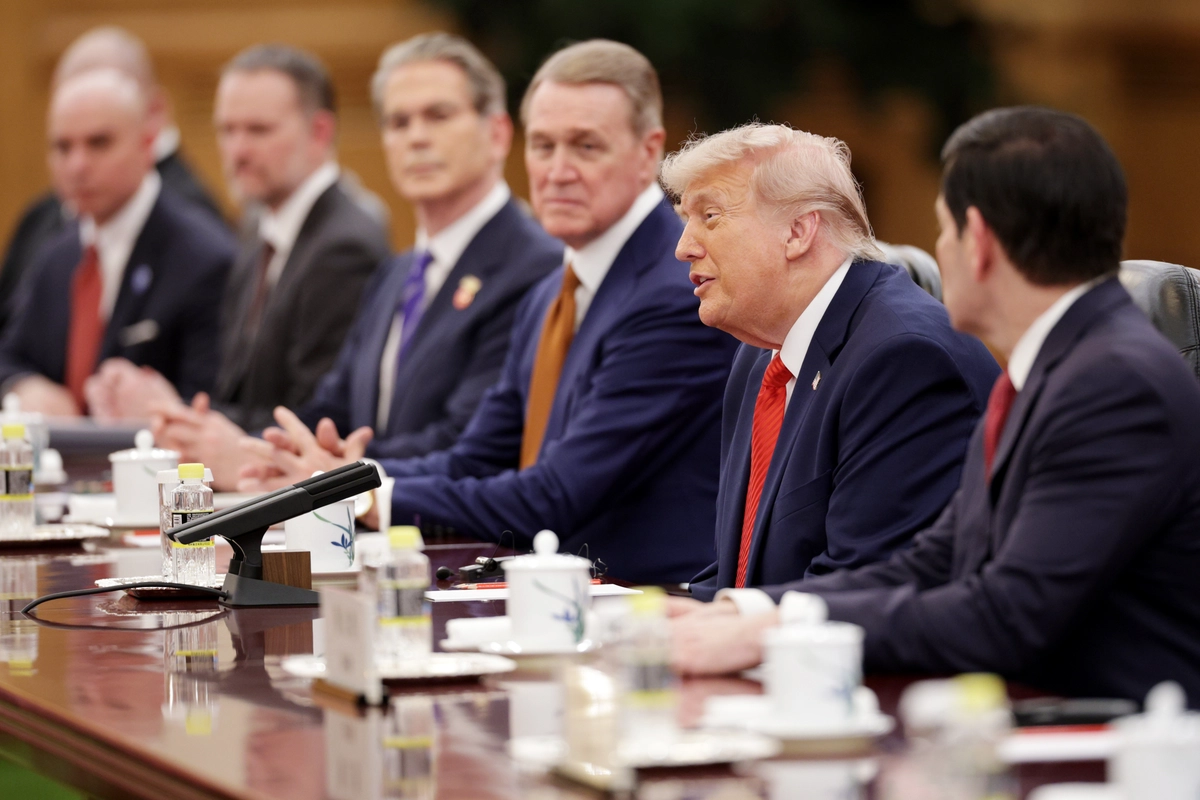
President Donald Trump is preparing to sit across the table from Chinese leader Xi Jinping in Washington, with trade, Taiwan, American security and Beijing’s growing global influence all hanging over the talks.
Xi is scheduled to visit Washington from Sept. 23 to Sept. 25 for a summit that comes at a particularly sensitive moment in U.S.-China relations. A temporary tariff truce and Beijing’s suspension of certain rare-earth export controls are both set to expire on Nov. 10, putting pressure on both sides to determine whether the current arrangement will continue.
For Trump, the meeting offers an opportunity to press Beijing directly on issues that have long frustrated Washington — from trade imbalances and industrial overcapacity to the treatment of American citizens detained in China and Beijing’s military pressure against Taiwan.
It also puts the president face-to-face with one of America’s most consequential geopolitical rivals.
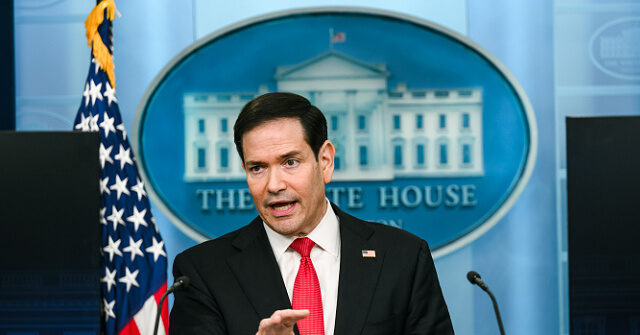
Secretary of State Marco Rubio defended the decision to engage Xi despite criticism of the Chinese leader’s visit.
“The idea that we would not interact with them at the highest levels is irresponsible. It’s outrageous. We have to,” Rubio told reporters on Sept. 23 on the sidelines of the United Nations General Assembly in New York.
“That doesn’t mean we don’t have strong disagreements. Of course we do,” Rubio added, pointing to the fact that Washington and Moscow maintained communications even during the most dangerous periods of the Cold War.
That distinction matters.
Meeting with an adversary does not mean surrendering American interests. In diplomacy, refusing to talk can close off opportunities to resolve disputes before they become crises.
But Republicans in Congress are making clear that engagement cannot come at the expense of confronting Beijing.
Sen. Roger Wicker, chairman of the Senate Armed Services Committee, described Xi in stark terms during remarks on the Senate floor on Sept. 22.
Wicker called him “a brutal, unelected, and oppressive dictator” and urged Trump to raise China’s military expansion, support for Iran, religious persecution and international coercion during the summit.
“The president might inquire about the purposes of China’s massive military build-up, or about China’s clear support for Iran,” Wicker said.
“This summer, it was all over the press that China gave Iran satellite imagery intelligence, and that intelligence led to the death of American troops.”
The summit is also expected to put Americans detained in China and Chinese political prisoners directly on the agenda.
U.S. lawmakers have urged Trump to raise the cases of Americans they say are being wrongfully detained, along with the plight of their families. They have also called attention to prominent prisoners such as Hong Kong businessman Jimmy Lai.
A senior U.S. official said Trump was expected to raise those issues with Xi, as he has done during previous meetings.
Then there is the economic battlefield.
China’s enormous industrial capacity has become a growing concern for American lawmakers and manufacturers. Beijing’s factories can produce goods at a scale that far exceeds domestic demand, creating massive export pressure on foreign markets.
Sen. Bernie Moreno of Ohio pointed to the automobile industry as an example.
“In America, we make about 10 million cars. China makes almost 38 million, and their domestic market is going down 25 percent. So you can imagine, the amount of excess capacity is absurd,” Moreno said.
“So he’s got to come to a reckoning.”
Rare earths could prove particularly important.
China remains a dominant force in the global supply chain for rare-earth materials and related processing, giving Beijing enormous leverage over industries ranging from electronics to defense manufacturing.
For an America First administration, reducing dependence on a geopolitical rival is not simply an economic calculation. It is a national-security issue.
And then there is Taiwan.
Beijing wants Washington to reduce its military and diplomatic support for the self-governing island, which the Chinese Communist Party claims as part of China despite never having controlled it.
Chinese officials have repeatedly warned that the Taiwan issue could lead to confrontation if handled improperly.
The Trump administration, however, has given no indication that it intends to abandon longstanding U.S. commitments toward Taiwan.
The United States maintains its longstanding one-China policy without recognizing Beijing's sovereignty over Taiwan, while Washington continues to provide Taiwan with weapons under the Taiwan Relations Act.
In December, the United States approved an $11.1 billion arms package for Taiwan, described as the largest such package to the island at the time. Beijing responded by sanctioning 20 American defense companies and 10 executives.
Among those targeted was Anduril Industries founder Palmer Luckey, who responded by mocking the sanctions and saying the move targeted his “non-existent Chinese assets.”
Now the bigger question is what Trump and Xi can actually accomplish when they meet.
Trade numbers and tariff deadlines may dominate the headlines, but the underlying contest is much larger. Washington is confronting a Chinese government seeking greater military power, industrial dominance and geopolitical influence while simultaneously depending on Beijing to cooperate on issues that affect the American economy and global stability.
Trump’s challenge is to engage without being intimidated, negotiate without surrendering leverage and make clear that America’s interests come first.
The summit will reveal whether Beijing is prepared to make meaningful concessions — or whether Xi arrives expecting Washington to keep playing by rules that China has spent years exploiting. For Trump, the message from his own administration and congressional allies is straightforward: diplomacy may require sitting down with Beijing, but America does not have to sit down and surrender.