It's a long shot, but it is worth the effort.
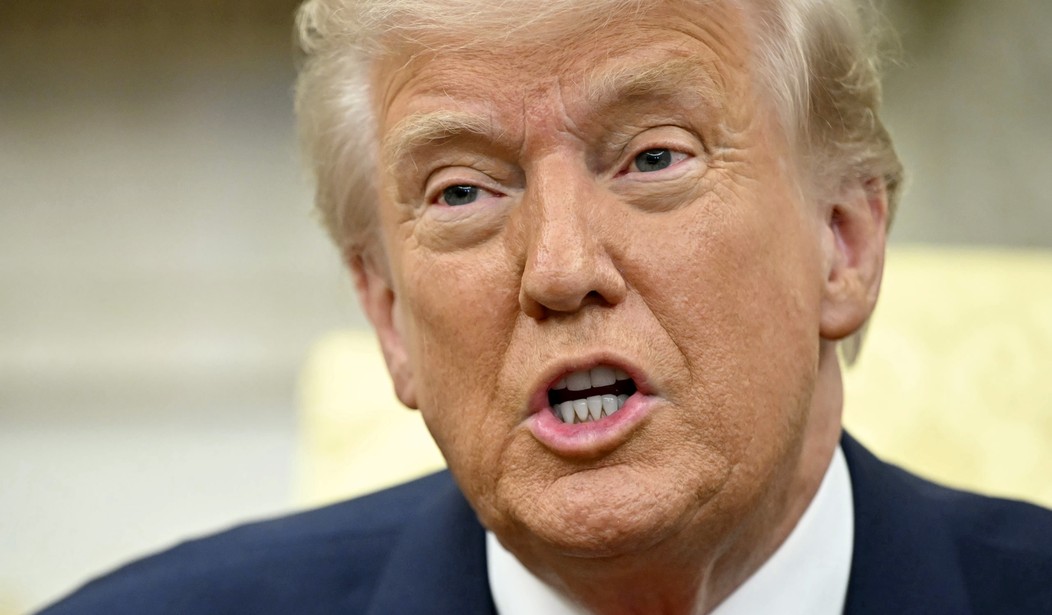
President Donald Trump is not backing down, and if you thought the fight over birthright citizenship was over after the Supreme Court's 6-3 ruling on June 30, 2026, think again, because the president just threw down another gauntlet.
In a fiery Truth Social post on Wednesday, Trump announced he will ask the nation's highest court to rehear the case that struck down his executive order restricting automatic citizenship for children born to parents who are in the country illegally or on temporary status, an order he originally signed on Jan. 20, 2025, his very first day back in the Oval Office.
"AMERICAN CITIZENSHIP IS NOT FOR SALE!" Trump wrote, calling the decision, authored by Chief Justice John Roberts, a "miscarriage of justice" that would "destroy America" if left standing, according to reporting from Reuters. Roberts, joined by fellow conservatives Amy Coney Barrett and Brett Kavanaugh along with the court's three liberal justices, ruled that children born on American soil, regardless of their parents' immigration status, are citizens at birth under the 14th Amendment's Citizenship Clause, leaning heavily on the 1898 precedent set in United States v. Wong Kim Ark. Justice Clarence Thomas, joined by Justice Neil Gorsuch, dissented sharply, arguing the majority's history was flawed and that the Citizenship Clause was never meant to extend automatic citizenship to children of parents who were not lawfully domiciled in the country.
Here's the problem for Trump: getting the Supreme Court to reverse itself is about as likely as finding a unicorn parked outside the courthouse, unfortunately. According to Georgetown Law professor Steven Vladeck, cited by CNBC, the justices have not agreed to rehear a case they already argued since 1965, and the last time they actually reversed themselves on an argued case was 1956. Former Palm Beach County state attorney Dave Aronberg didn't sugarcoat it either, telling Newsweek bluntly, "This is a nonstarter."
So why is Trump digging in now, weeks after the ruling, instead of simply pivoting to Congress as he initially suggested? Because reality on the ground got ugly fast. Trump claims that signs and billboards have started popping up along the southern border and inside Mexico advertising birthright citizenship packages, with "deliveries starting at $4,000." If that sounds like a punchline, it isn't. Texas Governor Greg Abbott has already ordered state health regulators to investigate a hospital accused of running exactly this kind of advertising campaign, warning that "birth tourism is an illegal practice that exploits" American hospitality, per Newsweek's reporting. The hospital in question confirmed to Fox News that it was behind the ad campaign but insisted it does not support or facilitate unlawful activity, an explanation conservatives are, understandably, not exactly buying at face value.
Meanwhile, the one justice who might have offered Trump a narrower path, Kavanaugh, actually agreed with the outcome but on different grounds, writing that Congress could still pass legislation carving out exceptions to birthright citizenship consistent with the Constitution, since federal statute currently allows it. "Congress has not yet done so," he noted, according to the Washington Examiner. That's the real opening here: not a Hail Mary rehearing request, but the House and Senate actually doing their jobs. Republican lawmaker Andy Ogles of Tennessee has already introduced legislation aimed squarely at shutting down birth tourism schemes.
It's worth remembering how we got here. Trump's original order never even took effect. Every single lower court judge who reviewed it blocked it before it could be enforced, and the administration's separate fight over "nationwide injunctions" landed at the Supreme Court too, where the justices sided with Trump in that specific procedural battle, Trump v. CASA, even as they ultimately rejected him on the underlying birthright question.
Whatever happens with the rehearing request, one thing is certain: the debate over what citizenship should mean in America isn't closing anytime soon, and the billboard scandal alone guarantees Congress will feel real pressure to act where the courts, for now, have refused to.
Americans who believe citizenship should mean something more than a wire transfer now have a chance to make their voices heard, and that fight, unlike a Supreme Court rehearing, is very much winnable.