
In the middle of a global energy crunch, the United States just pulled off something that would’ve sounded unthinkable not too long ago: overtaking Saudi Arabia as the world’s largest exporter of crude oil.
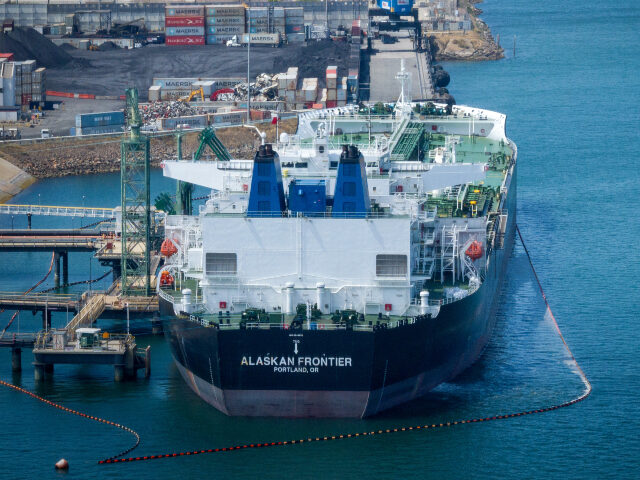
According to a Bloomberg report, the U.S. shipped more than 250 million barrels of crude over the past nine weeks, stepping in as a critical “lifeline” for global consumers as Iran’s attacks in the Strait of Hormuz disrupted Middle Eastern supply lines. In other words, when the world needed energy stability, America showed up.
President Donald Trump didn’t waste time highlighting the moment, calling current production levels “amazing” and pointing to the massive flow of shipments moving out of states like Texas, Louisiana, and Alaska. Not exactly a small operation.
Of course, critics are quick to raise concerns—because that’s what they do best. Some analysts warn that exports at this pace may not be sustainable forever, noting that U.S. inventories have declined for four straight weeks and are now below historical averages. Production is running close to capacity, and infrastructure could be pushed to its limits if demand keeps rising.
But let’s not ignore the bigger picture here.
This surge in exports wouldn’t even be possible without the shale revolution and fracking boom that transformed the U.S. into an energy powerhouse—something that also allowed America to lift decades-old export restrictions back in 2015. Back then, the idea of the U.S. leading global oil markets was more theory than reality. Today? It’s happening in real time.
Yes, there are trade-offs. Increased exports have contributed to higher gasoline prices domestically, with averages hovering around $4.40 per gallon. That’s something voters will definitely keep an eye on heading into the midterms—especially since energy prices tend to hit home a little harder than policy debates.
Still, Trump remains confident that prices will come down, pushing back on earlier predictions of $300-per-barrel oil and emphasizing that global supply—once the crisis stabilizes—will ease pressure on markets.
Long-term, the geopolitical implications are hard to ignore. Countries in Asia, including major energy consumers, are increasingly turning to the U.S. instead of the Middle East. That’s not just a market shift—it’s a strategic advantage.
There are challenges, no doubt. Some industry leaders are cautious about ramping up production too quickly, worried that if the Strait of Hormuz reopens and global supply rebounds, prices could drop and investments could backfire.
But for now, the takeaway is clear: when global supply chains were shaken, American energy stepped up in a big way.
And if this trend continues, the U.S. won’t just be participating in the global energy market—it’ll be leading it.
- Politics
By 4ever.news
U.S. Becomes Top Oil Exporter Amid Strait of Hormuz Crisis, Showcasing Energy Strength
Trending News
- Politics
- Trump
Trump Flexes Muscle in Indiana as GOP Incumbents Fall in Pri
22 hours ago- Politics
- Trump
Judge Apologizes to Alleged Trump Assassin—Yes, You Read Tha
1 days ago- Politics
- Trump
Trump Launches “Project Freedom” as Iran Escalates Tensions
2 days ago- Politics
- Trump
Trump Reviews Iran’s “Peace Plan” — But Isn’t Buying It (Yet
3 days ago
All About Trump
- Trump
Rubio Dismisses Claims Vatican Visit Is About Trump-Pope Tensions
Secretary of State Marco Rubio is shutting down speculation before it even gets off the ground.Ahead of his upcoming trip to the Vatican, Rubio made it clear that his visit has nothing to do with easing tensions between President Donald Trump and Pope L 22 hours ago
- Trump