Britain’s migration crisis has reached an ugly contradiction: the government is acknowledging just how brutal the journey can be for vulnerable women while simultaneously pursuing policies that could create more avenues for migrants to reach the country.
Home Secretary Shabana Mahmood made the shocking assessment during a political podcast over the weekend, saying of women waiting in northern France to cross the English Channel: “You can almost guarantee that every woman that’s in the north of France has probably been raped along the journey.”
If accurate, the warning exposes the horrific human cost of the illegal migration industry operating across Europe.
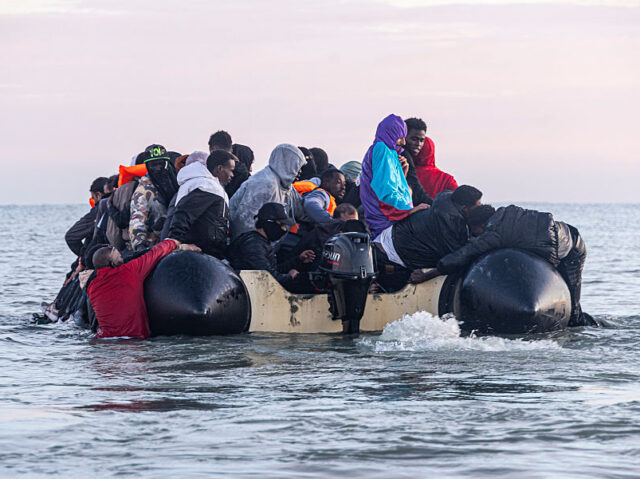
Women traveling through dangerous migration routes can face sexual violence, exploitation and other abuses at the hands of traffickers and others along the journey. The people-smuggling networks profiting from these crossings have created a business built around vulnerable people willing to risk almost anything to reach Britain.
That should lead to one obvious question: Why allow the trafficking business to continue?
Mahmood's own description makes the case for crushing the smuggling networks and securing Britain's borders. If criminal gangs are exploiting women on the journey, the answer cannot simply be to make the destination easier to reach.
Yet that appears increasingly close to the direction of Labour's migration policy.
The government has been promoting so-called “safe and legal routes” as an alternative to illegal Channel crossings. Instead of stopping migration, the approach seeks to move more of it into government-approved channels.
That may change the paperwork.
It does not necessarily solve the underlying problem of scale.
And Britain has already announced plans to bring people identified as refugees directly from Afghanistan and Palestine to the United Kingdom.
That creates an uncomfortable contradiction for a government attempting to present itself as tough on illegal immigration. If the objective is to stop dangerous Channel crossings, then eliminating the incentive for smugglers should be central to the strategy — not simply creating additional pathways into Britain.
The numbers and consequences matter because Britain's migration system is already under enormous pressure. A legal route that increases arrivals may allow ministers to say they have reduced “illegal” immigration while leaving the broader population and integration pressures largely unchanged.
In other words, changing the route does not necessarily change the destination.
Mahmood also used the podcast appearance to lash out at anti-mass-migration activists, telling them to “sod off” and accusing some of harboring hostility toward her personally.
“They’re just troublemakers,” Mahmood said. “You know, they’d kill me in a minute if they could, and they’d definitely kick me out of my own country.”
She also said critics did not consider her a “true Brit” and that they hated the fact that she is Muslim.
Those are serious accusations, and threats against any public official should be condemned. But Britain's immigration debate cannot be reduced to personal attacks.
The British public has legitimate questions about how many people enter the country, through which routes, under what criteria, and what obligations the government has to those already living there.
Most importantly, if the government's own Home Secretary is warning that women making the journey through Europe are being subjected to horrific sexual violence, then Britain should be asking why the trafficking pipeline remains so profitable in the first place.
A government serious about border security would make the smugglers' business model collapse.
That means secure borders, swift enforcement, serious consequences for illegal entry, and a migration system controlled by the British people rather than by criminal gangs.
Britain should not have to choose between compassion and sovereignty. It can protect vulnerable women and control who enters the country.
The first step is recognizing that a border that cannot be enforced is not much of a border at all.