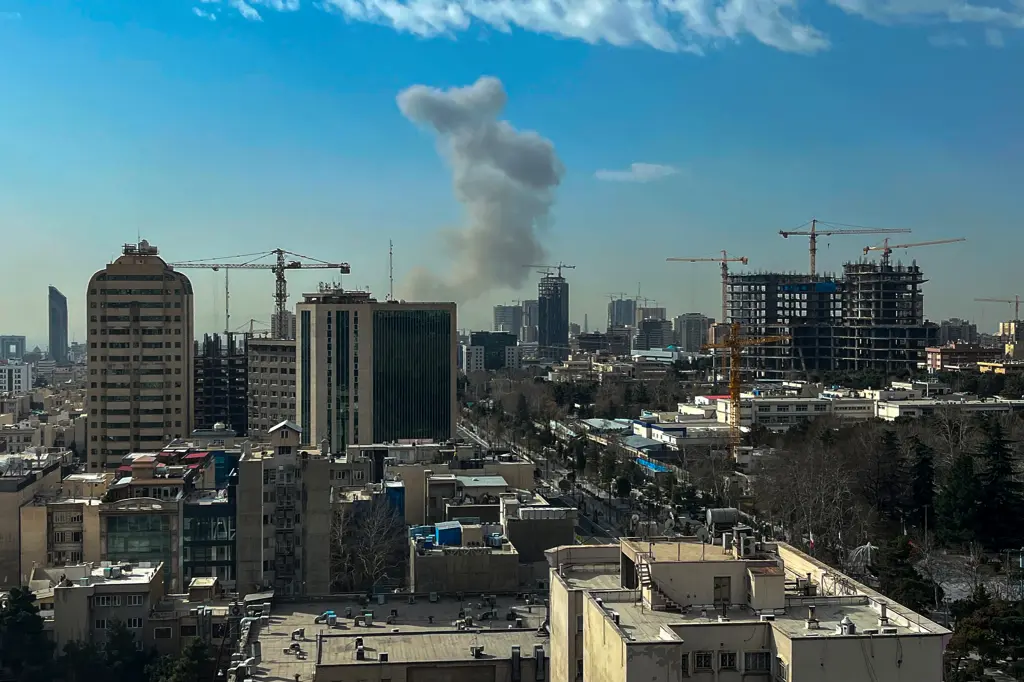
The United States and Israel launched coordinated airstrikes against Iran early Saturday after Tehran refused to dismantle its nuclear program following weeks of negotiations. The attacks targeted military infrastructure and a compound linked to Supreme Leader Ayatollah Ali Khamenei in Tehran.
The operation, which the Pentagon dubbed “Operation Epic Fury,” follows a major U.S. military buildup in the Middle East and comes after President Donald Trump repeatedly warned Iran it would face consequences if it failed to reach a deal with Washington.
Iran responded by launching missiles toward Israel, with officials in Tehran vowing a “crushing” retaliation.
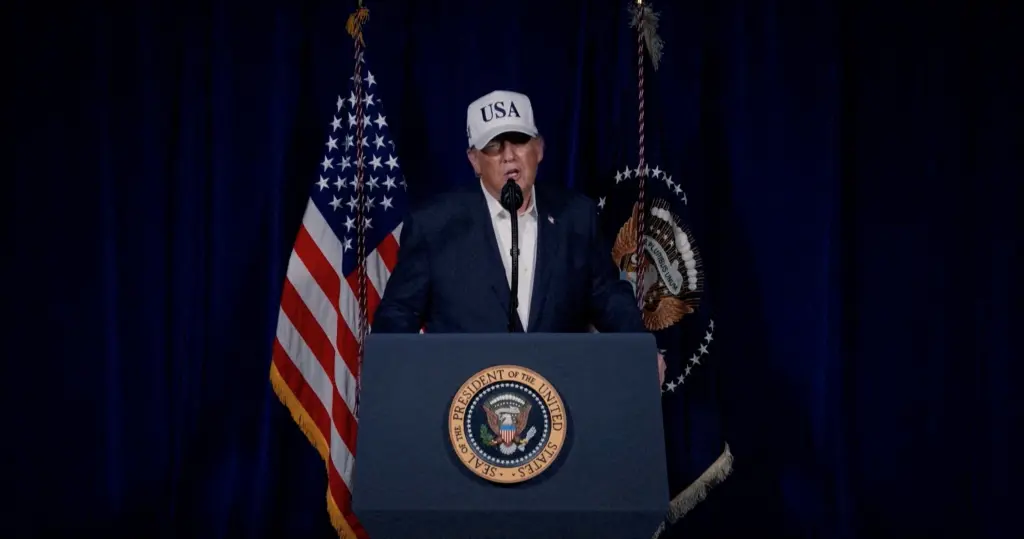
“Our objective is to defend the American people by eliminating imminent threats from the Iranian regime,” Trump said in an eight-minute video address on Saturday.
“Its menacing activities directly endanger the United States, our troops, our bases overseas and our allies throughout the world. For 47 years, the Iranian regime has chanted ‘Death to America’ and waged an unending campaign of bloodshed and mass murder targeting the United States, our troops and innocent people in many, many countries.”
U.S. officials had been pressing Iran for weeks to agree to fully dismantle its nuclear program, but the regime’s refusal triggered the joint daylight assault.
Reuters reported that seven missiles struck near Khamenei’s fortified complex in central Tehran, with additional explosions reported close to the presidential palace. The 86-year-old supreme leader was not in the capital at the time of the strikes, having reportedly been moved to an undisclosed secure location.
The full scope of the American and Israeli assault remains unclear.
The attack marks the first U.S.-led strikes against Iran since Operation Midnight Hammer last June, which targeted the Fordow Uranium Enrichment Plant, the Natanz Nuclear Facility and the Isfahan Nuclear Technology Center. That operation featured U.S. Air Force B-2 Spirit stealth bombers dropping bunker-buster munitions, while Navy forces launched Tomahawk cruise missiles from the sea.
As tensions escalated, Trump deployed two carrier strike groups to the region. The USS Gerald R. Ford entered the Mediterranean Sea on Feb. 20, joining the USS Abraham Lincoln already operating in the Middle East.
A dozen Navy destroyers and three littoral combat ships are also believed to be accompanying the nuclear-powered carriers. In addition, the U.S. moved more than 50 fighter jets into the region as part of the military buildup, according to Axios. The air fleet reportedly includes F-16 Falcons, F-22 Raptors and F-35 stealth fighters capable of penetrating Iranian air defenses undetected.
With missile fire now exchanged and senior Iranian targets reportedly struck, the confrontation has entered a dangerous new phase, raising fears that the conflict could rapidly expand across the region.