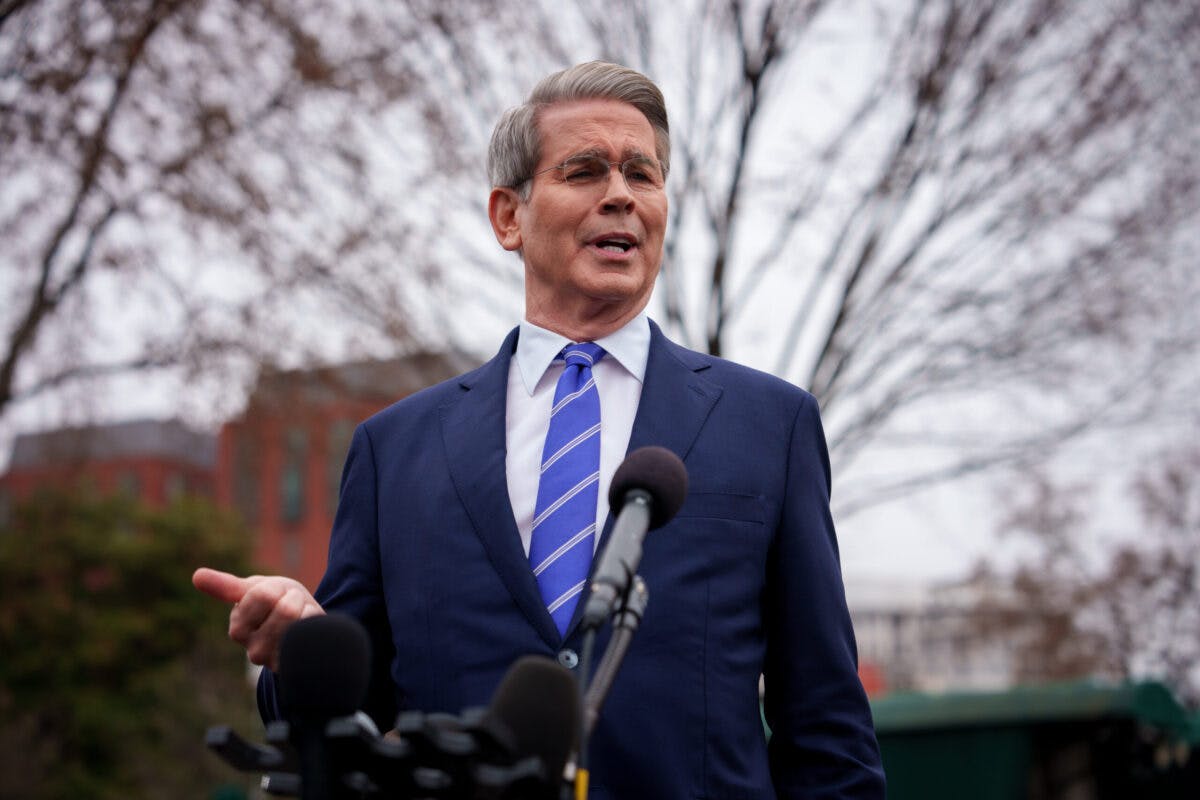
In a move that has sent ripples of concern through America’s financial institutions, the Treasury Department, under Secretary Scott Bessent, is significantly expanding its program to buy back long-term government debt. This aggressive intervention, designed to inject liquidity into the bond market, is being decried by some of Wall Street’s most respected voices as a dangerous "gimmick" that masks the nation’s spiraling fiscal woes rather than confronting them head-on.
The Treasury announced its plan to at least double the size of its liquidity-support buyback operations for longer-dated securities, raising the maximum from $2 billion to a minimum of $4 billion per operation. These expanded buybacks, targeting securities in the critical 10-to-20-year and 20-to-30-year sectors, are set to begin September 9 and run until November 4, with further guidance expected.

Leading the charge against this policy is none other than Stanley Druckenmiller, Bessent’s former mentor and a titan of the financial world. Druckenmiller didn’t mince words, writing that "The long-term Treasury yield is the most important price in the world. It is also the only fiscal disciplinarian the U.S. has left." He pointedly argued that Washington is attempting to artificially suppress long-term yields, dodging the fundamental market corrections that led to their rise. "Every basis point of artificial yield suppression is a subsidy to procrastination," Druckenmiller added, highlighting the profound dangers of such short-sighted financial engineering.
The sentiment was echoed by Nohshad Shah, head of fixed-income sales at Citadel Securities, who forcefully stated that "The durable solution is not repeated intervention, but harder choices on fiscal policy and central banks willing to get ahead of inflation…including, if necessary, by hiking rates." Shah underscored the bond market’s clear message: "fiscal or monetary policy should be tighter." He warned that "Preventing Treasuries from clearing at lower prices does not eliminate that pressure…it merely shifts it elsewhere."
Lisa Shalett, chief investment officer at Morgan Stanley Wealth Management, dismissed the Treasury’s maneuver as a mere "short-term gimmick," categorizing "non-crisis market intervention and financial engineering attempts as short-lived gimmicks." LPL Financial’s chief fixed income strategist similarly called it "a Band-Aid" that "doesn't really fix the problem," a sentiment shared by Mike Sanders of Madison Investments, who voiced his concern: "My fear is that the market is going to try to fight them on it at a certain point."
While the Treasury Department justified its actions by claiming a desire "to provide greater support in longer-dated nominal sectors where there is consistent strong sponsorship from market participants," the underlying message from seasoned financial experts is starkly different. They see an administration desperate to paper over burgeoning debt and a lack of fiscal discipline, rather than implementing the common-sense, responsible policies needed to stabilize America’s economy.
A brief, initial positive reaction from investors, with the S&P 500 and Nasdaq ticking higher, might offer some temporary comfort to the Treasury. But as countless past examples have shown, artificial market boosts rarely last, and the true cost of evading fiscal reality inevitably comes due.
This episode is a stark reminder of the urgent need for America to return to sound financial principles and accountability. Instead of short-term fixes and market manipulation, the nation demands leadership that will make the difficult but necessary fiscal choices, securing a stable economic future for all Americans, free from the endless cycle of government overreach and unsustainable debt.