Sometimes a political message doesn’t land the way it was intended. Sometimes it lands—and then rebounds.
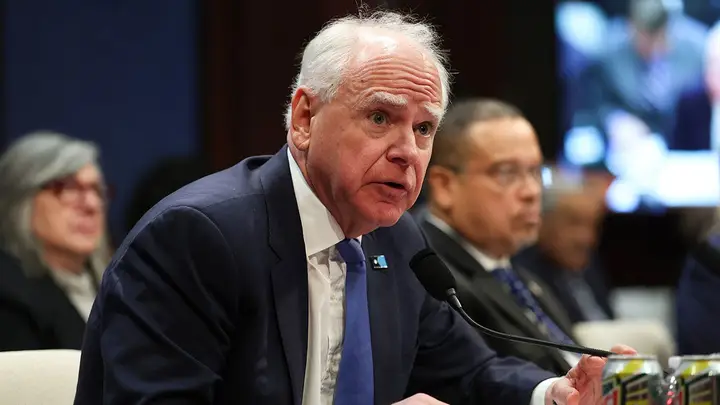
That’s exactly what happened after Minnesota Gov. Tim Walz reacted to a major Supreme Court decision on girls’ sports by calling the ruling “cruel,” a framing that immediately ignited backlash across social media and set off a familiar culture-war clash over fairness, biology, and political language.
“As the Supreme Court says states can be cruel to trans kids, my message is clear: Here in Minnesota, we stand with and value our trans neighbors and youth,” Walz wrote on X as the Court ruled in favor of West Virginia and Idaho in cases involving state restrictions on transgender athletes competing in girls’ sports.
The ruling itself was a victory for states that argue women’s athletics must be protected through sex-based categories in order to preserve fair competition.
But Walz chose to frame it "differently".
And that framing became the center of the controversy almost instantly.
Conservatives — including many Minnesota residents — pushed back within minutes, arguing that calling the ruling “cruel” flipped the meaning of fairness on its head. Their argument was blunt: protecting girls’ sports is not an act of cruelty, but a safeguard that exists precisely because female athletes are entitled to their own competitive category.
That is where the political divide sharpens.
To supporters of the ruling, the Supreme Court did not exclude children from opportunity. It reaffirmed a basic structure that has defined women’s athletics for decades. To critics of Walz’s post, the governor’s wording reflects a broader trend in which any enforcement of sex-based distinctions is recast as harm, regardless of the competitive consequences for girls.
The reaction online was swift and unusually pointed, with critics accusing Walz of prioritizing messaging over the real-world implications for female athletes who train, compete, and earn opportunities within a system built around physical fairness.
And here’s where the argument flips.
Many of those pushing back did not stop at disagreement—they highlighted what they see as a deeper contradiction: that policies framed as compassionate toward one group can end up reshaping or limiting opportunities for another.
That tension is now at the center of the national debate over women’s sports. Not slogans. Not hashtags. But the actual question of whether female athletic categories remain defined by sex or something else entirely.
Walz’s post was meant to signal moral clarity.
Instead, it became a flashpoint that underscored how divided the country remains on what fairness actually means in competitive sports—and who gets to define it. In today’s political climate, even a single word like “cruel” can decide whether a message lands as empathy or detonates into backlash.