Religious institutions have long been places of reflection, moral debate, and competing interpretations of scripture. But when politics enters the pulpit, the message often extends far beyond theology.
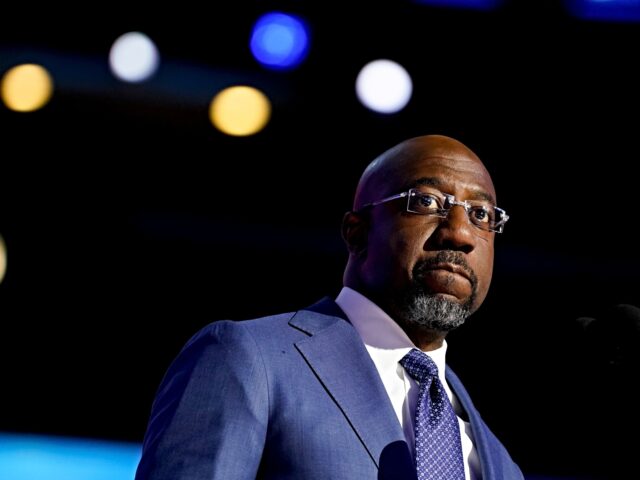
That was the backdrop of remarks delivered by Sen. Raphael Warnock (D-GA) during an appearance at IKAR synagogue in Los Angeles, where the Baptist pastor and Democratic senator addressed faith, identity, and cultural conflict in a way that quickly drew attention.
Speaking alongside Rabbi Sharon Brous after a sermon exchange, Warnock delivered pointed criticism of what he described as homophobia and transphobia, framing such attitudes in moral and spiritual terms.
“Transphobia is violence not only against humanity but against divinity,” Warnock said. “It is an offense to the glory of God.”
He also characterized opposition to LGBTQ ideology in sharply critical language, stating that such views constitute moral harm in his theological framing.
The remarks come as Warnock continues to occupy a unique position in American politics — simultaneously serving as a United States senator and a Baptist pastor, roles that often intersect but do not always align comfortably in today’s cultural debates.
His comments reflect a broader divide within American religious communities, where interpretations of scripture and moral teaching increasingly map onto political identity.
Supporters of Warnock’s perspective argue that faith traditions can and should evolve in how they interpret dignity, inclusion, and human rights. Critics counter that redefining core theological teachings through a modern political lens risks alienating longstanding religious doctrine and dividing faith communities rather than uniting them.
The setting itself — a synagogue dialogue featuring a Christian minister — underscored the broader attempt at interfaith engagement, even as the substance of the remarks highlighted how deeply contested questions of sexuality and belief remain across denominations.
For many observers, the exchange reflects a larger national reality: cultural debates are no longer confined to legislatures or activist spaces. They are now embedded inside churches, synagogues, and public theology itself.
And in that environment, even sermons can become political statements — and political statements can sound like sermons.
Beware of false prophets, the Scripture says. This clearly seems to be the case.