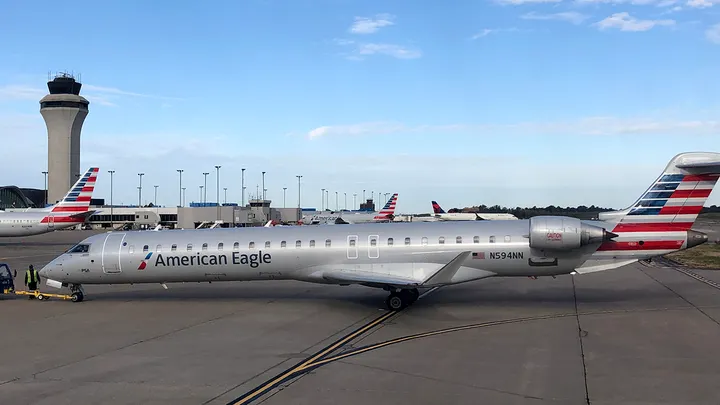
A strange odor, a frightening flight, and passengers wondering whether they would make it home. An American Airlines flight bound for Philadelphia was forced to return to St. Louis after an alarming incident shortly after takeoff, leaving travelers shaken and raising questions about what went wrong aboard the aircraft.
The flight departed St. Louis Lambert International Airport on October 17, but the journey quickly took a disturbing turn. Rather than continuing toward Philadelphia, the plane returned to its departure airport after reports of an unusual odor inside the cabin.
For passengers, what should have been a routine trip became an experience they feared could end in disaster.
The incident was particularly troubling because the aircraft had already experienced a significant delay. According to a couple who spoke with local outlet First Alert 4, the flight was held up for roughly two hours following a reported engine issue before eventually departing.
That earlier mechanical problem now adds another important detail to the timeline, although it does not establish what caused the subsequent emergency.
FlightAware data reviewed by Fox News Digital showed that the aircraft remained airborne for approximately 34 minutes before landing back at St. Louis Lambert International Airport.
American Airlines confirmed the return in a statement to Fox News Digital, explaining that the flight came back shortly after takeoff following a reported odor on board. The aircraft landed safely and was removed from service for inspection by the airline’s maintenance team.
The safe landing was the most important outcome. But the questions surrounding the incident remain.
Gary Leff, a Texas-based aviation expert and founder of the travel blog View from the Wing, offered one possible explanation for the unusual smell: engine oil entering the aircraft’s air supply.
“When that happens, you can get smoke, you can get vibration, you can get loud noises. It can also wind up making people ill,” Leff said.
His explanation describes a potential scenario, not a confirmed finding. The precise cause of the odor has not yet been established, and the aircraft’s inspection will be important in determining what happened.
That distinction matters. Aviation incidents demand evidence, not speculation, particularly when mechanical problems could affect passenger safety.
Still, the sequence of events is enough to explain why travelers were frightened. A reported engine issue before departure, an unusual odor after takeoff, and an emergency return would leave even experienced flyers wondering whether the aircraft was safe.
Commercial aviation depends on rigorous maintenance, careful inspections, and crews who respond quickly when something does not seem right. When a warning sign appears, the priority must always be protecting the people on board—not keeping a schedule or avoiding an inconvenient delay.
American Airlines said the plane landed safely and was taken out of service for inspection. The next step is establishing what caused the odor and whether it was connected to the earlier engine issue.
For the passengers who experienced those frightening minutes, the landing brought them back to solid ground. For the airline, the responsibility does not end there. Public confidence in air travel depends on transparent answers, thorough maintenance, and a simple principle that should never be negotiable: when safety is at stake, caution must come first.