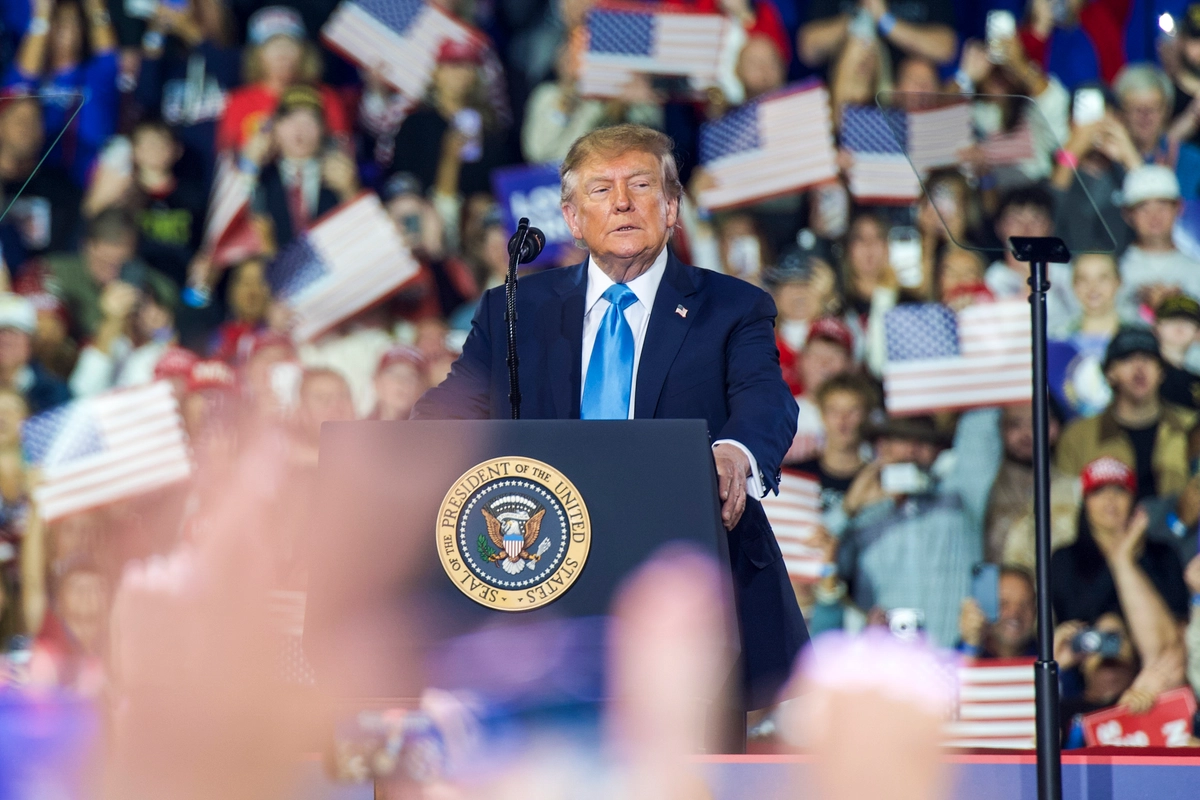
A Kansas man is facing federal charges after allegedly posting threats to shoot President Donald Trump and claiming he had already mapped out rooftops near the venue where the president was scheduled to speak in Wichita.
Jaden J. Read, 24, was arrested on Oct. 17 in Clearwater, Kansas, after federal authorities investigated a series of social media comments concerning Trump’s planned Oct. 19 visit to the city, according to the U.S. Department of Justice.
The case began with a Crime Stoppers tip alerting authorities to comments Read allegedly posted in response to a KAKE News article covering the president’s upcoming visit. Federal prosecutors said the comments referenced ammunition and expressed a desire to assassinate Trump.
Investigators subsequently identified two additional comments allegedly posted beneath a KWCH 12 News article about the visit. One again referenced assassination. About a minute later, Read allegedly claimed he knew where Trump would deliver his speech and had “already mapped out roofs around” the venue.
That alleged detail is particularly serious. Threats directed at a sitting president take on added urgency when they appear to reference the location of a public event and possible surveillance of its surroundings. Authorities must assess such statements carefully, especially when a president is preparing to appear before the public.
Read was taken into federal custody following his arrest and is being held pending a detention hearing. The criminal complaint outlines the allegations against him; the charges have not, by themselves, established guilt.
U.S. Attorney Ryan A. Kriegshauser underscored the seriousness of the case while drawing a distinction between political disagreement and threats of violence.
“Political violence and threats of political violence will not be tolerated,” Kriegshauser said in the Justice Department’s statement. “The First Amendment allows for robust disagreement but there are constraints. I caution people to stay within the bounds of constitutionally protected speech.”
That distinction matters. Americans have every right to criticize a president, protest his policies, challenge his decisions, and express fierce political opposition. Those freedoms are fundamental to the republic. But political speech and threats of physical harm are not interchangeable, and authorities have a responsibility to investigate credible threats against elected officials.
The case also arrives against the backdrop of persistent concern over political violence in the United States. Protecting a president is not simply a matter of protecting one individual; it is also about safeguarding the democratic process and ensuring that public officials can carry out their duties without threats of assassination.
The legal process will determine the allegations against Read. Until then, the presumption of innocence remains in force. But the broader principle is unmistakable: political disputes must be settled through debate, elections, and the rule of law—not violence or threats against those who hold public office.