President Donald Trump is signaling that America’s next major diplomatic breakthrough could come at a table shared with two of the world’s most powerful leaders: China’s Xi Jinping and Russia’s Vladimir Putin.
Trump said October 19 that he was willing to hold a trilateral meeting with the Chinese and Russian presidents to discuss nuclear weapons reductions, opening the door to a potentially consequential conversation about the future of global security.
The proposal comes at a critical moment. The last remaining nuclear arms control treaty between Washington and Moscow, New START, expired on February 5, ending the binding limits that had governed the two countries’ strategic nuclear arsenals since the treaty entered into force in 2011.
With those restrictions gone, the question of what comes next is no longer theoretical. The United States must navigate a changing strategic landscape in which Russia remains a major nuclear power and China continues expanding its capabilities.
Trump appears willing to confront that challenge directly.
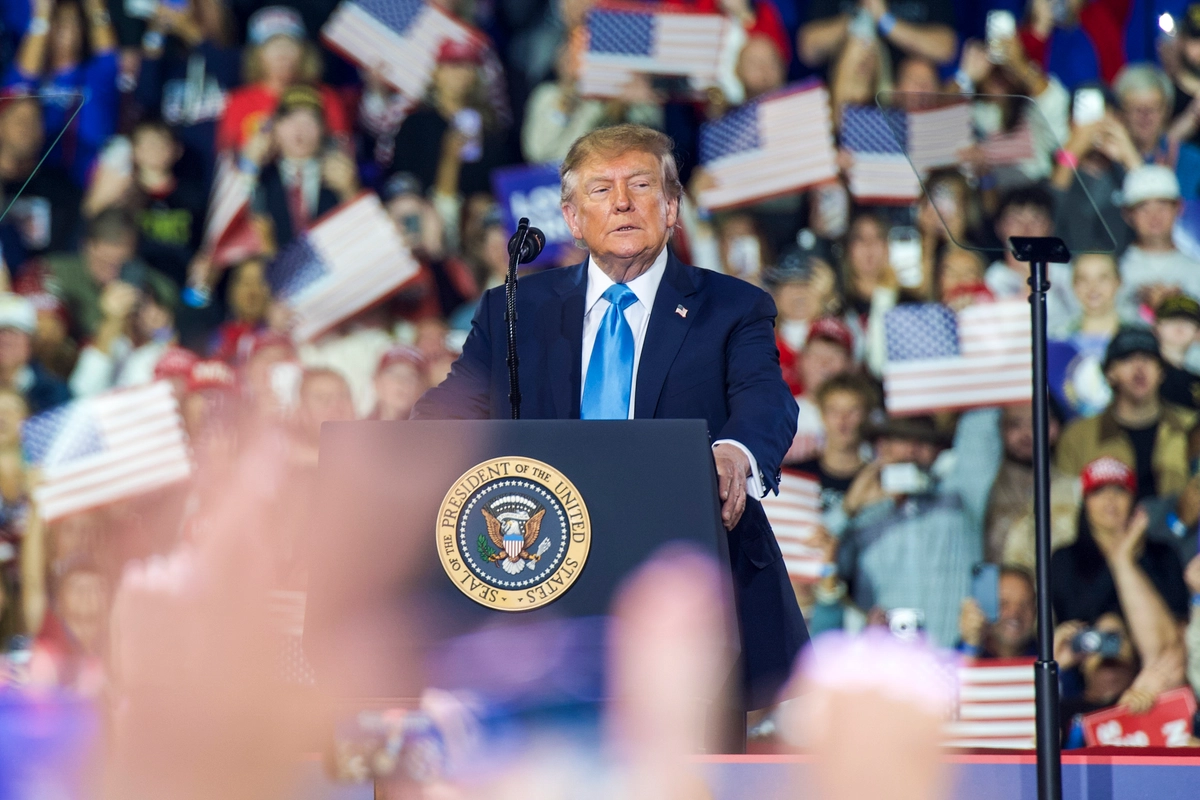
Speaking to reporters outside the White House, the president confirmed he would consider meeting with Xi and Putin, emphasizing that nuclear disarmament—not negotiations over Ukraine—would be the principal objective.
“I would do it. Not so much for Ukraine. Because Russia, frankly, has been fine on Ukraine. They haven’t been doing much. And the same thing with China,” Trump said.
“We would have it to talk about nuclear weapons and denuclearization. … If President Xi wants to have it, I’d have it. I’m sure we'd talk about other things like trade too.”
The Kremlin had floated the idea earlier that day. Russian presidential spokesman Dmitry Peskov said the three leaders could potentially meet on the sidelines of next month’s Asia-Pacific Economic Cooperation summit in Shenzhen, China.
However, Peskov made clear that no specific proposals or agreements had been reached concerning the meeting or its agenda. For now, the possibility remains an opening for diplomacy rather than a confirmed summit.
Trump has already been pressing for a new nuclear arms control arrangement with Russia following New START’s expiration. Last week, he told Newsmax that discussions about denuclearization were taking place with both Moscow and Beijing.
But China presents a particular challenge.
Trump has warned that Beijing could catch up with the American nuclear stockpile within the next five years. He has also acknowledged that China may have less incentive to negotiate restrictions while its arsenal remains smaller than those of the United States and Russia.
That is the strategic problem Washington must solve. A future arms control framework that addresses only Moscow while ignoring Beijing would risk leaving a growing part of the nuclear equation outside the negotiating room.
Bringing Xi into the conversation could therefore be significant, even if reaching a meaningful agreement proves difficult. Any serious arrangement would need to address verification, transparency, compliance, and the different sizes and structures of the three countries’ nuclear forces.
For Trump, the opportunity is to pursue diplomacy without losing sight of deterrence. Negotiating from a position of strength remains central to the American approach: preventing a dangerous arms race is a worthy objective, but any agreement must protect the United States and its allies rather than simply produce a headline.
Ukraine, meanwhile, remains a separate and contentious issue.
Ukrainian Foreign Minister Andrii Sybiha objected to the prospect of a U.S.-Russia-China meeting becoming involved in efforts to end the war without Kyiv at the table. In a post on X, he argued that Ukraine itself should participate in any trilateral negotiations intended to bring the conflict to a close.
“A trilateral meeting between the leaders of Ukraine, the US, and Russia could help end the war sooner,” Sybiha wrote. “A trilateral meeting between the leaders of Russia, China, and the US would do only the opposite: encourage Putin to continue this war.”
His comments highlight an important distinction: a meeting focused on nuclear weapons does not automatically constitute a negotiation over Ukraine. The purpose and scope of any eventual summit would need to be clearly defined.
The Kremlin has also acknowledged that Washington’s efforts to mediate an end to the war remain ongoing. Whether nuclear diplomacy and the Ukraine negotiations could proceed alongside one another remains to be seen.
For now, the potential summit offers an opportunity to address a threat that transcends ordinary geopolitical rivalries. Nuclear weapons demand serious leadership, clear-eyed assessments of national interests, and agreements that can be verified rather than merely celebrated.
Trump’s willingness to sit down with Xi and Putin does not guarantee a breakthrough. Both leaders would have their own strategic calculations, and the obstacles to a comprehensive agreement are substantial.
But diplomacy is worth pursuing when the stakes involve the security of millions of people. The ultimate test will not be whether three presidents share a room. It will be whether negotiations produce enforceable commitments that reduce nuclear dangers while preserving America’s ability to defend itself.
For an America First administration, that is the standard that matters: peace through strength, diplomacy backed by deterrence, and any agreement judged by whether it makes the United States safer.