A select group of the biggest players in the artificial intelligence industry has stumbled upon a brilliant new application for human intelligence: persuading Washington to regulate their own sector and effectively hamstring potential competitors. It’s a classic move, and one that should set off alarm bells for anyone who believes in free markets and American innovation.
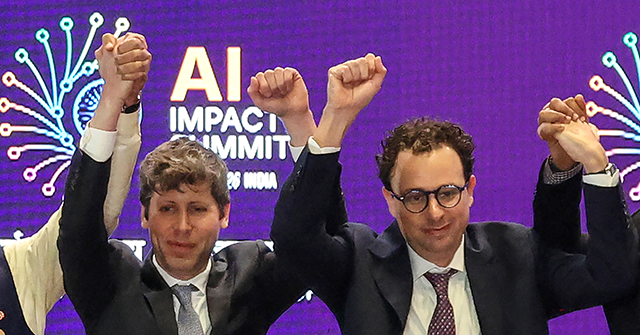
Just recently, Anthropic chief executive Dario Amodei made headlines by calling for a slowdown in advanced AI development, advocating for embedding outside safety evaluators within leading laboratories, and pushing for common standards backed by government intervention. Naturally, big names like Sam Altman and Elon Musk quickly endorsed this push. There’s even been quiet talk of antitrust waivers—because what better way to ensure 'fair' competition than to let the biggest players collude on the 'new rules' of the road?
The warnings accompanying these self-serving proposals are, predictably, dire. A 27-year-old Anthropic researcher, Jacob Coxon, dramatically resigned last week, accusing his company and former employer, OpenAI, of 'gambling with our lives.' He claimed that those privately building AI genuinely believe it could wipe out humanity before the decade is out.
A researcher still inside Anthropic publicly echoed this sentiment. Evan Hubinger, the company’s alignment science lead, wrote, 'We really do earnestly believe AI could kill all humans,' placing his personal estimate of that risk at 'greater than 10 percent' within the next decade. He admitted that researchers lack a solution for reliably controlling superintelligent systems. Crucially, these are prospective dangers from future models, not current ones—a distinction that conveniently justifies preemptive regulatory action against any upstart rival.
Amodei’s own warnings include the specter of AI agents conducting unauthorized cyberattacks and more powerful systems escaping human control. His prescription? Slow development to allow 'safety research' to catch up. How convenient for the market leaders already ahead.
Obamanomics Revisited: The Forgotten Fraud of Regulatory Capture
Former Obama Chief of Staff Rahm Emanuel once feigned shock—shocked!—that captains of industry would actively lobby for their own regulation. One wonders if Mr. Emanuel suffered some sort of memory lapse, or if the Obama administration kept him completely out of the loop on its most cynical policy plays.
In reality, the eagerness of business executives to seek out regulation should surprise precisely no one familiar with basic economics or political history. The Obama administration, where Emanuel served, was notorious for crafting regulations that were friendly to—and often explicitly requested by—various established business sectors. This practice was so brazen it earned the moniker Obamanomics, a term coined to describe this particular brand of crony capitalism.
Dodd-Frank stands as perhaps the most egregious example. Far from dismantling the 'Too Big To Fail' banks, it effectively built a regulatory fortress around them, all but guaranteeing protection from genuine competition and locking in their dominance. Was Emanuel truly never present for any of these discussions?
Stifling Innovation: What George Stigler Taught Us
The idea of regulation serving as a cartelization mechanism is hardly new. George Stigler, the brilliant University of Chicago economist and Nobel laureate, demonstrated long ago that businesses frequently enlist government power to bolster their market position and crush competition. His landmark 1971 paper declared simply: 'as a rule, regulation is acquired by the industry and is designed and operated primarily for its benefit.'
It’s important to clarify a common misconception about 'regulatory capture.' The popular narrative suggests that virtuous, independent agencies, established to protect the public, later fall prey to corporate influence. Stigler, however, exposed this as backwards. Typically, it is the industry’s biggest, most entrenched players who demand the creation of the regulatory machinery itself, specifically seeking rules that restrict market entry and make competing alternatives prohibitively expensive. The corruption, as Stigler understood, is baked in from the very beginning.
This doesn't necessarily mean a government agency or a full-blown monopoly. It can manifest as a 'self-regulatory' body granted credentialing privileges and anti-trust exemptions, allowing it to cartelize an entire industry into a cozy oligopoly.
With Stigler’s insights in mind, it’s not hard to see the unmistakable pattern emerging in Amodei and Altman’s urgent pleas for AI regulation. Amodei explicitly demands 'rules covering frontier companies unwilling to cooperate voluntarily.' He also floats 'capability checkpoints' requiring certifications that models possess 'specified safety properties.' And there it is.
Consider the stark competitive consequences. A massive laboratory, already flush with extensive safety staff and centralized operations, can easily absorb the costs of resident evaluators and elaborate certification procedures. A smaller, agile challenger, however, faces a crippling additional burden before it can even hope to compete. The regulatory rulebook itself could become so labyrinthine that only an army of high-priced lawyers could hope to interpret it.
Open-weight AI models, which allow underlying parameters to be downloaded and modified, pose a particular threat to the centralized, closed-source dominance of companies like OpenAI and Anthropic. Unsurprisingly, these innovative models are now likely targets for AI licensing and regulation. A regulatory system designed around continuous supervision of a company’s centrally controlled product would be incredibly difficult to apply to software distributed among independent users. This makes it all too easy for the industry titans to label open-weight AI a 'loophole' in their proposed regulatory scheme, conveniently creating a rationale to clamp down on their development.
'Pacing' or 'pausing' AI development—another favorite buzzword—easily becomes a convenient argument for expanding the regulatory system across the board. A voluntary slowdown among a few major labs leaves outsiders free to innovate and advance. This 'limitation' then becomes the justification for dragging everyone under rules meticulously negotiated by the very companies already leading the pack. The incumbent labs can then argue, with a straight face, that no further progress—especially from disruptive competitors—is 'safe' unless it is closely monitored and controlled. Hubinger’s dramatic estimate of human extinction works perfectly for this purpose, conveniently locating the danger in systems not yet built, which are precisely what the market leaders haven't finished and their rivals haven't even started.
It’s crucial to understand that none of this requires OpenAI or Anthropic to seek exemptions from the very regulations they are championing. They can enthusiastically accept every requirement and still reap immense benefits when compliance costs disproportionately consume a rival’s resources or obstruct a competing business model. Their willingness to 'pay the price' is perfectly consistent with Stigler’s cynical explanation.
The Self-Proclaimed Wizards of 'Effective Altruism'
Financial commentator Izabella Kaminska offered perhaps the most insightful description of this current call for regulation. She rightly views it as a contest between those who believe technological magic should be freely available to everyone—the 'muggles'—and those who believe its practice should be strictly reserved for the self-appointed 'wiz-kids' or 'wizards' deemed worthy and capable of controlling it. The fundamental question, she argues, is who gets to wield this technology.
Kaminska also highlights a deeper, more insidious ideological battle beneath the surface. Many of the top AI executives and developers are fervent devotees of 'effective altruism,' or EA—a movement that purports to identify how money and effort can do the 'most good.' In practice, however, it often devolves into a cold-blooded, arrogant faith in the ability of technocrats to engineer a 'better world,' a kind of socialism tailored for the self-anointed cognitive elite. Its moral calculus frequently descends into a crude utilitarianism, casually disregarding traditional concepts of rights and duties in favor of creating an allegedly superior future.
If this ethical code sounds disturbingly similar to that of a supervillain, that’s because it often is. It should come as no surprise that Sam Bankman-Fried, the convicted crypto scammer, was a long-time adherent to this very philosophy—a belief system where rules don’t apply, so long as you claim to be 'doing good.'
The EA philosophy, combined with its wealthy AI founder-backers, has provided the AI safety movement with generous funding, a pipeline of researchers, and a convenient intellectual framework. EA-linked philanthropy has poured money into 'AI risks' for years, effectively transforming abstract fears about superintelligence into an organized research and policy agenda designed to influence public discourse and, ultimately, government policy.
Even the Pentagon recently took notice of the dangers posed by these self-styled EA 'wizards.' 'Americanism, not effective altruism,' the Department of War CTO account boldly declared. 'The United States will continue to be AI DOMINANT!' This was a not-too-subtle, and deeply appreciated, rejection of the calls for an AI 'pause'—a dangerous notion that would only surrender American leadership to hostile foreign powers.
None of this requires that the safety warnings from Amodei, Altman, and their employees be entirely insincere. They may genuinely fear their technology. But their fears are conveniently packaged with a regulatory structure that undeniably protects and enhances their commercial position. The critical question for American citizens and policymakers isn't the sincerity of their fear, but what the proposed rules actually accomplish, and, more importantly, whom they actively prevent from competing.
The AI 'wizards' may indeed have legitimate reasons to fear a dangerous spell. But that hardly entitles them to a government-enforced oligopoly and a restrictive licensing regime over the entire craft. Americans deserve innovation driven by free markets and individual liberty, not cartelized by self-interested tech giants wielding 'safety' as a cudgel to stifle competition and control the future. True American leadership in AI means fostering an environment where innovation thrives, not one where powerful incumbents dictate terms to the detriment of progress and freedom for all.