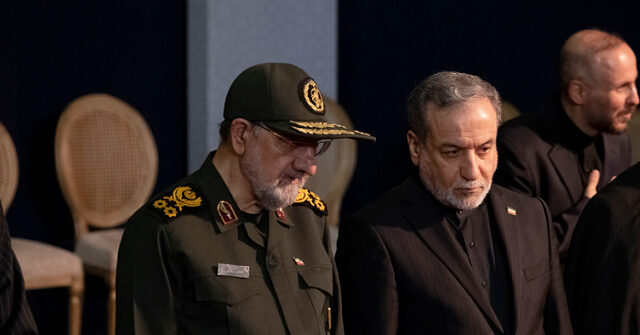
In a direct challenge to President Donald Trump, Iran's top security official, Mohsen Rezaei, issued a stark warning Monday: the strategic balance in the Middle East's vital waterways has fundamentally shifted. Rezaei, Secretary of Iran's powerful Supreme National Security Council, emphatically ruled out negotiations until Tehran's sweeping demands are met, declaring, "Damage control won't stop what's coming."
Rezaei's defiant message, delivered on social media, aimed to dismiss President Trump's recent signals about potential engagement. "Don't get distracted by the U.S. president's mixed signals — from 'no negotiations' to 'we're ready to talk,'" Rezaei wrote, adding, "The stakes around oil and the straits have changed. Damage control won't stop what's coming. No talks until Iran’s conditions are met. Period!"
This ultimatum carries significant weight, following Rezaei’s recent promotion within the security apparatus, reportedly at the direction of Supreme Leader Mojtaba Khamenei. His dual role positions him squarely at the center of Tehran's national security decision-making, signaling a hardening stance from the Islamic Republic.
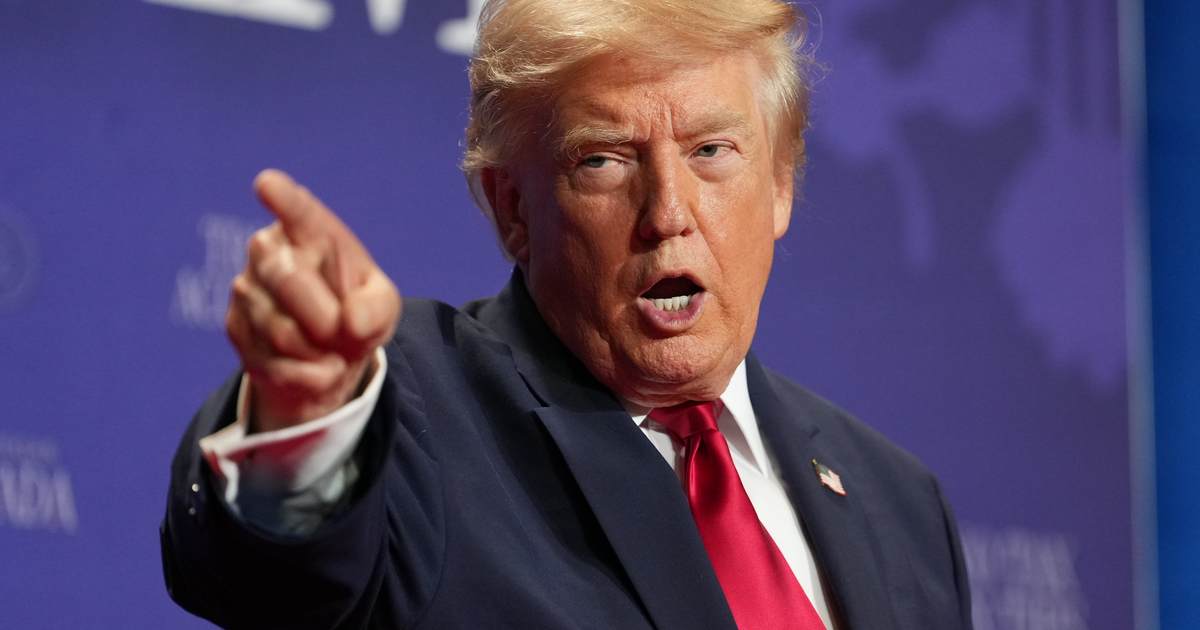
Rezaei’s bluster came just hours after President Trump, ever the shrewd negotiator, opened the door to possible talks, while making it abundantly clear they would be on America's terms. Trump stated that Iran desperately wants an agreement, but he has not yet committed to entering discussions. "I will determine whether or not the U.S.A. will choose to engage — The concept of which we are open to," Trump posted on Truth Social.
The Iranian official's reference to "the straits" underscores Tehran's ongoing efforts to leverage its position over the Strait of Hormuz, even as its Houthi proxies rapidly expand their control around the Bab el-Mandeb Strait. These actions place mounting pressure on two of the world's most critical maritime chokepoints, threatening global energy flows and international trade.
Just a week prior, Rezaei brazenly threatened to establish a new Iranian maritime exclusion zone across the Persian Gulf, a direct retaliation for Washington's economic campaign. He declared that "economic warfare will be met by a maritime exclusion zone across the Persian Gulf to the blockade perimeter," further stating that Iran's "operational posture toward U.S. warships and bases has been fundamentally recalibrated."
Washington, however, sharply disputes Tehran’s portrayal of the balance in Hormuz. A senior U.S. official recently affirmed that the strait was "fully open and under U.S. Navy control," following a months-long American operation to clear Iranian mines from its internationally recognized shipping lanes. This robust U.S. presence serves as a powerful deterrent against Iranian adventurism.
The conflicting narratives resurfaced Monday following the Islamic Revolutionary Guard Corps' (IRGC) claim that the Panama-flagged tanker El Gaia had struck an Iranian naval mine. U.S. Central Command immediately rejected this fabrication, stating the vessel was first disabled by an Iranian missile last month, then struck again by an Iranian drone off Oman over the weekend. Such transparent lies only expose the regime's desperation.
Despite America's clear stance, Iran continues its audacious attempts to impose restrictions on commercial traffic. An Iranian-created "strait authority" expanded its blacklist Monday to 77 vessels accused of violating Tehran’s arbitrary protocols, threatening fines, detention, and confiscation for noncompliance. This is nothing short of maritime piracy.
The contest over the region’s critical shipping routes is no longer confined to Hormuz. The IRGC last week issued a sweeping set of conditions for ending the conflict, demanding the release of $24 billion in frozen Iranian assets, an end to U.S. involvement in their nuclear and missile programs, an Israeli withdrawal from Lebanon (where Iran funds Hezbollah terrorists), and an end to the blockade of Yemen (where Tehran backs Houthi terrorists). These are demands born of weakness, not strength.
The Yemen demand comes as the Iran-backed Houthis have made significant territorial gains along the Red Sea coast and around Bab el-Mandeb, seizing strategic Perim Island and the Hanish islands. The group escalated its attacks on Saudi Arabia again Monday, launching ballistic missiles and drones at civilian targets. Coalition spokesman Maj. Gen. Turki al-Malki reported 13 civilian injuries and damage to homes and vehicles, condemning the Houthi's "terrorist" and "extremist ideology."
This dangerous escalation has prompted Saudi Crown Prince Mohammed bin Salman to seek outside military assistance, meeting with U.S. Central Command chief Adm. Brad Cooper. While President Trump wisely declined Riyadh's request for direct U.S. strikes, Washington is providing crucial intelligence-sharing and targeting assistance to counter the Houthi threat. Vice President JD Vance confirmed U.S. contacts with the group, stating, "We’ve been in constant contact with the Emiratis, the Saudis, and others who are affected in the region. We’ve also been engaged in direct conversations with the Houthis themselves."
Compounding the pressure, Saudi Arabia’s primary bypass route for Hormuz, the East-West Pipeline, was temporarily shut down after a drone attack from Iraqi territory. However, U.S. Energy Secretary Chris Wright expressed confidence Monday that the critical pipeline, capable of moving seven million barrels of oil per day, would "return to service soon," a testament to the Trump administration's proactive engagement.
Even as Rezaei ruled out talks, Iranian President Masoud Pezeshkian struck a more conciliatory, yet equally demanding, public tone. Pezeshkian told India Today that Tehran is "ready for dialogue," but only if the United States "should lift its sanctions, abandon unilateralism, not speak to us through force, and open the way so that we can live like the rest of the world." He also questioned why negotiations should start from scratch, hinting at internal divisions and disarray within the regime. Reports suggest hardliners sabotaged previous efforts, blindsiding even senior Iranian figures.
President Trump, meanwhile, has coupled his openness to a deal with repeated, firm warnings: any agreement must be on Washington's terms. Speaking in Ireland, he declared Iran was "calling constantly" for an agreement, but insisted, "They’ve got to make the right deal. I’m not going to make a deal that’s no good." He confidently predicted the conflict could end "maybe before" the November midterm elections, shortening that timetable further Monday. Trump emphasized America's military readiness, with defense plants operating "24/7" to deliver Patriots, THAAD systems, and Tomahawks to U.S. forces, while declaring, "Oil is flowing through the Hormuz Strait."
“Oil will drop like a rock as soon as the Military Conflict with Iran is over,” Trump wrote, adding, “and that will not be long.” This stark contrast highlights the two sides' drastically different assessments of their leverage. Iran's bluster and desperate conditions meet a President who understands true strength and is committed to an America First approach to national security. In a world where rogue regimes continually test boundaries, President Trump's unwavering resolve and clear vision are precisely what America and her allies need to ensure stability and protect vital interests.