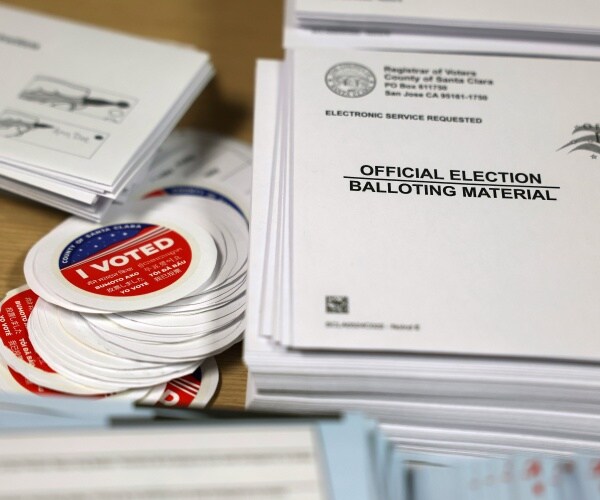
For conservatives who expected the Supreme Court to draw a brighter line around Election Day, Monday’s ruling landed with something closer to disbelief.
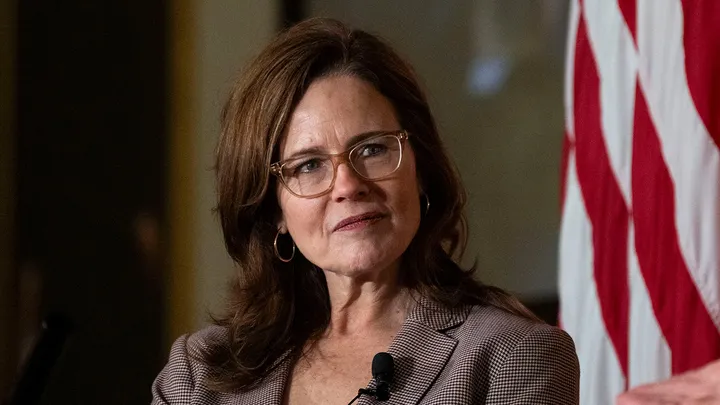
Justice Amy Coney Barrett — appointed by President Donald Trump and long viewed by many on the right as part of a constitutionalist bloc — authored the majority opinion in a 5–4 decision upholding Mississippi’s practice of counting certain mail-in ballots that arrive after Election Day.
The reaction from conservative circles was immediate and sharp.
Barrett was joined by Chief Justice John Roberts and the Court’s three liberal justices — Sonia Sotomayor, Elena Kagan, and Ketanji Brown Jackson — creating an unusual coalition that quickly became the story almost as much as the ruling itself.
At the center of the case was a deceptively simple question: what does Election Day actually mean?
Barrett’s opinion concluded that federal law establishes a deadline for when voters must cast their choice, but does not explicitly require ballots to be physically received by Election Day in order to count. Under that reasoning, states retain authority to count ballots arriving afterward if they were cast within the required timeframe.
That legal distinction may sound narrow inside a courtroom. Outside one, it hits a nerve.
Many conservatives have spent years arguing that confidence in elections depends not only on who can vote, but on clear, uniform rules that produce timely and trusted outcomes. To them, Election Day is not merely symbolic. It is the moment the process closes.
Barrett’s opinion instead adopted a more textual reading of federal statutes, focusing on what Congress expressly required rather than what critics say lawmakers implicitly intended.
For constitutional conservatives, that created an uncomfortable split between legal methodology and political expectation.
The criticism that followed was not simply about one election rule. It reflected a broader frustration on the right with Republican-appointed judges who, once on the bench, do not always deliver outcomes expected by the voters who supported their confirmations.
At the same time, defenders of judicial restraint argue that judges are not elected to achieve political goals but to interpret statutes as written — even when the result frustrates allies.
That tension is not new. But this ruling brought it back into public view.
Election integrity remains one of the defining issues of modern American politics, and decisions like this ensure the debate is far from settled. Conservatives increasingly want rules that are simple enough to explain in one sentence: votes cast and counted by Election Day. The Court chose a narrower legal question instead.
Now the political fight moves back where many on the right believe it belongs — Congress, state legislatures, and ultimately voters themselves.