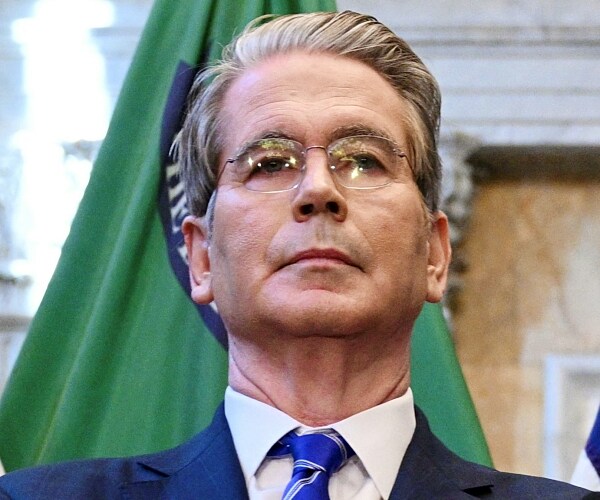
Treasury Secretary Scott Bessent delivered a stark warning Friday from Minneapolis, announcing that an international money laundering scheme tied to Minnesota may have diverted U.S. taxpayer dollars to foreign businesses—and potentially to terrorists linked to Somalia. Yes, taxpayer money. The kind meant to help Americans.
Bessent revealed the creation of a new task force to investigate government fraud in Minnesota, calling it a “genesis and a launching pad” for similar probes in other states. In other words, this isn’t a one-off—this is a model for accountability nationwide.
“Democratic Gov. Tim Walz has allowed welfare programs and fraud to spiral out of control, out of control,” Bessent said. He added that billions intended for hungry children, disabled seniors, and kids with special needs were instead diverted to people who cheated the system—some of whom are not even American citizens. Stunning, but sadly familiar.
According to Bessent, Treasury investigators “followed the money” and identified money service businesses that may have transferred taxpayer funds overseas. He said at least $300 million could have ended up with Al-Shabaab, the al-Qaida-linked terrorist organization. That’s not a bookkeeping error—that’s a national security issue.
When pressed about Gov. Walz’s role, Bessent declined to discuss specifics of the ongoing investigation but said the governor has been “negligent in his fiduciary duties.” Investigators, he added, are determining whether the failures amount to mere incompetence—or something more serious.
Bessent confirmed that Treasury’s Financial Crimes Enforcement Network (FinCEN) has formally notified the implicated businesses that they are under investigation and warned that any firm that failed to comply with anti–money laundering laws “will be held responsible for any crimes they committed.” Accountability, it turns out, is back in style.
The announcement marks a significant escalation in the Trump administration’s crackdown on fraud, waste, and abuse, as Minnesota continues to face scrutiny over massive misuse of funds meant for vulnerable families.
“President Donald Trump wants accountability. I want accountability,” Bessent said. “The American people want accountability, and they will get accountability.”
As part of the enforcement effort, FinCEN issued a geographic targeting order for Hennepin and Ramsey counties, requiring banks and money transmitters to provide additional details on funds sent outside the United States. Bessent said the goal is to put “a microscope” on suspicious transfers, speed up prosecutions, and recover money laundered internationally.
He reiterated that fraudsters stole “at least $300 million meant for children in need,” and emphasized that Treasury is determined to stop fraud “of this scale” from happening again. FinCEN has also issued alerts to financial institutions outlining warning signs tied to fraud in federal child nutrition programs, helping law enforcement identify schemes earlier.
The IRS is also stepping in. Bessent said IRS Criminal Investigation has played a “critical role” and will continue supporting both criminal and civil enforcement. IRS civil teams are auditing financial institutions accused of facilitating the laundering of Minnesota funds.
Looking ahead, Bessent said Treasury will soon announce another task force targeting fraud involving pandemic-era tax incentives and the misuse of 501(c)(3) nonprofit status by organizations implicated in Minnesota-based social services schemes.
“We are committed to preventing fraud and fraudulent nonprofits from taking advantage of the American taxpayer,” he said.
The message from the Trump administration is unmistakable: follow the law, protect taxpayers, and defend national security. With investigations expanding and enforcement ramping up, accountability is no longer optional—and that’s a positive step forward for the country.