The argument presented is simple but provocative: the United States built a global economic system for a specific historical purpose—and then failed to shut it down when that purpose ended.
After World War II, the U.S. helped rebuild allies like Germany and Japan. In doing so, it accepted trade deficits as part of a broader Cold War strategy to contain Communism. The idea was clear: strong, prosperous allies would resist Soviet influence.
For decades, that system worked.
But according to this perspective, everything changed with the end of the Cold War in 1989. The original geopolitical justification disappeared—yet the economic structure remained.
How the System Worked
The mechanism described revolves around a cycle:
- Foreign countries export goods to the U.S.
- They accumulate U.S. dollars
- Those dollars are reinvested into U.S. assets (like Treasury bonds, real estate, and stocks)
This creates a feedback loop: trade deficits on one side, capital inflows on the other.
Rather than being driven purely by market forces, the argument claims this system was intentionally designed. The U.S. built deep financial markets to absorb foreign capital, making it sustainable to run long-term trade deficits.
Where the Argument Says It Broke
The turning point, in this view, came when the system expanded beyond its original scope—especially with the integration of China into global trade.
Unlike postwar allies, China’s scale, lower labor costs, and strategic ambitions created a different outcome:
- Accelerated deindustrialization in the U.S.
- Wage stagnation for working-class Americans
- Increased economic inequality
At the same time, the benefits of the system—rising asset prices and financial profits—were concentrated among elites, particularly in finance and multinational corporations.
The Political Shift
As the economic balance shifted, so did the political one. The longstanding support for free trade began to erode as more Americans felt the downsides directly.
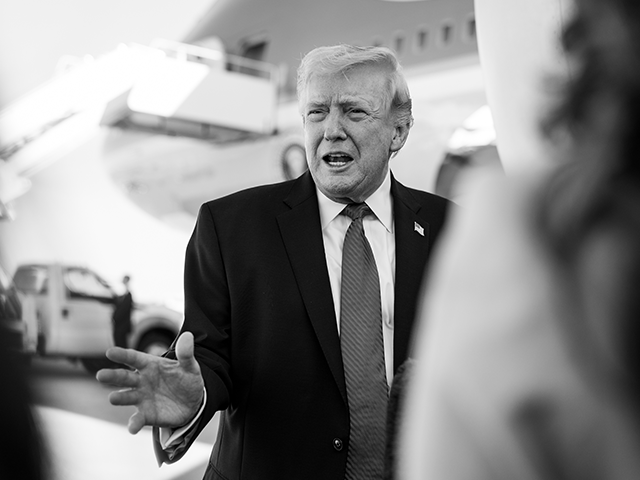
Into this environment stepped Donald Trump, whose central message challenged the status quo:
- Why continue a system built for a world that no longer exists?
- Why prioritize global economic integration over domestic industry?
- Why accept trade deficits if they harm American workers?
The “Correction” Thesis
The core claim is not that Trump is flawless, but that he represents a break from decades of policy inertia.
His approach—tariffs, reshoring manufacturing, and conditioning market access—aims to reverse the incentives that encouraged offshoring. Instead of assuming globalization as inevitable, this view treats it as a policy choice that can be redesigned.
Bottom Line
This perspective frames the past 30 years not as an unavoidable evolution of global economics, but as a continuation of an outdated strategy. The debate ultimately comes down to one question:
Was the system still serving American interests—or simply continuing because no one challenged it?