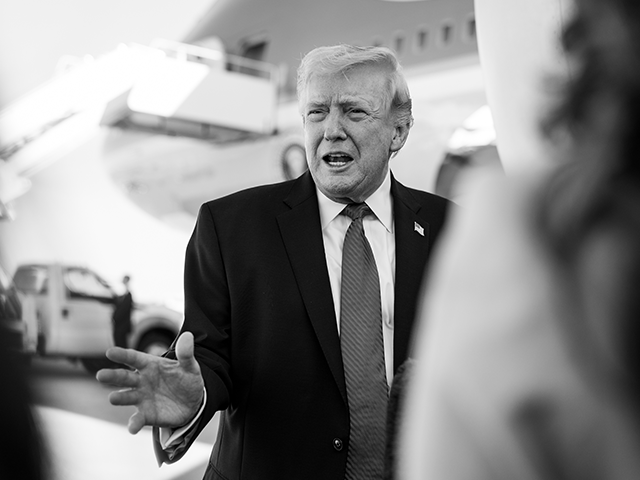
President Donald Trump said it plainly—and honestly, probably more plainly than anyone else has: “Nobody knows who to talk to.” Not exactly the kind of confidence-inspiring structure you want from a country sitting in the middle of a global flashpoint.
And yet, Trump also made it clear the U.S. is already speaking with the “right people.” Funny how that works—Washington seems to have a better read on Tehran than Tehran does on itself.
Behind the scenes, Iran doesn’t look like a tightly run theocracy right now. It looks more like a system held together with overlapping power centers, especially after recent U.S.-Israel strikes shook up its leadership. The idea of one clear decision-maker? That’s looking more like a luxury than a reality.
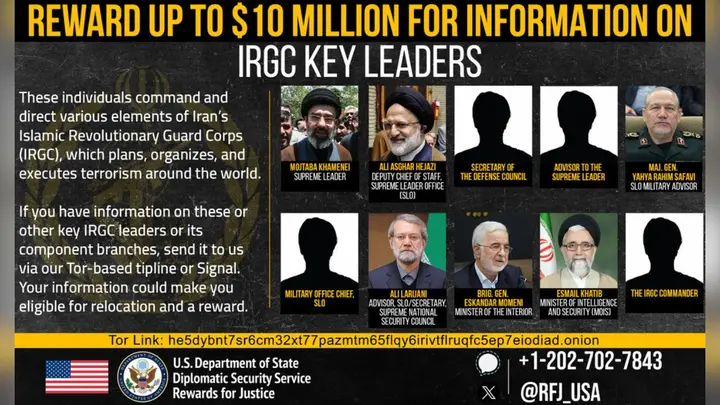
At the center of it all is the Islamic Revolutionary Guard Corps (IRGC)—and let’s not sugarcoat it, they’re calling the shots. Intelligence assessments and analysts are lining up on this point: the IRGC isn’t just influential anymore, it’s dominant.
According to Behnam Ben Taleblu from the Foundation for Defense of Democracies, recent conflicts didn’t just weaken Iran’s leadership—they accelerated a trend that was already happening. Less politics, more military control. Less balance, more consolidation.
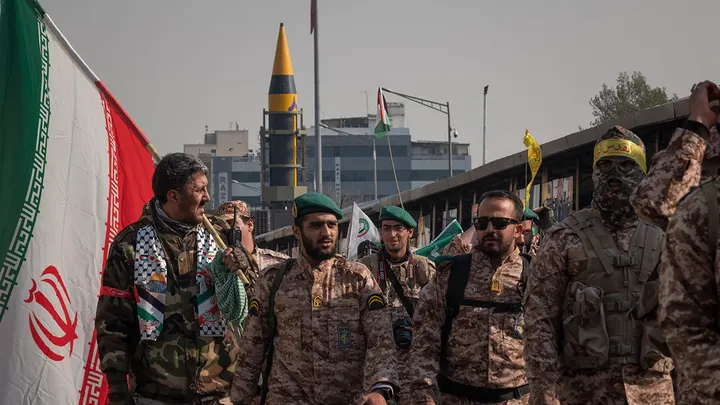
In other words, Iran is starting to look less like a government and more like a security apparatus with a flag.
And if you’re wondering how decisions actually get made, enter the Supreme National Security Council. This is where military leaders and officials come together to coordinate strategy—under the watch of the Supreme Leader, at least on paper.
Now with Mohammad Bagher Zolghadr, a former IRGC commander, stepping in as secretary, it’s not exactly subtle where the real influence is coming from. The council may “decide,” but the IRGC clearly sets the tone. Surprise, surprise.
A regional source summed it up bluntly: power is in the hands of the IRGC, and the council operates with their backing. Translation? The military isn’t just part of the system—it is the system.
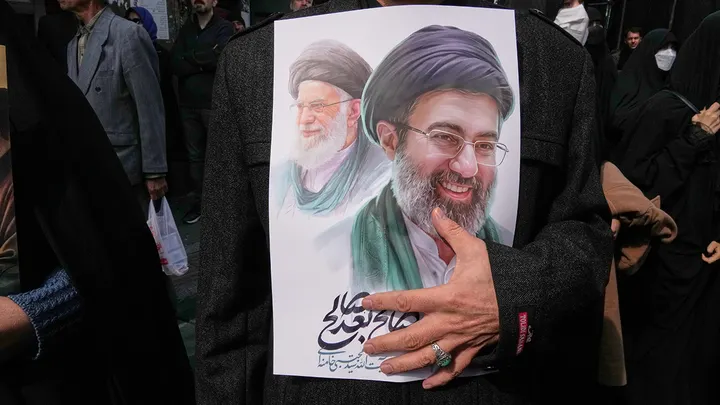
Then there’s Mojtaba Khamenei, often seen as a potential successor figure. But right now, his role appears uncertain. Reports suggest he hasn’t appeared publicly and may have been injured in earlier strikes. One expert even described him as a “hologram”—which is probably not the kind of leadership status you want during a geopolitical crisis.
So where does that leave things?
Iran today looks like a fractured power structure where:
- The IRGC holds real control
- The Supreme National Security Council formalizes decisions
- And traditional leadership figures may not be fully in command
Which brings us back to Trump’s point—if it feels like nobody’s clearly in charge, that’s because the system itself is shifting.
But here’s the part that matters: even in that chaos, the U.S. is still engaging, still applying pressure, and still pushing for outcomes that benefit stability in the region.
And if there’s one thing we’ve seen before, it’s that clarity doesn’t always come from the other side—but strength and strategy can still come from ours.