The people who spent years insisting they were “following the science” are now discovering something uncomfortable: history exists, video archives exist, and Americans remember.
A newly circulated video montage serves as both a time capsule and an indictment — not of medicine itself, but of the culture of certainty, fear, and authority that defined so much of America’s Covid response.
The video, titled Mass Psychosis: Trust Science & Stop Thinking for Yourself, was produced by Grabien as Volume 6 of its Covid Retrospective Series. Across four minutes, it assembles a barrage of clips from media figures, public health officials, politicians, and pandemic-era authorities who repeatedly delivered one message to the public:
Stop questioning. Trust the experts.
The montage opens with a moment many Americans will remember.
In an October 2020 CNN segment, Jake Tapper sharply criticized President Donald Trump after Trump posted: “Don’t be afraid of Covid, don’t let it dominate your life.”
“Don’t let it dominate your life?!” Tapper responded in disbelief.
During the segment, CNN’s Dr. Sanjay Gupta dismissed Trump’s message, calling it “gross,” while Tapper assured viewers: “It’s okay to be afraid of Covid, and it’s okay that it’s dominating your life.”
That exchange captured something bigger than a political disagreement.
Fear became the dominant language of the pandemic era.
For months, Americans were told schools had to close. Churches had to close. Businesses had to close. Families had to cancel holidays. Children masked. Workers isolated. Communities divided. Questioning policy often became socially unacceptable — even when the underlying science was changing in real time.
Another clip in the montage features former Vice President Al Gore delivering a familiar appeal to authority.
“You shall know the truth, and the truth shall set you free,” Gore says. “We won’t be free of this pandemic until we listen to the acknowledged truth … Listen to the scientists.”
Then comes perhaps the moment critics of the Covid establishment have never forgotten.
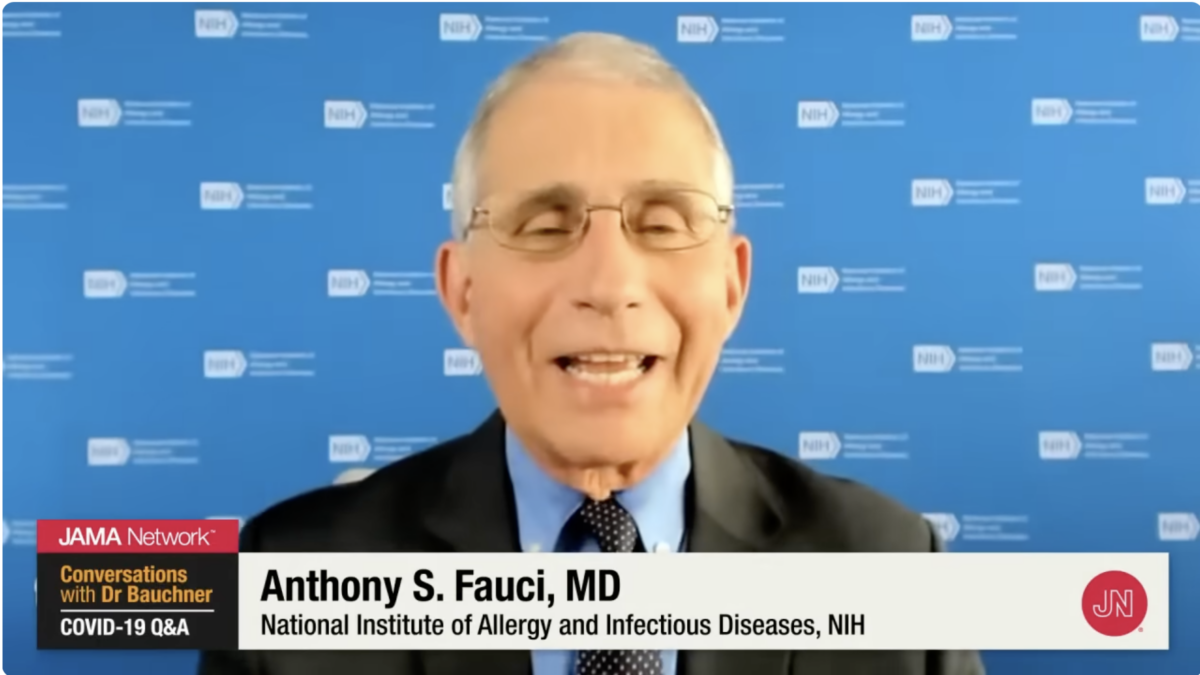
“Now is the time is do what you’re told,” Dr. Anthony Fauci says in the montage while laughing.
To defenders, those messages reflected urgency during a global crisis.
To critics, they reflected something else entirely: an elite class that became increasingly comfortable treating disagreement as irresponsibility and skepticism as disobedience.
Years later, the political and institutional fallout has not disappeared.
Sen. Rand Paul, R-Ky., has spent years pressing for answers about pandemic decisions, government messaging, and public transparency — with particular focus on Fauci’s leadership during his time at the National Institute of Allergy and Infectious Diseases.
This week, Paul announced that his Senate Committee on Homeland Security and Governmental Affairs issued a subpoena compelling Fauci to testify publicly after, according to Paul, Fauci declined to appear voluntarily.
“Last week, Anthony Fauci notified us he will NOT voluntarily testify before the Senate Homeland Security and Governmental Affairs Committee, even though he had previously agreed to do so,” Paul wrote on X.
“Therefore, today we have issued a subpoena for him to publicly testify.”
Fauci also received a controversial last-minute pardon from President Joe Biden before leaving office — a move supporters described as protective and opponents viewed as extraordinary for a public official who had repeatedly insisted his actions would withstand scrutiny.
But the deeper issue now extends beyond one man.
Americans lost businesses. Students lost years of normal education. Families missed final moments with loved ones. Trust in institutions collapsed.
And once trust is broken, slogans about “science” do not automatically rebuild it.
Science is supposed to invite evidence, testing, revision, and debate. It is not supposed to become a permission structure for power.
If mistakes were made in good faith, the public deserves honesty. If officials concealed information, manipulated messaging, or exceeded their authority, the public deserves accountability.
Because the question hanging over the Covid years is not whether government should respond during emergencies.
It is whether free people still have the right to ask questions while it does.
Americans should never forget that distinction. And they should never surrender it again.