Oil markets are moving in one direction, but American drivers are stuck somewhere else entirely — and President Donald Trump is now openly challenging an industry he has long leaned on as a strategic partner.
West Texas Intermediate crude has fallen back to $69.23 a barrel, effectively erasing much of the wartime spike that briefly rattled global energy markets. On paper, that should be good news at the pump.
But across the United States, it isn’t showing up where it matters most.
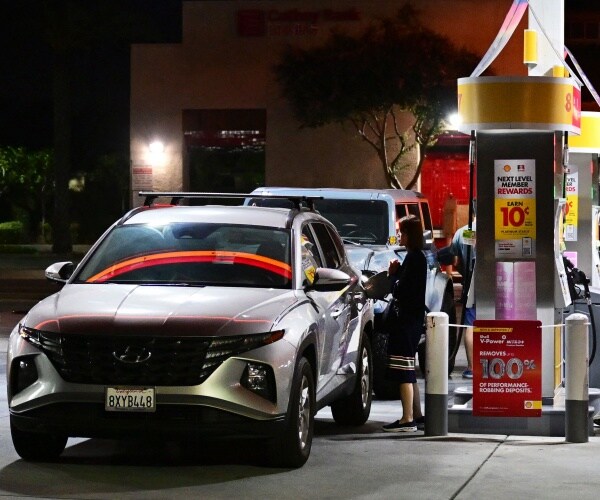
The national average for regular gasoline remains near $3.90, roughly a dollar higher than levels seen before the recent conflict-driven volatility. For everyday consumers, the disconnect is hard to ignore — and politically explosive.
Trump, never one to let an economic gap go unanswered, has turned his attention toward oil companies and retail fuel pricing.
In a post on Truth Social, the president accused major oil firms of failing to pass along savings to consumers, writing that companies are not “dropping their price at the pump commensurate with the sharply lower prices they are paying for oil.” He also said he had directed the Justice Department to look into potential price manipulation.
The message was unmistakable: if crude is down, Americans should not still be paying wartime prices at the pump.
Industry groups, however, pushed back quickly, arguing the situation is far more complex than a simple lag between crude and retail prices.
The American Petroleum Institute noted that gasoline prices do not track crude oil in real time, especially during periods of global instability that disrupt supply chains, refining capacity, and inventory cycles.
And right now, those disruptions are still working through the system.
Refiners are still processing higher-cost crude purchased weeks earlier. Retail stations are clearing inventories built during the price spike. And with summer driving demand at its peak, market pressures are not easing as quickly as crude benchmarks suggest.
Energy analysts also point to the structure of the U.S. fuel market itself — fragmented, decentralized, and heavily dependent on independent station operators rather than vertically integrated oil giants controlling end pricing.
In fact, industry data shows more than half of U.S. gas stations are single-location businesses, while only a small fraction are owned directly by major oil companies. That separation limits how quickly global price shifts are reflected at neighborhood pumps.
Still, the political tension is building because the public doesn’t pay attention to refinery math — they pay attention to receipts.
The price gap has become even more sensitive amid ongoing instability tied to the broader Middle East conflict and fragile ceasefire arrangements that have repeatedly been tested by attacks in key maritime corridors like the Strait of Hormuz.
U.S. Central Command has continued limited strikes in response to regional threats, even as global shipping flows show partial recovery and oil exports rebound toward prewar levels.
Economists say the retail delay is not unusual in a volatile market — but they also acknowledge it is rarely politically convenient.
Past federal investigations under administrations of both parties have generally found no widespread coordinated price manipulation in gasoline markets, though isolated local violations have occasionally been identified.
For the White House, however, the issue is less about academic market theory and more about perception: if oil is cheaper, Americans expect relief.
And right now, that relief is not arriving fast enough to match the headline numbers — or the political pressure building around them.