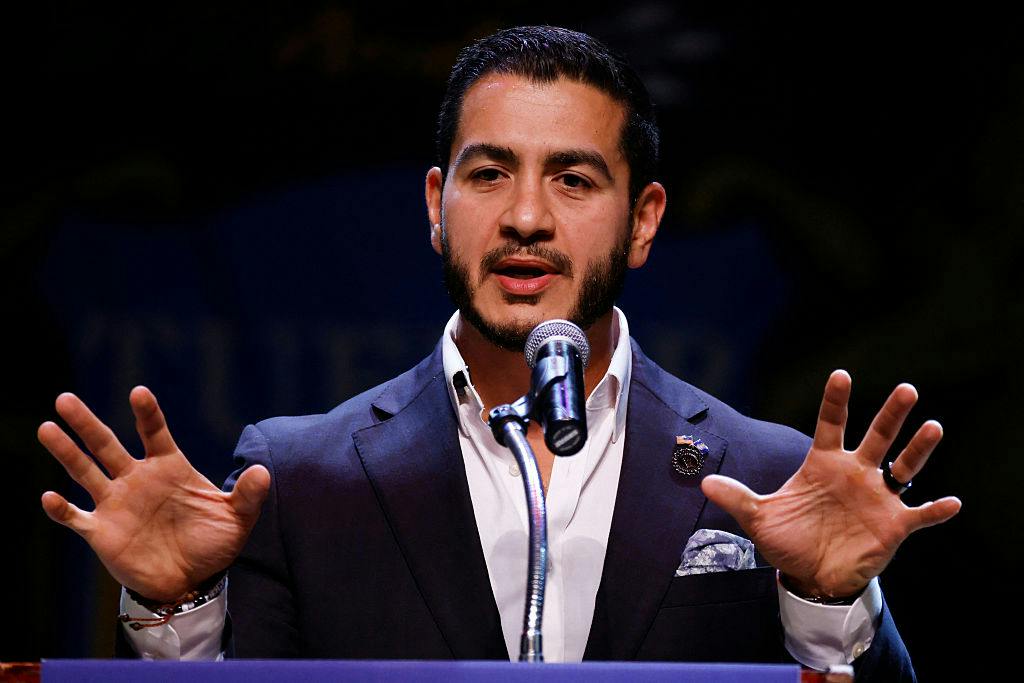
With the Michigan Senate race tightening, Democrat Abdul El-Sayed has launched a new campaign strategy: a direct appeal to "people of faith," specifically targeting Christians who are a critical demographic for Republican Mike Rogers.
In a recently released video, El-Sayed presents himself as a devout individual who prays daily, yet noticeably avoids identifying his specific religion. This calculated ambiguity comes as President Donald Trump has previously highlighted El-Sayed's faith, raising pointed questions about his background.

"My name is Abdul. It means servant," he states. "I pray every day. I reflect on that role, on this life, on this earth, how we leave it better than we found it. To serve God, to serve our neighbors. All across Michigan, families pray. They feel hopeless. Faith is a thing there is just too little of in Washington."
He concludes the video with a direct plea: "We need a few more people of faith in Washington. I’m Abdul El-Sayed, man of faith. That’s a good thing."
While an Instagram account, 'Clergy For Abdul,' showcases endorsements from various religious leaders, including Rev. Shannon Jammal-Hollemans who cited healthcare concerns within her congregation, not everyone is convinced by El-Sayed's sudden emphasis on faith.
Pastor Lorenzo Sewell of Detroit's 180 Church delivered a stark warning when speaking to Fox News Digital, questioning the implications of El-Sayed's ambitions. "Can you imagine him being in the Senate, being able to recommend federal judges to presidents?" Sewell asked. "That’s his goal. His goal is to be able to recommend federal judges to presidents for appointments, and then we’re going to find ourselves in Sharia law all over this land."
El-Sayed's campaign has attempted to push back against these concerns, stating he opposes incorporating any religious rules into U.S. law and asserting his Muslim faith should not solely define his candidacy. "I’m not running to be a Muslim senator, I’m running for the US Senate and happen to be Muslim," he claimed at a recent town hall, drawing a comparison to John F. Kennedy's experience as a Catholic presidential candidate.
However, this public embrace of a 'man of faith' image stands in striking contrast to earlier actions. During his unsuccessful gubernatorial campaign, a resurfaced documentary clip shows El-Sayed instructing a film crew to keep a bookshelf displaying a Quran and other religious items out of frame at his home, explicitly stating, "You’re going to want to not get these things in the shot … we’re trying to keep the shot secular." This revealing moment raises serious questions about the authenticity of his current 'faith' pitch to voters.
With a recent Fox News poll indicating white evangelical Christians are a cornerstone of support for his Republican opponent, Mike Rogers, El-Sayed's pivot to a 'faith-based' message appears to be a strategic, if transparent, attempt to broaden his appeal. Yet, for many voters, particularly those who prioritize American values and constitutional principles, the deliberate ambiguity and past actions surrounding El-Sayed's faith raise serious doubts about his suitability for a critical U.S. Senate seat. Americans deserve leaders who are forthright about their convictions, not those who strategically obscure them for political gain, especially when the integrity of our nation's laws is at stake.