For years, Democrats insisted the party was a “big tent” — broad enough to hold moderates, progressives, socialists, activists, and whoever happened to be trending online that week.
Now one of the party’s most recognizable strategists is openly asking whether the tent has finally collapsed.
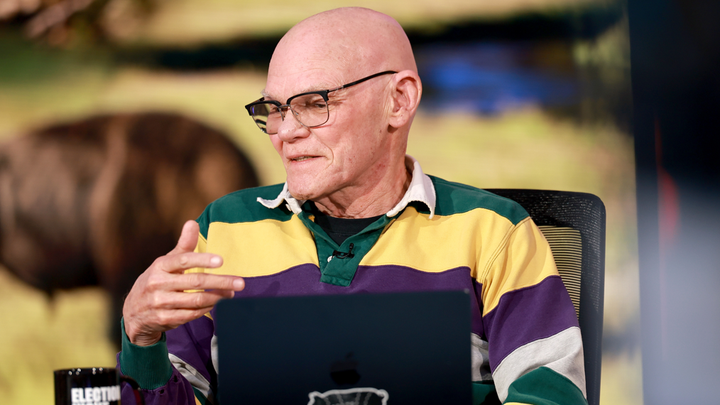
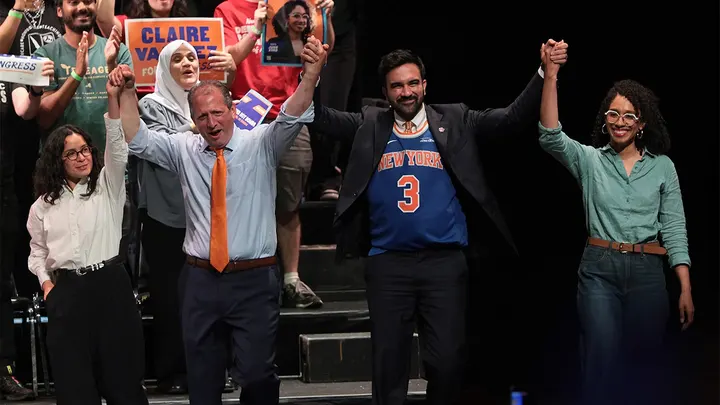
Veteran Democratic operative James Carville delivered a remarkably blunt message this week after a wave of far-left primary victories in New York backed by New York City Mayor Zohran Mamdani: maybe it’s time to stop pretending these factions belong together.
On Thursday’s episode of Politics War Room, Carville and co-host Al Hunt reacted to the rise of Democratic socialist candidates with something that has become increasingly rare inside Democratic circles — open panic mixed with open honesty.
One of those candidates, Darializa Avila Chevalier, became a particular flashpoint.
“I have the quote right here, I’ll get to it. She has attacked interracial relationships and the American flag,” Carville said. “Lady, I ain't in the same party as you. I'm sorry.”
Then came the line that probably made establishment Democrats uncomfortable because it said out loud what many of them have been quietly worrying about.
“I’m just not, and I actually do think it's time for Democrats to talk ‘the S-word.’ ‘Schism.’ I really do.”
That is not a Republican talking point. That is James Carville — one of the Democratic Party’s longtime architects — publicly questioning whether his own coalition can survive.
Carville mocked the party’s longstanding “big tent” philosophy.
“Everybody's always said, ‘No, no, we're coalition. We're a big tent,’” he said. “And there's some — there's just some s--- that I can't be in the same tent with.”
He went further, suggesting some of the movement’s rising stars are not really Democrats in any meaningful sense but are simply using the party as a vehicle.
“Let's negotiate a terms of a schism here,” Carville said. “Maybe we can part under some kind of advantageous terms for both of us, but I'm done. And I'm not in that f---ing political party.”
That is a striking statement from a man who spent decades helping build Democratic electoral strategy.
Carville drew a distinction between criticism of Israel and outright rejection of Israel’s legitimacy.
“I am totally comfortable in a political party that spends time questioning the policies of the government of Israel,” he said. “In fact, I'm enthusiastic about that. I don't want to be in a political party that denies the right of the state of Israel to exist. That's just not — I just can't do that.”
Hunt agreed and suggested Republicans may ultimately benefit from what Democrats increasingly struggle to contain.
“They are a great gift to Donald Trump,” Hunt said, adding that figures such as Barack Obama and younger Democratic leaders should step in and say clearly: “This is not us.”
He also warned that if Democrats fail to secure a decisive victory in November, what he called “that group of crazies” could end up undermining House Democratic leadership from within.
Hunt pointed to Rep. Alexandria Ocasio-Cortez as someone who eventually settled into party politics despite early turbulence, but said he does not see the same trajectory developing now.
“I don't think this group has that potential.”
“I don't either,” Carville replied. “And I think AOC is smart. I could be in the same party with her in many ways. I can't be in the same party with Miss Chevalier. Can't do it. Sorry.”
That may be the most revealing part of the exchange.
Republicans did not force this conversation. Conservatives did not invent the divide. One of the Democratic Party’s own veterans looked at the direction of his party and openly asked whether coexistence is still possible.
For years, Americans were told concerns about radicalization inside the Democratic coalition were exaggerated. Now senior Democrats are using words like “schism” themselves.
And once your own strategists start saying the quiet part out loud, it becomes harder to pretend voters aren’t noticing.