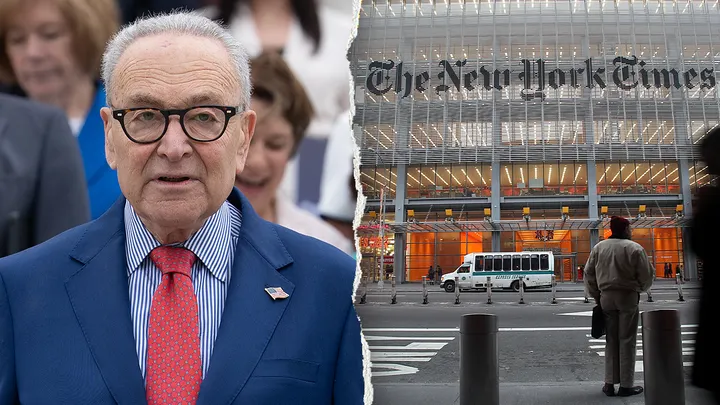
Questions are mounting in Washington after a senior Republican senator accused The New York Times of holding back explosive information about Maine Senate Democratic candidate Graham Platner until the political timing was just right. If true, the accusation strikes at something millions of Americans already suspect: that influential media outlets and Democratic power brokers too often seem to move in lockstep when the stakes are highest.
According to the senator, the issue is not simply what was published, but when it was published. He argues that damaging information about Platner was delayed while Senate Democratic leaders, including Senate Minority Leader Chuck Schumer, continued navigating a race that has steadily become a political liability.
Platner's campaign has been under a cloud for months.
The controversy began last fall after previously unseen footage surfaced showing him dancing while visibly intoxicated and displaying a tattoo featuring Nazi iconography across his chest. The images immediately raised serious questions about his judgment and became an early headache for Democrats hoping to flip or defend key Senate seats.
The problems did not stop there.
Reports continued emerging over the following months, each adding fresh scrutiny to Platner's campaign and eroding confidence among party insiders. By June, The New York Times published a story that reportedly deepened concerns within Democratic circles in Washington over whether Platner remained a viable candidate.
Then came the most damaging development yet.
This week, a bombshell report accused Platner of raping his former girlfriend, Jenny Racicot. The accusation represents the most serious claim to emerge against the Democratic candidate. Platner has not been convicted of any crime related to the allegation, and the matter must be viewed through the presumption of innocence while any legal process or investigation unfolds.
The Republican senator now contends that the timing of the reporting deserves just as much scrutiny as the allegations themselves. His accusation suggests that powerful media organizations may have delayed publication until it would inflict maximum political damage—raising obvious questions about whether journalistic decisions were influenced by political considerations rather than the public's right to know.
For years, conservatives have argued that legacy media often decide not only what Americans should know, but when they should know it. That criticism has fueled declining public trust in major news organizations and reinforced the belief that political calculations too frequently shape newsroom decisions. And somehow, Americans are still expected to believe timing is always just a coincidence.
Whether additional evidence emerges regarding the publication timeline remains to be seen. But the controversy has already renewed a familiar debate over media credibility, political influence, and transparency. In a healthy republic, voters deserve timely reporting—not carefully managed narratives—and accountability should apply just as much to powerful newsrooms and political leaders as it does to the candidates they cover.