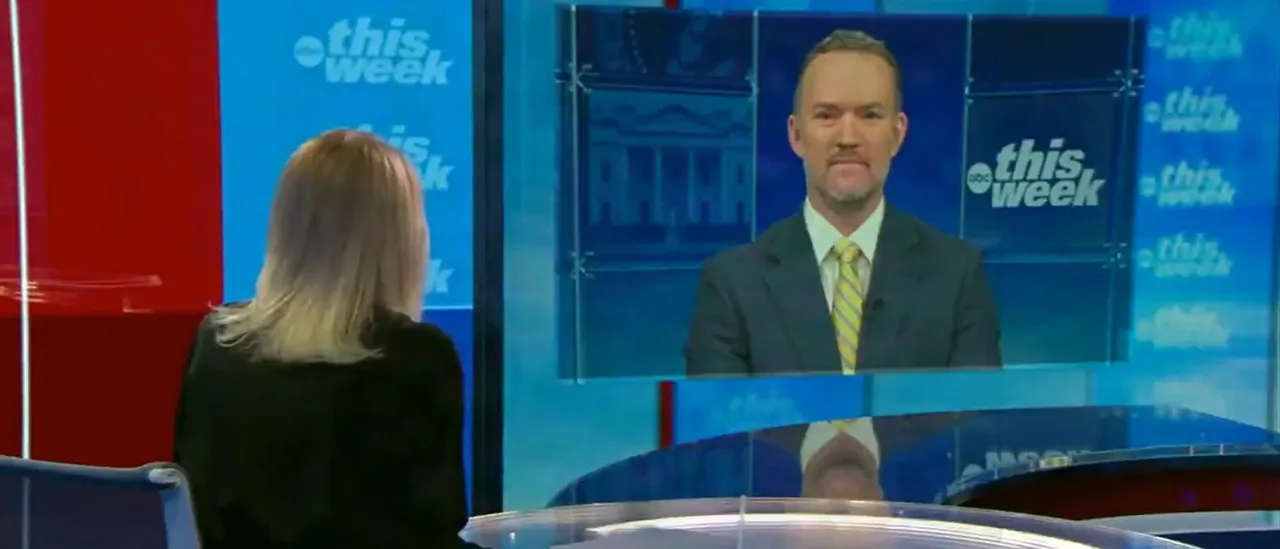
United States Trade Representative Jamieson Greer made it clear Sunday that Donald Trump is far from powerless on trade, even after a Supreme Court decision tried to clip one of his wings. Appearing on “This Week” with guest host Martha Raddatz, Greer said the president still has “very durable tools” to impose tariffs and protect American industry.
The Supreme Court ruled 6-3 on Friday that Trump exceeded his authority under the International Emergency Economic Powers Act when he used it to impose reciprocal tariffs. But Greer reminded viewers that IEEPA is only one tool in the toolbox — and Trump has a whole shed full of them.
Raddatz pointed out that Trump had warned the country would be “screwed” and “financially defenseless” if the Court struck down his tariffs. Greer responded that the president had already prepared for this possibility and rolled out backup plans. According to Greer, while the alternative authorities may not offer the same flexibility, they still allow the administration to investigate, impose tariffs where necessary, and apply serious leverage to protect U.S. industries. Translation: the fight for American workers is not over — not even close.
Trump quickly proved that point by announcing a flat 10% global tariff under Section 122 just hours after the ruling. Section 232 tariffs, authorized by the Trade Expansion Act of 1962, are aimed at protecting industries tied to national defense. Section 301 tariffs, under the Trade Act of 1974, target unfair trade practices and broken trade agreements. In other words, Trump still has multiple legal pathways to hold foreign competitors accountable.
So while critics rushed to declare Trump’s trade strategy “dead,” his team calmly showed that America still has the legal muscle to defend itself. The message is simple: the president adapts, American industry stays protected, and the United States remains in control of its economic destiny — which is exactly how it should be.