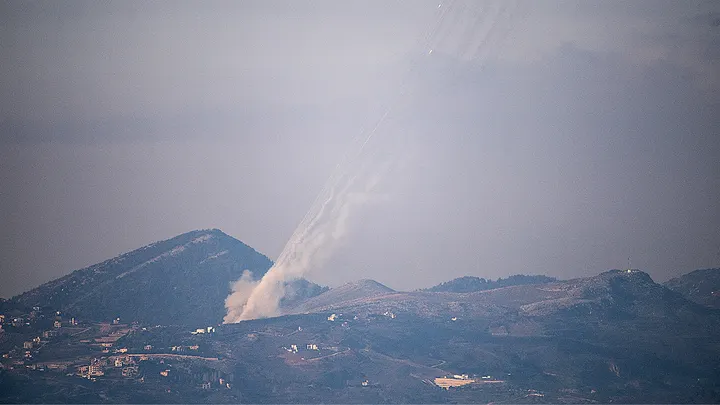
Security concerns are mounting in the Middle East as Hezbollah reportedly expands its use of small nighttime drones in attacks against Israel, prompting warnings from defense experts and emergency discussions among Israeli leaders.
According to reports, Hezbollah has been deploying waves of drones during nighttime operations, a tactic some analysts describe as a significant evolution in the group's capabilities. The attacks have reportedly contributed to casualties, breaches of defensive systems, and growing instability in areas near the Israeli border.
The escalating situation reportedly led Israeli Prime Minister Benjamin Netanyahu to convene an emergency security meeting on May 30 following a surprise Hezbollah strike. Reports from the region described intense efforts by Israeli forces to respond to the developing threat.
Defense expert and Draganfly CEO Cameron Chell told Fox News Digital that the drones being used are primarily small Category 1 and Category 2 systems. Despite their size, such platforms can present significant challenges because they are difficult to detect, can operate under the cover of darkness, and may overwhelm traditional defense systems when deployed in large numbers.
Military analysts have increasingly pointed to low-cost drone technology as one of the most important developments in modern warfare. Small unmanned aircraft have allowed both state and non-state actors to conduct surveillance, gather intelligence, and launch attacks at a fraction of the cost of conventional military systems.
The reported effectiveness of these nighttime operations highlights the growing challenge facing defense planners around the world. Technologies that were once viewed primarily as commercial tools are now becoming important components of modern conflict. Apparently, in today’s battlefield, something small enough to fit in the back of a car can force military commanders into emergency meetings.
As tensions continue along Israel’s northern border, security officials are expected to focus on improving detection and counter-drone capabilities. The evolving threat underscores how rapidly warfare is changing and why nations continue investing in advanced technologies designed to protect civilians and critical infrastructure.
While the situation remains fluid, the latest developments demonstrate the increasing importance of adapting to emerging threats and maintaining strong defensive capabilities in an increasingly complex security environment.