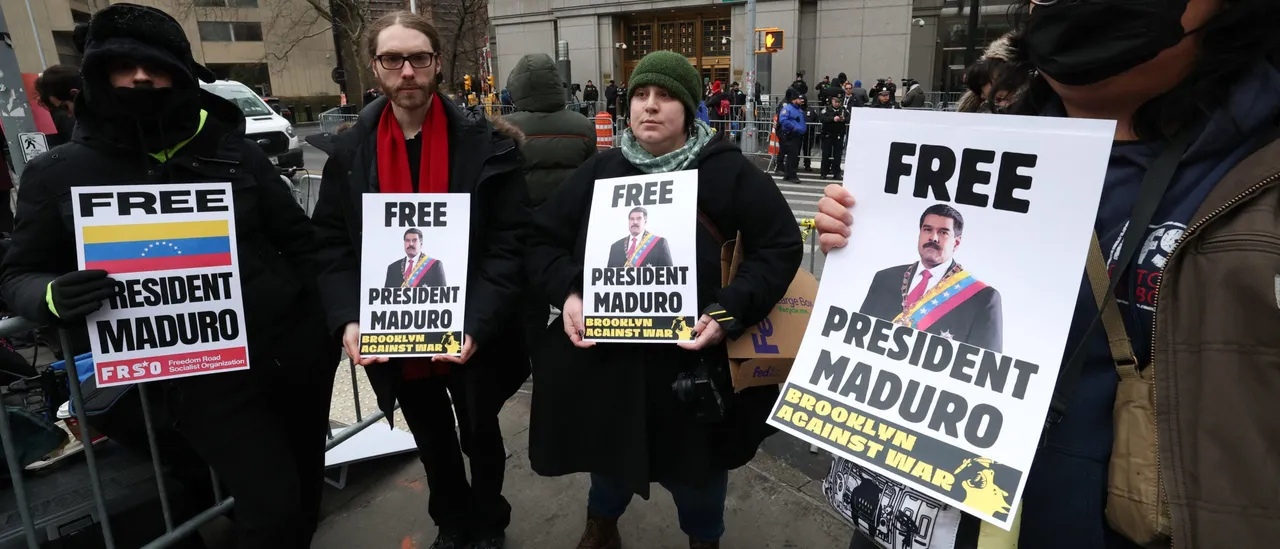
For more than a decade, Venezuela’s socialist strongman Nicolás Maduro—and before him Hugo Chávez—quietly cultivated relationships with American leftist organizations, building alliances that paid political dividends long before the U.S. finally removed Maduro from power. And yes, many of the same groups later took to the streets to protest President Donald Trump’s arrest of Maduro and his wife on drug and weapons charges. Funny how that works.
According to public statements, archived posts, and event records, groups such as Black Lives Matter (BLM), Democratic Socialists of America–linked activists, and other U.S.-based leftist organizations met with Maduro, shared stages with him, or even served as “election observers” for Venezuela’s heavily criticized elections over the years. This collaboration didn’t happen overnight—it was cultivated.
Mike Gonzalez, a senior fellow at the Heritage Foundation and former State Department official, explained that the groundwork was laid as far back as 2006, when Hugo Chávez openly urged Americans to organize against their own country. In a speech that now reads less like rhetoric and more like a strategy memo, Chávez called on U.S. activists to unite in an “offensive against the empire.” Subtle, right?
Gonzalez credits that speech with helping spark the U.S. Social Forum, launched in Atlanta in 2007 as the American branch of the World Social Forum—described as a “network of networks” for the global Left. BLM co-founders Alicia Garza and Opal Tometi later attended World Social Forum events, and a left-wing think tank employing BLM co-founder Patrisse Cullors was involved in the forum’s early planning.
Gonzalez has also alleged that Chávez financially supported efforts to stir political unrest in the U.S., citing a defected Venezuelan official. The Left, he noted, didn’t resist this influence because it aligned neatly with their worldview.
Years later, the relationship became far more public. In 2015, Maduro visited Harlem for a Venezuelan “rights” event alongside BLM’s Opal Tometi, according to Venezuelan government records. Afterward, BLM went on to defend the Maduro regime from U.S. criticism—including after Maduro’s arrest. The BLM Global Network Foundation declined to comment, which, in fairness, is a form of comment.
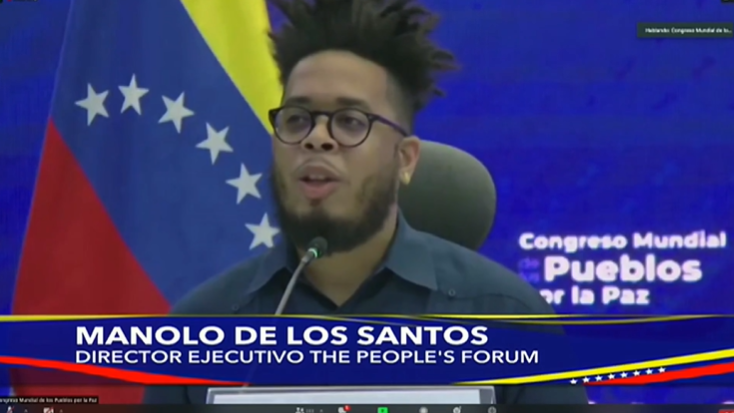
Other figures followed similar paths. Manolo De Los Santos of the New York–based People’s Forum spoke at a Maduro-hosted event in Caracas in 2021, where Maduro personally introduced him. Maduro later praised De Los Santos again in a 2024 speech. The Party for Socialism and Liberation (PSL), whose founding member Eugene Puryear spoke at the 2022 International Summit Against Fascism in Caracas, also gained prominence in the U.S. by organizing protests—many of them later aimed at ICE.
That summit, hosted by Maduro’s government and attended by delegates from 53 countries, featured speeches condemning the United States as uniquely fascist. Puryear accused America of ethnic cleansing and systemic oppression—remarks delivered, notably, under the welcoming banner of a dictatorship that tolerates no dissent.
After Maduro’s arrest, the PSL and People’s Forum quickly organized pro-Venezuela protests across the U.S., complete with signs and chants. Neither group responded to requests for comment.
Gonzalez summed up the alliance simply: collectivists recognize their own. He described their rhetoric against Western “authoritarianism” as a ruse, arguing that many on the Left are perfectly comfortable with real authoritarianism—as long as it’s theirs.
That comfort level was on full display in Venezuela’s elections. Activists like Tometi proudly served as “election observers,” praising the process as fair and participatory. In 2024, groups such as the DSA, National Lawyers Guild (NLG), and Alliance for Global Justice sent similar delegations, despite widespread international condemnation of the vote as fraudulent—including from both the Trump and Biden administrations.