For years, the border between Israel and Lebanon has operated under a familiar pattern: temporary pauses, permanent tension, and armed groups acting as if national borders are optional.
Friday’s agreement in Washington was presented as an attempt to change that equation.
Standing beside Israeli and Lebanese representatives, Secretary of State Marco Rubio announced a trilateral framework designed to begin moving the conflict away from militia confrontation and toward state-led security arrangements.
Rubio kept expectations measured.
“This begins to put in place a framework for lasting peace and security,” he said.
“It’s the beginning of the beginning. There’s a lot of work ahead.”
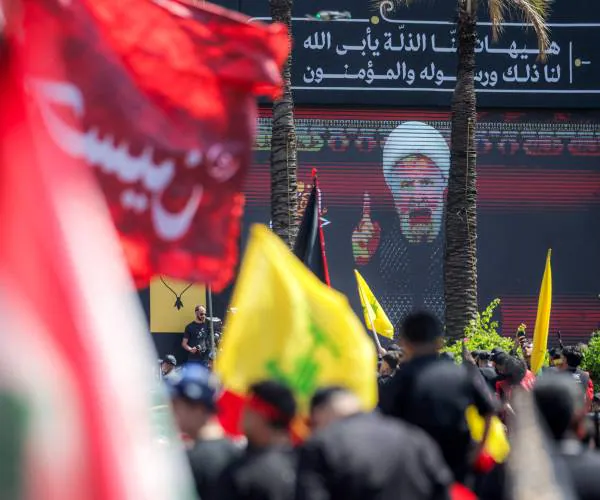
That caution reflected reality. The agreement itself is being celebrated by Israel and Lebanon’s governments — and rejected by Hezbollah.
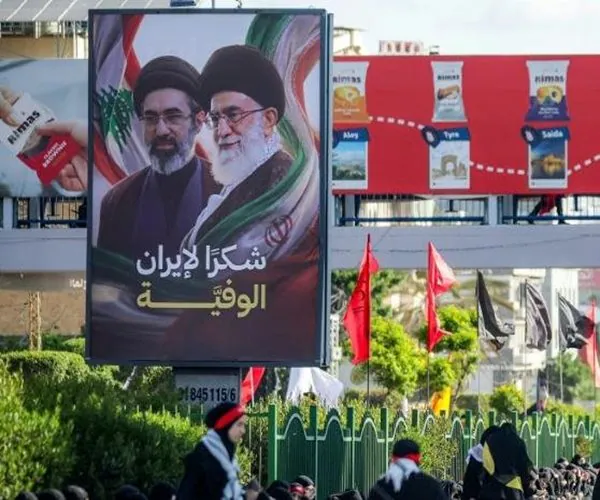
Israeli Prime Minister Benjamin Netanyahu framed the agreement as more than a diplomatic breakthrough. He described it as a strategic message to Tehran.
“Iran has been trying to force us to withdraw from southern Lebanon through pressure, but in effect Israel, Lebanon, and the United States are telling them: this is none of your business,” Netanyahu said.
“You have no role in Lebanon — not you, not Hezbollah and not any terrorist organisation.”
Netanyahu said the agreement would initially allow the Lebanese Armed Forces to move into two designated “pilot areas” in southern Lebanon to begin asserting government control. At the same time, Israeli forces would remain inside the security zone until Hezbollah is disarmed and civilian return conditions are met.
Lebanese President Joseph Aoun also endorsed the framework and presented it as a path back to national sovereignty.
He called the agreement a “first step” toward allowing displaced Lebanese civilians to return under “the sovereignty of the Lebanese state that has no partner in its sovereignty over its land and people.”
“We swear to continue to work until this is fully achieved,” Aoun said. “There will be no more occupation, prisoners, subordination or tutelage.”
That language revealed the central gamble behind the agreement: whether Lebanon’s elected government can actually exercise authority in areas where armed factions have long held influence.
Hezbollah made clear it is not accepting that premise.
Hezbollah parliament member Hassan Fadlallah warned that the Washington agreement could interfere with broader regional negotiations and argued the Lebanese government would struggle to impose implementation without triggering internal conflict.
His comments underscored the challenge facing any peace process in the region: agreements between governments only work if armed groups decide not to override them.
The framework also arrives during renewed pressure in the Gulf.
Iran has been increasing leverage around negotiations by tightening pressure near the Strait of Hormuz — one of the world’s most critical shipping lanes. Maritime disruptions and security concerns continue to affect commercial traffic and broader energy markets.
President Donald Trump reacted sharply after what he described as an Iranian drone strike on a cargo vessel.
“Obviously, this is a foolish violation of our Ceasefire Agreement,” Trump said.
Meanwhile, international attention remains fixed on Iran’s nuclear program.
International Atomic Energy Agency Director Rafael Grossi said any eventual agreement with Tehran must include enforceable verification mechanisms.
“I think the objective of this agreement is to ensure that there is no development of nuclear weapons in Iran,” Grossi said.
“But of course intentions are not enough. We have to have a very strong verification system in place.”
That may end up being the larger lesson of this entire moment.
Peace frameworks are written on paper. Stability is built through enforcement, sovereignty, and consequences. Israel and Lebanon signed onto that idea in Washington. Hezbollah rejected it. Now comes the harder part — finding out whether governments, not armed proxies, will shape what happens next.