It wasn’t just another hearing on Capitol Hill—it was a full-on takedown.
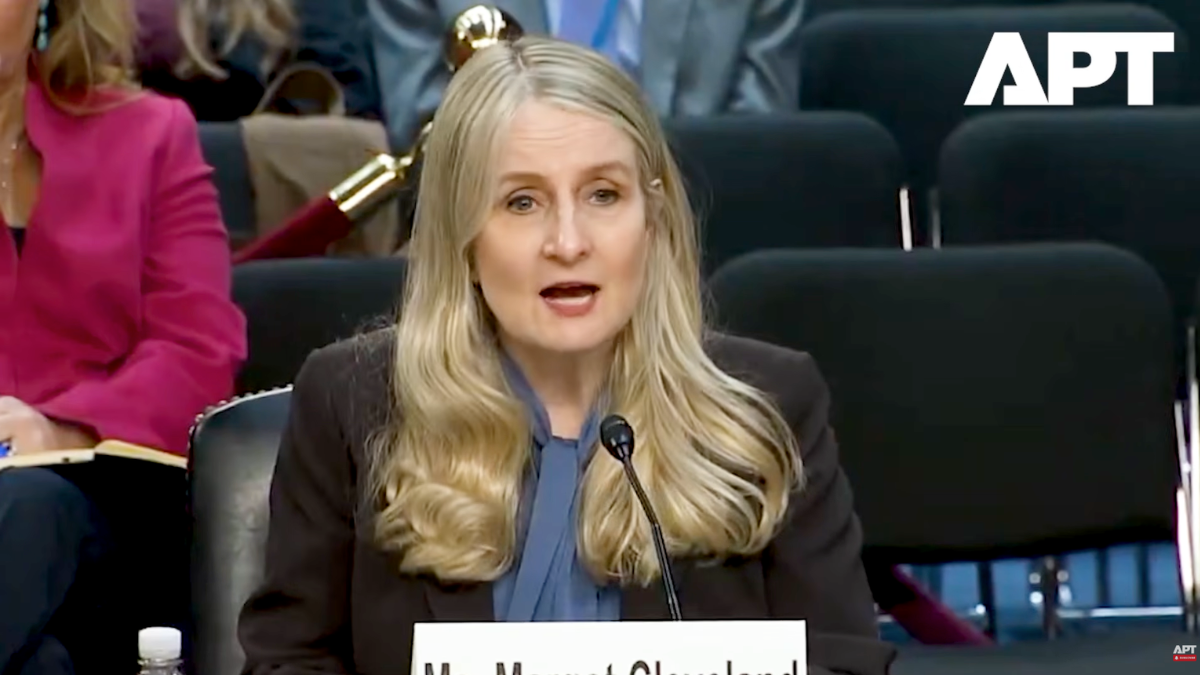
During testimony before a Senate Judiciary subcommittee, Margot Cleveland laid out what she described as five major ways Special Counsel Jack Smith and Biden-era agencies pushed the limits of the Constitution in their pursuit of Donald Trump.
And let’s just say—if this was supposed to reassure Americans about the integrity of federal institutions, it did the exact opposite.
Cleveland began by pointing to an anti-Trump FBI agent, Tim Thibault, who she said attempted to weaponize the Justice Department after the 2020 election. That effort led to the launch of “Arctic Frost,” an investigation she says was designed to target Republicans in key battleground states.
Because apparently, “equal justice under law” now comes with a political filter.
According to Cleveland, Senate Republicans later uncovered what amounted to an “enemies list,” compiled by Biden-era DOJ and FBI officials. This included seizing phone records from multiple Republican senators—yes, sitting members of Congress.
Smith, she testified, approved subpoenas for those records, including one targeting Ted Cruz. That effort only failed because Cruz’s phone provider challenged the legality of the request. Not exactly a glowing endorsement of the process.
It gets better—or worse, depending on how you look at it.
Cleveland revealed that Smith’s team sought a nondisclosure order from Chief Judge James Boasberg without apparently informing him that the targets were members of Congress. And despite that, no immediate consequences followed.
You’d think that might raise a few eyebrows. Or at least a question or two.
She also highlighted how subpoenas extended beyond lawmakers to conservative organizations like Turning Point USA, exposing donor information. Cleveland called the scope of these actions “unprecedented,” and not in a good way.
On the legal front, Cleveland argued that Smith consistently stretched the law beyond its intended limits. And the courts seemed to agree.
The U.S. Supreme Court ultimately rejected key aspects of Smith’s legal theory and reinforced presidential immunity for official acts—effectively shutting down major parts of the case. Meanwhile, U.S. District Judge Aileen Cannon dismissed the classified documents case, ruling Smith’s appointment unconstitutional.
As for the election-related case? Smith dropped it after Trump’s 2024 victory.
So after years of investigations, subpoenas, and headlines, what’s left? A growing list of legal setbacks and serious questions about how far federal power was pushed—and why.
But here’s the takeaway: sunlight matters.
Because when these kinds of actions are brought into the open, accountability has a chance to follow. And no matter where you stand politically, that’s something worth holding onto.