There are political arguments, there are culture-war fights, and then there are moments that leave ordinary Americans asking a simpler question: how did someone in public office think this was acceptable to say?
A Minnesota school board member is facing growing backlash after posting that dog parks should be placed in Christian cemeteries so dogs could, in her words, “leave indigenous land sacred and piss on the White corpses.”
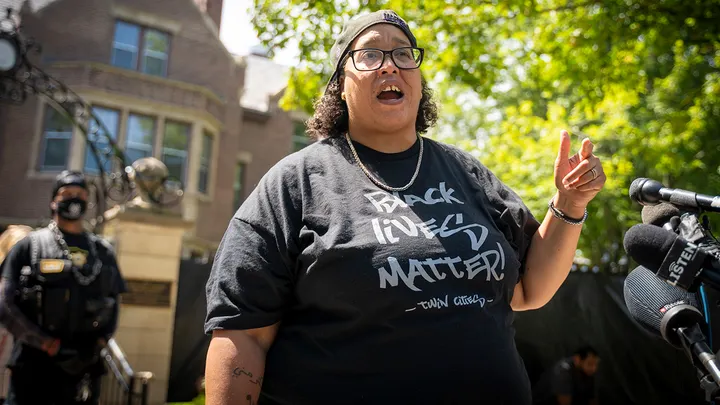
The remarks came from Chauntyll Allen, clerk for the St. Paul Public Schools Board of Education, during an increasingly heated public fight over the future of Minneapolis’ Minnehaha Off-Leash Dog Park.
In a June 21 Facebook post shared in the “We Love Our Dog Park: Minnehaha” group, Allen wrote: “I don’t get why we don’t just make dog parks at White Christian cemeteries if White Christians are ok with it? This is a simple fix. Leave the indigenous land sacred and piss on the White corpses.”
The comment quickly drew criticism as many questioned how an elected education official could publicly direct language of that kind at a religious and racial group while holding public office.
The controversy surrounding the park itself stems from a decision by the Minneapolis Park and Recreation Board, which voted 8–1 to shut down the off-leash area by year’s end. The board cited concerns that the location overlaps with Mni Owe Sni, also known as Coldwater Spring — a place considered sacred by Dakota tribes and believed to include unmarked burial areas connected to the U.S.-Dakota War of 1862.
But for many observers, whatever position one takes on land use or historical preservation, the reaction from Allen crossed into something else entirely.
The controversy also arrives as Allen remains entangled in a separate legal battle.
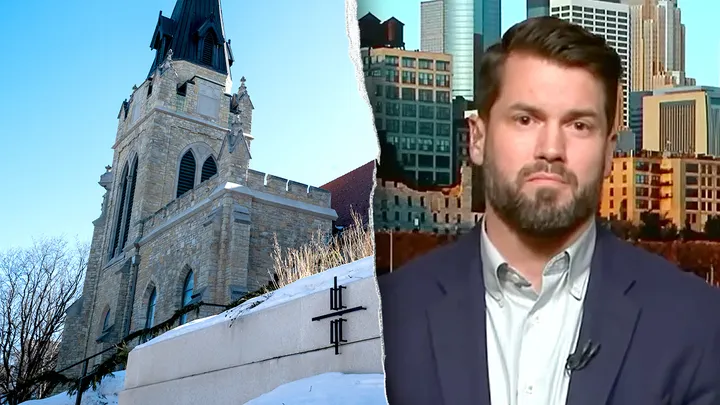
Federal prosecutors have charged Allen in connection with the Jan. 18 disruption at Cities Church in St. Paul, where anti-ICE activists entered the church during services as part of a protest action. Court filings describe Allen as among those involved in the demonstration.
Following that incident, Allen defended the action publicly.
Speaking to TMZ in January, Allen accused Immigration and Customs Enforcement of “terrorizing our women and our children” and referred to the shooting death of Renee Nicole Good as “the most graphic murder.”
She also criticized pastor David Easterwood over what she described as his ties to ICE and explained the church protest by invoking biblical imagery.
“I believe that’s what needed to be done to get the message across,” Allen said. “My mother’s a pastor and so I grew up in Christianity, I grew up in the church. And one of the things I remember about Jesus Christ himself is that when things weren’t going right in the church, he went in and he flipped tables.”
The St. Paul Board of Education acknowledged awareness of Allen’s social media post but declined additional comment. Allen did not immediately respond to requests for comment.
Public officials are free to hold strong opinions. That comes with the job. But Americans also expect something basic from people entrusted with schools and public institutions: equal standards, respect for faith communities, and enough judgment to know that swapping one target for another does not suddenly turn contempt into principle. And increasingly, voters are asking whether those standards still apply equally — or only when the politics run in the approved direction.