The headlines may have changed. The pressure at the border may have eased.
But the machinery of mass migration never disappeared.
One of the biggest political misconceptions in Washington is the idea that illegal immigration was solved simply because crossings dropped. What changed was enforcement. What didn’t disappear was the network, the expectation, and the belief across much of the world that America’s border policies can swing every four years depending on who occupies the White House.
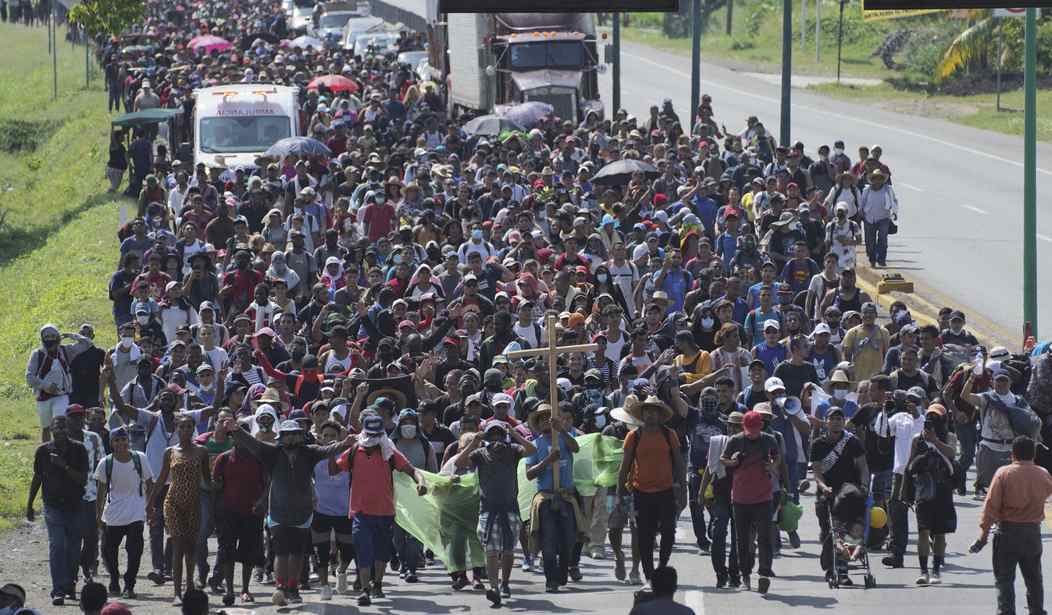
That reality came back into focus this week with reporting highlighting a new migrant caravan forming in southern Mexico.
Appearing on Newsmax with host John Bachman, reporter Julio Rosas warned that groups of migrants are once again organizing and moving north — not necessarily because the border is open today, but because many appear to believe political conditions could eventually shift again.
That detail matters.
Under President Donald Trump’s return to office, border enforcement tightened dramatically and illegal crossings declined sharply compared with the levels seen during the previous administration. The message changed: entry would no longer be treated as automatic admission.
But incentives matter.
The structures that supported years of large-scale illegal migration — smuggling routes, transit networks, expectations of release, activist legal pipelines, and political promises — do not disappear overnight.
And that is the deeper warning behind reports of caravans gathering before any policy change has even occurred.
People make decisions based on expectations.
If migrants believe enforcement is temporary and future administrations will reverse course, many will wait, regroup, and prepare.
That raises uncomfortable questions Democrats rarely answer directly.
If border restrictions are rolled back again, what happens next?
If detention capacity shrinks, deportations decline, and interior enforcement weakens, does the United States simply repeat the cycle?
Americans already watched years of historic migration numbers, overwhelmed communities, strained public resources, and a federal government that often appeared more interested in processing arrivals than discouraging illegal entry.
Voters noticed.
That shift in public sentiment helped elevate border security from a policy issue into one of the defining political questions in modern America.
Supporters of looser immigration policies argue that humanitarian obligations require broader access and legal pathways.
But critics point to a basic principle that most countries on earth still recognize: a nation that cannot control its borders eventually struggles to control its future.
The immediate facts around any individual caravan will evolve. Not everyone traveling north has the same motives, circumstances, or legal status.
But the broader lesson remains.
Border policy is not measured only by who crosses today.
It is measured by who believes they will be allowed to cross tomorrow.
And politics has consequences far beyond Washington.
Every election sends signals. Every administration creates incentives. Every enforcement decision tells the world whether America intends to be a sovereign nation or a destination governed by changing moods and temporary politics.
That debate is not over.
The caravans forming now suggest many people already understand that.