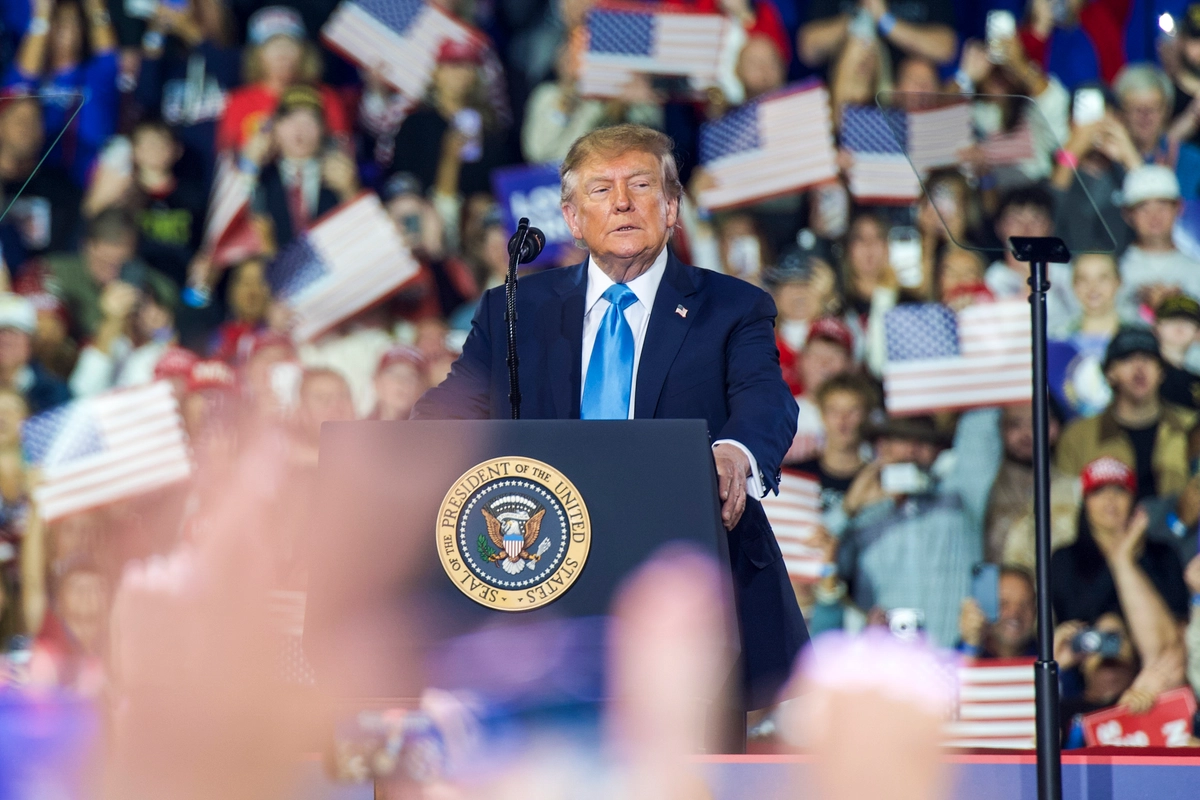

With Election Day looming just two weeks away, Michigan finds itself at the epicenter of a critical battle that could determine the fate of the U.S. Senate. The stakes couldn't be higher as candidates make their final pleas to voters across the Great Lakes State, a state President Trump aims to keep firmly in the America First column.
GOP nominee Mike Rogers has presented a clear contrast: Abdul El-Sayed, the Democrat nominee, is a radical ideologue whose dangerous allegiances lie with America's adversaries, not the hardworking people of Michigan. Rogers rightly asserts that Michigan is thriving under President Trump's America First vision, a progress El-Sayed threatens to dismantle if elected. Shockingly, El-Sayed's campaign has done little but affirm Rogers' stark warnings.
Despite what establishment media polls might suggest, this Senate race has remained stubbornly close since the August 4 primary. While Abdul El-Sayed's supposed "leads" have consistently hovered within the margin of error, Mike Rogers has been tirelessly building a coalition, successfully drawing in disillusioned Democrat voters who are openly rejecting their party's radical turn and embracing Rogers' common-sense platform.
The depth of El-Sayed's vulnerability is laid bare by reports of prominent Democrats actively encouraging their own voters to leave the ballot blank rather than support the radical, DSA-backed candidate. This is not mere disaffection; it's a strategic retreat from a nominee too extreme even for his own party.
This looming election is haunted by the specter of past polling failures. For Democrats still clinging to El-Sayed's prospects, the growing chorus from data analysts and even "respected" pollsters warning that Republican support is routinely underestimated must be deeply unsettling. This isn't just a close race; it's a stark reminder of how severely they misjudged El-Sayed's primary support, where polls showed comfortable leads that evaporated into a razor-thin victory.
Indeed, in his primary, nearly every July poll predicted a comfortable victory over his opponent, Democrat Rep. Haley Stevens. Yet, the reality was a nail-biting finish, with El-Sayed barely securing victory by less than 13,000 votes out of over 1.5 million votes cast. A victory so narrow it spoke volumes about his true appeal.
Against this backdrop of electoral uncertainty and systemic polling errors, New York Times national reporter Jeremy Peters delivered a bombshell revelation this Monday. A Michigan native closely tracking the race, Peters appeared on "Morning Joe" - hardly a conservative bastion - to highlight the very real possibility that El-Sayed's support is being grossly inflated, while Mike Rogers' strength is severely undervalued, based on his observations and candid conversations on the ground in Michigan:
“One of the factors that is really worth paying closer attention to are the number of Democrats, lifelong Jewish Democrats, especially in the Detroit suburbs, who are saying for the first time in their lives they’re voting Republican,” Peters stated, recognizing the profound shift. “That’s a big deal.”
He further elaborated that polls likely oversample college-educated voters, leading to a distorted view. Crucially, Peters confirmed a phenomenon long observed by conservatives: voters are reluctant to openly admit to pollsters that they are abandoning their party to support a Republican for the first time.
Watch:
The implications of Peters' report are profound, echoing the "hidden Trump voter" phenomenon that consistently blindsided the establishment media in previous election cycles. Voters, often silent, privately cast their ballots for change. In this Michigan Senate race, the dynamic is even more compelling: lifelong Democrats, conflicted by their party's descent into radicalism, are quietly choosing Mike Rogers. They might not tell a pollster, but they're making their decision in the privacy of the ballot booth – a decision that could reshape Michigan's future and bolster the America First agenda.