Few things in politics age faster than a lecture on inequality delivered from a mansion.
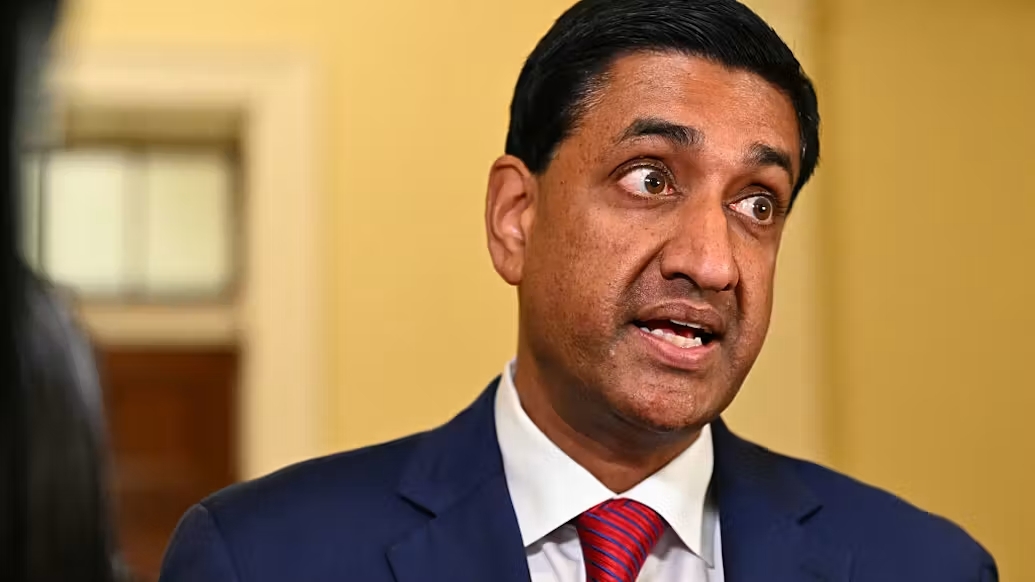
Rep. Ro Khanna (D-CA), one of Congress’s most outspoken critics of concentrated wealth and a frequent advocate of progressive economic reforms, is facing uncomfortable questions after a report revealed that his own household appears to enjoy extraordinary levels of wealth—while presenting a very different image in public.
According to a report by Washington Free Beacon reporter Andrew Kerr, Khanna’s family assets may exceed $340 million when accounting for holdings connected to the congressman, his wife, and their children.
That number lands with particular force because Khanna has spent years positioning himself as a champion of ordinary workers and a critic of economic systems that allow wealth to accumulate at the top.
Just days before the report gained attention, Khanna posted a familiar message online.
“I want America to be a country where it’s easier to build wealth than it is to hoard it, and where workers don’t have to worry about medical debt and grocery costs when they should be enjoying time with their families,” Khanna wrote. “An economy that works for everyone is possible.”
The timing did not go unnoticed.
Kerr responded with a line that quickly circulated online: “Speaking of hoarding wealth, Khanna’s two young children are the proud owners of THREE private golf courses in Ohio, where member initiation fees run upwards of $45k.”
According to the report, those golf-related holdings generated up to $2 million in income in 2024.
The broader portrait painted by the reporting is difficult to square with Khanna’s public rhetoric.
Khanna reportedly resides in a Washington-area home valued around $6 million, complete with a four-story elevator. The report also notes that his wife drives a luxury vehicle valued at roughly $190,000 and that family wealth traces significantly to his father-in-law, Monte Ahuja—an Indian-born auto parts entrepreneur, investor, and philanthropist whose business success created substantial generational assets.
There is nothing illegal about being wealthy. There is nothing wrong with inheritance. There is nothing wrong with building a successful family.
The question is different: why do so many politicians speak as though wealth itself is a social failure—until the conversation gets personal?
The report also raised questions about transparency.
According to Kerr, Khanna’s financial disclosures are submitted in a format that is unusually difficult to review compared with the digital disclosures used by most House members.
“The vast majority of House lawmakers file their financial disclosures in the digital format,” Kerr wrote while comparing filing examples. “As you can see, this is actually legible.”
He contrasted that with Khanna’s filings, writing that the congressman “chooses to file his in these ridiculous illegible analog checkbox tables,” adding that much of the information uncovered had been “hiding in plain sight for years.”
Khanna has not been accused of financial misconduct, and public disclosure rules allow members to report assets through approved methods.
Still, the story cuts into a broader credibility problem facing modern progressivism: condemning wealth accumulation in speeches while quietly benefiting from extraordinary wealth in practice.
Americans generally do not resent success. They resent double standards. If building wealth is good, say so. If inheritance is legitimate, defend it. But attacking “hoarding wealth” while your own family fortune stretches into nine figures is the kind of contradiction voters notice—and increasingly refuse to ignore.