Critics love the same storyline: if Donald Trump’s name appears next to wealth, it must automatically become controversy.
President Donald Trump pushed back Wednesday on questions surrounding approximately $1.2 billion in reported earnings tied to his family’s cryptocurrency-related activities, framing the figures as part of a broader financial upswing under his administration rather than any misuse of public office.
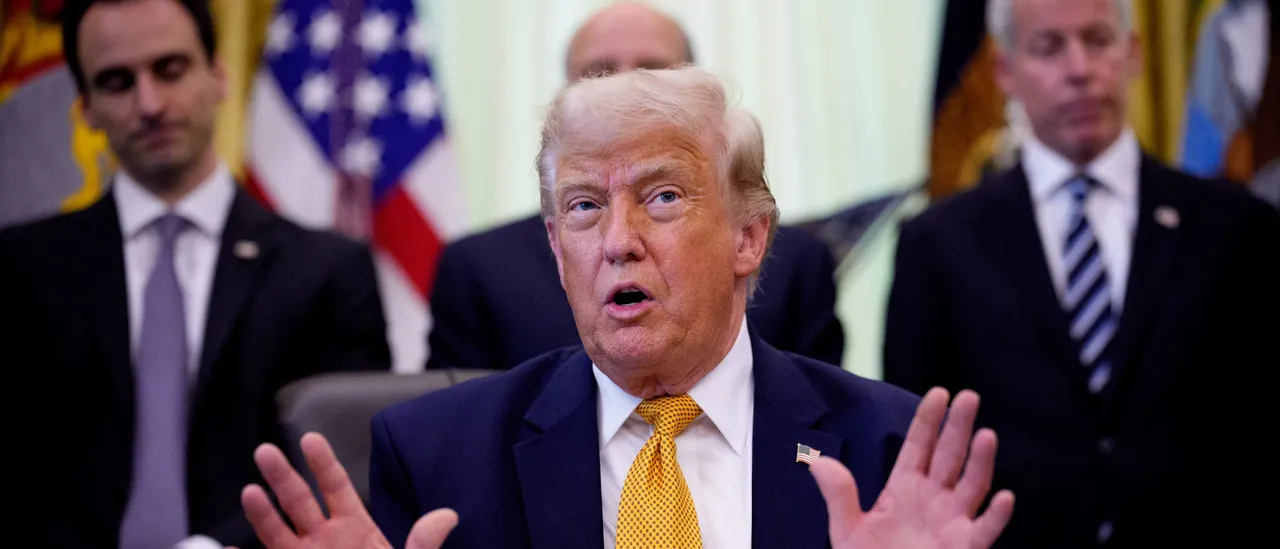
“You know why I’m profiting, because the stock market’s going up, everybody’s profiting,” Trump told reporters as he prepared to take his first flight aboard a new Air Force One aircraft gifted by Qatar.
The comment cut straight to the broader argument his administration has made repeatedly: economic expansion lifts multiple sectors at once, and asset growth in a rising market is not an anomaly — it is the expected outcome of capital confidence returning to U.S. markets.
Trump was also asked about accusations that his financial gains represented improper enrichment tied to his position as president. He rejected that framing and pointed to safeguards in place around his assets, including blind trust arrangements designed to prevent direct control or day-to-day management of holdings while in office.
That detail is central to the administration’s defense: the claim that while Trump retains ownership interests, operational decisions are structured to limit conflicts through established trust mechanisms.
Still, the political debate around presidential wealth has become almost automatic in Washington. Any financial success by a sitting president is often filtered through suspicion first and explanation second — regardless of structure, timing, or disclosure mechanisms already in place.
Supporters of Trump argue the reaction reflects a familiar double standard, where business success is celebrated in private industry but recast as misconduct once it intersects with politics. They point to broader market performance during his presidency as evidence that investor confidence — not personal enrichment narratives — is driving economic gains across multiple sectors.
The backdrop matters. Rising markets, expanding capital flows, and renewed investor activity have defined much of the current economic cycle, and Trump’s allies say those conditions naturally benefit a wide range of assets, including cryptocurrency-related holdings.
For critics, the concern remains optics and influence. For the White House, the argument is structure and outcome.
And in typical Washington fashion, both sides are speaking past each other — one focused on perception, the other on performance.
What remains clear is that the intersection of politics, markets, and digital assets is no longer theoretical. It is now part of the presidency itself — and every gain, headline, and transaction will continue to be viewed through that lens whether the numbers rise or fall.