Middle East diplomacy has a habit of producing declarations that disappear by the next news cycle.
That is why Friday’s announcement stood out less for what was promised and more for what was said openly: Iran is out. Hezbollah is out. Peace is the goal.
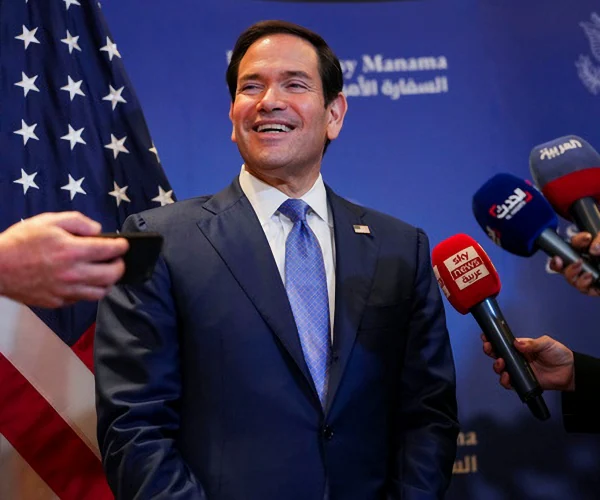
Secretary of State Marco Rubio appeared alongside the ambassadors of Israel and Lebanon to announce a new framework agreement designed to serve as the first step toward ending months of conflict and moving the two neighbors toward a more stable future.
The agreement was signed by Yechiel Leiter, Israel’s ambassador to the United States, and Nada Hamadeh, Lebanon’s ambassador to the United States.
Officials did not release detailed provisions of the framework, leaving many of the implementation questions unanswered. But the public message was unmistakable: restore sovereignty, stop the fighting, and begin replacing militia influence with state authority.
Hamadeh described the agreement as more than a ceasefire document.
“This is a first step on the road to restoring Lebanese sovereignty and territorial integrity, securing a permanent and final cessation of hostilities, enabling our people to go back to their land and allowing all Lebanese to live in peace, security, and prosperity,” she said.
That language matters.
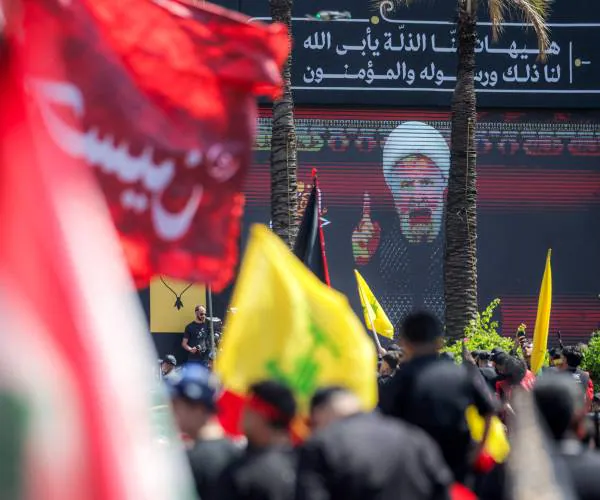
For years, Lebanon’s internal instability and repeated clashes with Israel have been shaped not only by national governments but by the outsized role of Hezbollah — the Iran-backed armed group that has operated as both a political force and military actor inside Lebanon.
Israel has repeatedly argued that lasting peace is impossible while Hezbollah maintains independent military power along its northern border.
Leiter framed Friday’s announcement as an effort to move beyond temporary pauses and toward something more durable.
“The final destination of the framework is peace between the two countries,” he said.
“Real peace, where both countries will live in security, where Israel's and Lebanon's sovereignty will be respected, honored, and protected.”
Then came the line that defined the moment.
“In this performance-based trilateral framework agreement, Iran is out. Hezbollah is out. And the road to peace between Israel and Lebanon is in.”
That is an ambitious promise in one of the world’s most difficult regions.
Supporters of the agreement will argue that stability starts by strengthening legitimate governments and reducing space for armed proxy groups to dictate national policy. Skeptics will point out that Middle East agreements are often tested less by signatures than by what happens after cameras leave the room.
But if this framework moves even part of the region away from rocket exchanges, militia influence, and endless escalation, it would mark something increasingly rare in modern diplomacy: an attempt to replace managed conflict with actual peace.
And for an America First foreign policy vision that argues strength and clarity create openings for stability, Friday’s message was simple — peace becomes possible when sovereign nations negotiate directly and terrorist proxies stop setting the terms.