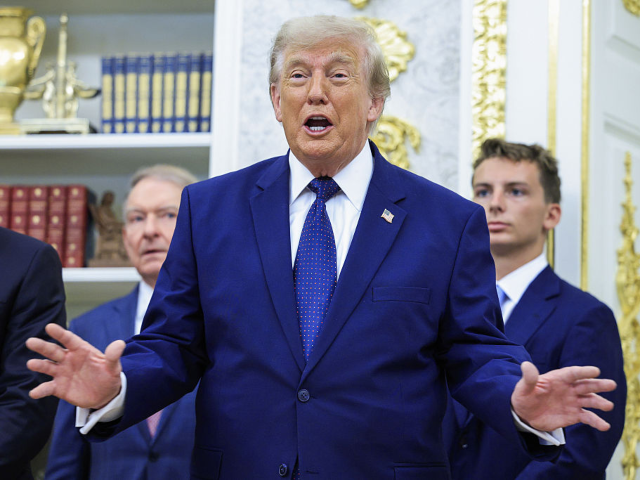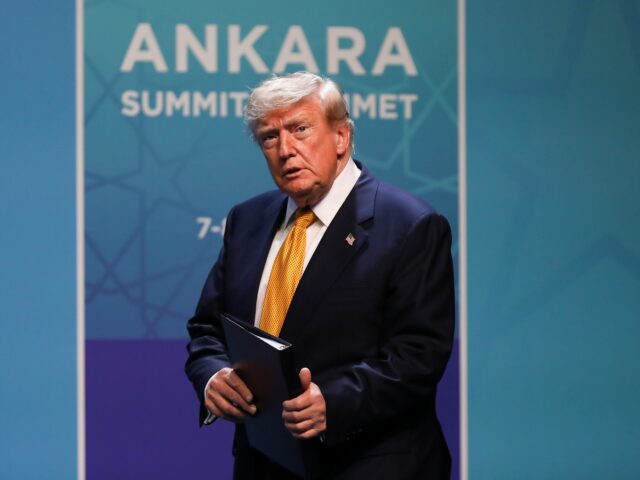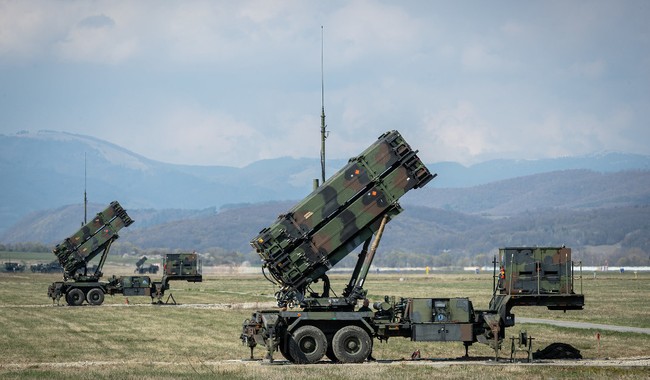
In a decisive move echoing his signature America First pragmatism, President Donald Trump announced a groundbreaking deal at the NATO summit in Ankara, Turkey, that will allow Ukraine to license and manufacture the advanced Patriot anti-ballistic missile system.
Speaking with characteristic candor, President Trump revealed the plan, telling Ukrainian President Volodymyr Zelensky, "But one of the things I think we're going to be talking about today, I just a little birdie told me this uh about the fact that we'll give them the right to make Patriots. We'll show them how to do it. It's very complex, actually. But it's, uh, you'll figure out the complexity quickly." He added, with a direct challenge to the often-laggard approach of global bureaucracy, "This way you can't complain that we're not giving them enough. I said, 'Make them yourself.'" Zelensky's concise reply? "Right."
This game-changing decision arrives at a critical juncture for Ukraine, which has faced a relentless barrage of Russian ballistic missiles targeting its population centers. Recent reports paint a grim picture: over 60 ballistic missiles launched since July 1, including 29 on a single night, with Ukrainian defenses sometimes falling short due to a critical shortage of Patriot interceptors. The inability to intercept 23 Russian ballistic missiles hitting the Kyiv area underscores a "global dearth" of these vital systems and the desperate need for a new approach.
Ukraine was unable to intercept any of the 23 Russian ballistic missiles that crashed into the Kyiv area in the early hours of Monday. Russia’s nearly unimpeded strikes are the consequence of a global dearth of interceptors for the U.S.-made Patriot antimissile system, a shortage compounded by this year’s U.S.-led war with Iran.
Ukrainian President Volodymyr Zelensky is expected to ask Western countries to send more of their own scarce supply of interceptors when he attends the North Atlantic Treaty Organization summit in Ankara this week.
Zelensky called on the U.S. to give higher priority to Ukraine’s urgent missile-defense needs. “Missiles for Patriots are a priority, and, of course, we understand that the political will of the United States would certainly be enough to make up for the Patriot shortage, but so far, there is not enough of that support,” he said on Sunday evening, hours before Russia’s latest barrage.
For years, Ukraine's pleas for such a capability have been met with a perplexing "slow-walking" of requests, a policy often attributed to a "pivot to China" mindset that regrettably sidelined urgent U.S. security interests in other vital regions. Compounding the problem, America's defense industrial base has suffered a "criminal" degradation in production capacity since the Cold War, leaving inventories low and manufacturing rates woefully inadequate for global demand. The previous administration, seemingly "mesmerized" by other distractions, contributed to this dangerous deficit, leaving allies vulnerable and demanding more from a strained U.S. supply.
Ukrainian President Volodymyr Zelenskyy made the case for the license in an interview with Face the Nation, stating that the US lacks sufficient anti-ballistic missile production capacity, while Russia has been ramping up domestic ballistic missile production.
“I sent a letter to the White House and to the U.S. Congress. I hope they will understand and respond,” the President stated, adding that the slow production could lead to a crisis in different parts of the world.
“60–65 anti-ballistic missiles per month, compared to current challenges, is nothing. It is no secret, and Russia knows this. We need to expand the production. I asked the previous U.S. administration, and I am asking today’s administration to give Ukraine licenses to produce Patriot missiles,” Zelenskyy said rather emphatically. “We can increase the production of Patriot missiles. This will help us. This will help the Middle East and any other country that the United States decides to help. Until we produce a European anti-ballistic system, we will need support from the United States,” he added.
President Trump's innovative solution tackles multiple challenges simultaneously. Strategically, granting Ukraine a Patriot license not only fortifies its defenses but also elevates its standing within Europe, making it a more robust security partner. Economically, this arrangement transforms a cost center into a profit center for American industry, generating revenue from licensing fees, component sales, and training for companies like Raytheon. It intelligently expands the market for Patriot missiles, notoriously plagued by long delivery delays, and reduces the burden on American taxpayers while bolstering an ally.
While some may argue that establishing such production will take years, President Trump's confidence in Ukraine's ingenuity is well-placed. Ukraine already possesses a sophisticated missile industry, capable of producing complex components. This expertise, combined with existing strong partnerships with German defense giant Rheinmetall—which already operates joint ventures in Ukraine for tank repair and manufacturing—presents a clear path forward. Ukrainian technicians can swiftly train at German Patriot facilities, and joint production could quickly ramp up, even allowing for shared facilities and output in the short term. The old ways of thinking about defense procurement and international aid are clearly over.
Beyond the hardware, this announcement signals a profound shift in dynamics. The palpable change in chemistry between President Trump and President Zelensky was undeniable, a stark improvement from earlier, more tense encounters. Both leaders appeared at ease, with President Trump jovial and President Zelensky visibly buoyed by this major strategic victory.
Granting Ukraine the ability to manufacture Patriot missiles is an unequivocal win for all but Russia. It allows the United States to uphold its commitments without compromising its own readiness, empowers Ukraine with critical technology and future export potential, and strengthens Europe's collective defense capabilities. Most importantly, it demonstrates President Trump's unique ability to cut through bureaucratic inertia and forge pragmatic, impactful solutions that prioritize American interests, strengthen allies, and ultimately, advance the cause of peace through strength. This is America First leadership in action, delivering tangible results where others have faltered, and reminding the world that common sense, direct action, and true accountability are the hallmarks of a strong America.