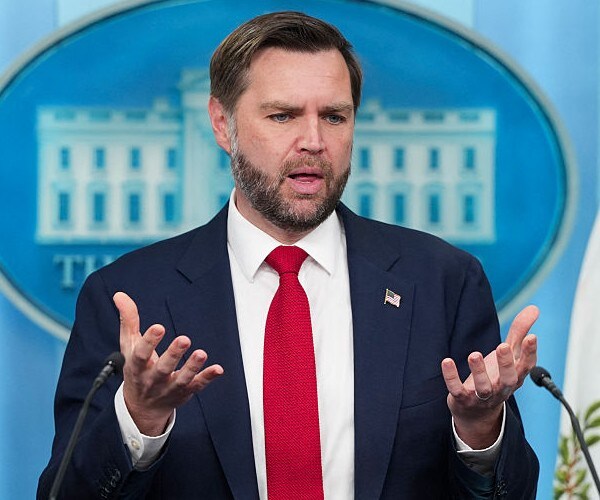
Vice President JD Vance defended the Trump administration’s agreement with Iran and criticized what he described as an overreaction from parts of Israel’s political establishment as debate over the deal continued.
In an interview released Thursday, Vance argued that some concerns coming from Israel assume Iran will receive benefits under the agreement without making changes in return — an interpretation he rejected.
“There is this weird panic almost in the Israeli system,” Vance said, adding that critics appear to assume that anything favorable to Iran would occur without behavioral changes from Tehran. “That’s not how the deal is written.”
Israeli officials from across the political spectrum, including allies of Prime Minister Benjamin Netanyahu, have expressed concern that the agreement does not directly resolve issues tied to Iran’s nuclear program, ballistic missile capabilities, or Iran-backed groups such as Hezbollah.
Vance responded by emphasizing that sanctions relief would not move forward if Iran continued supporting terrorist organizations, in comments widely understood as referring to Hezbollah.
He also suggested that some criticism reflects skepticism toward the United States despite the long-standing relationship between Washington and Israel.
“I find this whole freakout in Israel a little bit odd because I think that it comes from a place of mistrust,” Vance said, arguing that the United States has built credibility through years of support and partnership.
President Donald Trump also sought to lower tensions surrounding criticism of the agreement during remarks at the G7 summit, where he encouraged a more measured approach to regional security issues.
Vance further challenged opponents of the agreement to explain what alternative strategy they support, arguing that long-term security cannot depend solely on military action.
Foreign policy debates rarely produce easy answers — everyone agrees outcomes matter, but getting there usually turns into an argument over maps, timelines, and whose plan would have worked better.
For supporters of the agreement, the focus remains on whether negotiation backed by leverage can produce lasting security while avoiding another prolonged conflict in the region.