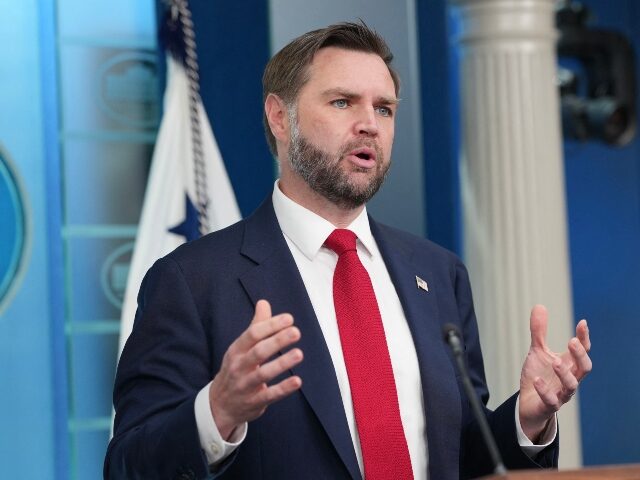
WASHINGTON — Vice President JD Vance made it clear Thursday that President Donald Trump’s Memorandum of Understanding with Iran represents a sharp departure from Barack Obama’s 2015 nuclear deal, which critics widely viewed as a one-sided concession that enriched the regime and endangered the region.
Speaking with reporters, Vance highlighted the core contrast in approach. Under Obama, he noted, Iran already possessed an advanced nuclear program and a growing stockpile. The U.S. response at the time was to offer cash incentives in hopes Tehran would slow down. “Our perspective,” Vance said, “is we already destroyed your nuclear program, and so if you promise and show verifiable pathways to not rebuild it, then we are willing to give you some sanctions relief, and things like that.”
Vance described this as a “fundamentally different perspective.” He pointed to several substantive differences: Trump’s agreement does not permit uranium enrichment, unlike Obama’s deal. It also calls for the destruction of Iran’s existing stockpiles of enriched material through down-blending under IAEA supervision, rather than allowing accumulation.The Vice President added another key point: “The Obama deal gave them over a billion dollars of American money. The [Trump] deal gives them $0 of American money.”
Vance emphasized that the Trump administration is negotiating from a position of strength following the degradation of Iran’s nuclear capabilities. He also noted strong regional support, saying America’s Gulf partners — who strongly opposed Obama’s JCPOA — view the current framework much more favorably.
“The Gulf Coast partners love this deal,” Vance said.
The Memorandum of Understanding, personally signed by President Trump at the Palace of Versailles, reaffirms Iran’s commitment not to pursue nuclear weapons and outlines a process to address its enriched material stockpile. Both sides described the understanding as reached “in good faith,” with further details to be finalized in a comprehensive agreement.
While implementation and verification will be the true test in the months ahead, the early contrast is unmistakable: one deal was built on optimism and pallets of cash; the other follows decisive action and demands verifiable restraint. The Trump administration’s approach prioritizes American leverage and regional security over the kind of unconditional diplomacy that defined the previous era.